
- Why the First Report Usually Comes From a Distributor
- One Customs Union, Separate Trademark Rights
- A Transit Hub Changes What a Listing Means
- Two Large Marketplaces, One Pool of Sellers
- What the 2026 UAE Fraud Rules Change
- Why Premium Brands Feel This Differently
- What to Set Up Before the First Shipment
- How Truviss Puts the Setup to Work
- From Takedowns to Rights
 Arun KrishnanSep 24, 20266 min read
- Selling on noon, Amazon.ae or Amazon.sa is not an extension of an India marketplace routine: trademark rights in the Gulf are granted country by country.
- Saudi Arabia is first-to-file, and Dubai Customs will only record a brand that holds a UAE registration, so both belong before launch.
- The UAE’s 2026 commercial fraud rules require counterfeit goods to be withdrawn within 24 hours of an official notice, and they cover e-commerce.
- Monitoring works on top of an authorised-seller list and a listing baseline, not in place of them.
For most Indian brands, marketplace protection has meant a familiar routine. Find the fake listing on Amazon India, Flipkart or Meesho, file the complaint, repeat. The rules, the registries and the courts are all ones the legal team already knows.
That routine does not travel well. Once a brand starts selling into the UAE or Saudi Arabia through noon, Amazon.ae or Amazon.sa, the first question is no longer how to report a listing. It is whether the brand holds the rights that let anyone act on the report at all.
Why the First Report Usually Comes From a Distributor
In India, a brand usually has years of baseline knowledge. It knows which sellers are genuine, what a normal price looks like and which listings belong to its own channel. In a new export market, it has none of that.
So the first sign of trouble tends to arrive by phone. An importer in Dubai or Riyadh notices a seller undercutting them on a marketplace, or a customer complains about a product that does not match the one they bought before.
That is not a monitoring failure. It is what happens when nobody has defined what “genuine” looks like in that market yet.
One Customs Union, Separate Trademark Rights
The six Gulf Cooperation Council states share a customs union, which makes it tempting to treat the region as one market for protection. For trademarks, it is not.
Saudi Arabia adopted the GCC’s unified trademark law in 2016, but rights are still granted country by country, on a first-to-file basis. The US government’s Saudi Arabia guide is blunt about the consequence: secure registrations before launching products in the market.
The UAE runs its own trademark law, Federal Decree-Law No. 36 of 2021, in force since January 2022. It broadly follows the GCC law but differs in places. A mark registered in Riyadh does not protect the same product in Dubai.
Customs is local too. Dubai Customs will only record a brand for border monitoring against a valid UAE Ministry of Economy trademark certificate, at AED 210 per category, and the brand recordal lasts only as long as that registration does.
If your Indian registration is your only one, none of these routes are open to you. The basics of registering a trademark are familiar. The difference is that it has to be done in each country, ideally with local counsel.
A Transit Hub Changes What a Listing Means
The UAE is not only a consumer market. OECD and EUIPO research has long identified it, alongside Hong Kong and Singapore, as a global hub for trade in counterfeit goods, and named the UAE and Saudi Arabia as transit points for fakes heading to Africa.
Their follow-up work on free trade zones found that the larger the role free zones play in an economy, the higher the value of counterfeits in its exports. US trade officials have separately flagged coordination between emirates and free zones as a gap in controlling transshipment.
For a brand, this changes how to read a suspicious listing. Stock sold on a Gulf marketplace may have come through a free zone rather than from a local importer. It may be counterfeit, diverted genuine stock or a grey import, and those are different problems with different fixes.
Two Large Marketplaces, One Pool of Sellers
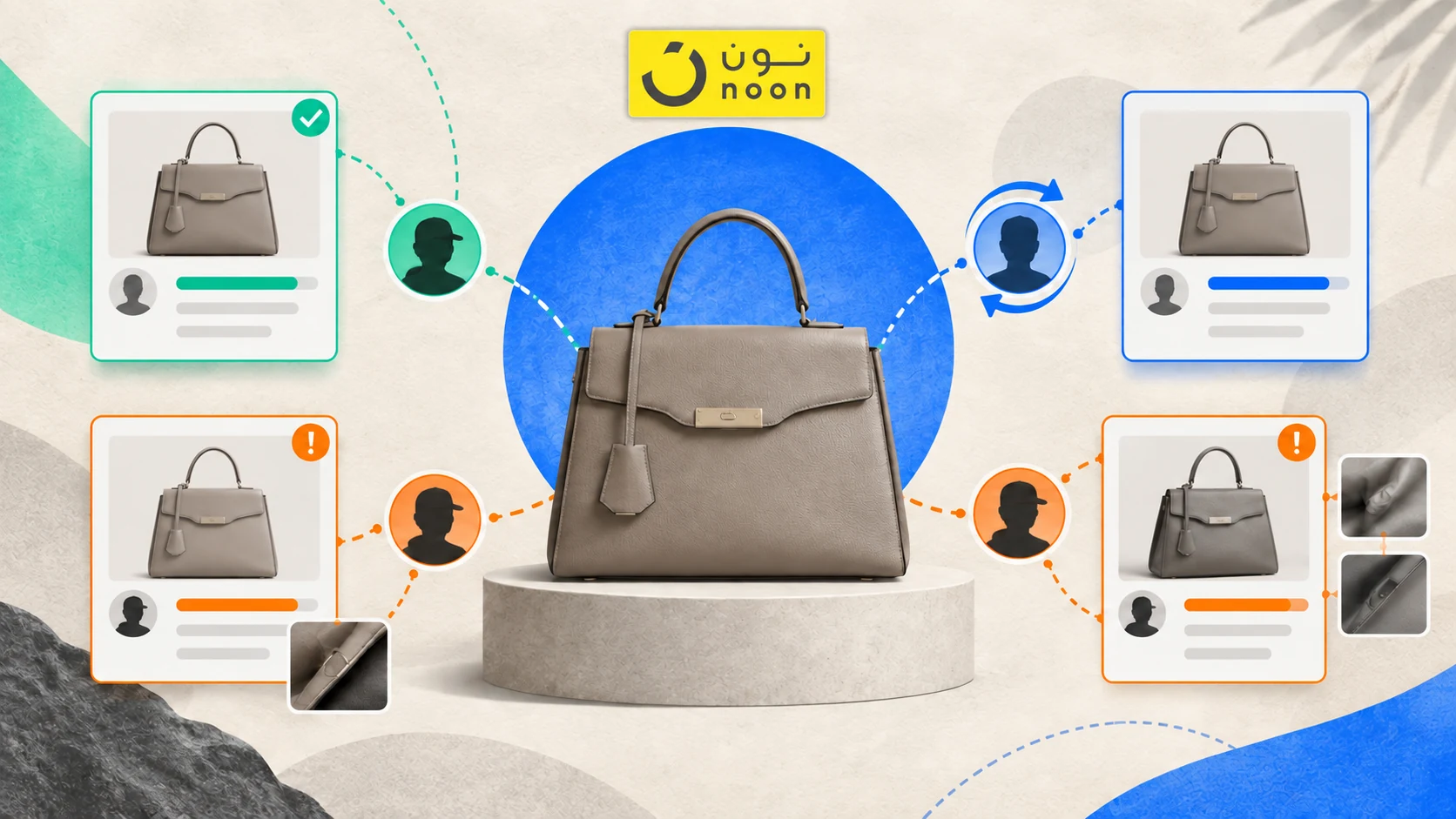
In the Gulf, noon and Amazon compete head to head. Amazon entered by rebranding Souq as Amazon.ae in 2019 and as Amazon.sa in 2020, while noon sells across the UAE, Saudi Arabia and Egypt.
On paper, noon’s own seller policy is strict. Counterfeit listings are prohibited, and penalties include delisting, loss of selling privileges, referral to government authorities, legal action and fines starting at AED or SAR 200,000.
A platform policy is a tool the brand has to use, though, not monitoring done on its behalf. Someone still has to find the listing, show why it infringes and file a marketplace takedown.
Two competing platforms in one market also means sellers can move. A seller removed from one can keep trading on the other, so watching a single marketplace gives you half the picture.
What the 2026 UAE Fraud Rules Change

The UAE has also tightened the rules around the goods themselves. Cabinet Resolution No. 107 of 2026, the executive regulations under the country’s commercial fraud law, came into force on 13 August 2026.
Once a supplier is officially notified, it must stop selling and withdraw counterfeit or fraudulent goods within 24 hours. The rules cover e-commerce, and the ministry can notify online platforms so listings are withdrawn or carry warnings.
Detailed penalties had not been published as of early September 2026, so parts of this are still developing. The direction is clear, though: faster removal once an authority has a notification to act on.
That notification still depends on someone bringing evidence.

Selling into the Gulf without a clear view of your listings?
See what an online brand protection programme needs to track from day one.
Book a DemoWhy Premium Brands Feel This Differently
For a premium brand, the risk in the Gulf is less about volume and more about price position. A fake sold at a small discount to the genuine product does more damage than an obvious knock-off at a fraction of the price, because buyers have no reason to suspect it.
It also changes who is hurt first. The authorised distributor, who has paid for the brand’s launch in that market, loses sales well before the brand sees any drop in its own numbers.
That is one more reason to agree with distributors, in writing, how suspected fakes get reported and who acts on them.
What to Set Up Before the First Shipment
None of this needs a crisis to start. Most of it is easier to do before products reach a marketplace than after the first complaint.
1. Register the mark in every country you will sell in
Rights in the Gulf are territorial, and Saudi Arabia is first-to-file. Register in the UAE and Saudi Arabia before listing, not after a copy appears.
2. Record the brand with customs where goods enter
A customs recordal follows the registration. In Dubai, it cannot exist without a valid UAE certificate, so plan the two together.
3. Write down who is authorised to sell
List your distributors and the marketplace seller accounts that are genuinely yours, platform by platform. Without that list, nobody can tell a legitimate reseller from an infringer.
4. Capture a baseline across noon and Amazon
Record current listings, prices, images and sellers before launch. A new seller or a sudden price drop is only visible against something.
5. Agree who acts, and on what evidence
Decide whether the brand, the distributor or local counsel files each type of complaint, and what proof each route needs: a platform report, a customs action or a ministry notification.
How Truviss Puts the Setup to Work
Truviss is Acviss’s online brand protection solution, and the setup above is what it runs on. A brand onboards its trademarks, product images and authorised seller list, and Truviss monitors the online channels selected for it for listings that match or closely resemble them.
Flagged listings are prioritised, then reviewed by a person against the supporting evidence before anything is filed. The brand’s team decides which ones go forward as platform complaints or other action.
Each case and its outcome stay on record. That history is what a notification under the UAE’s new rules, or a repeat complaint against a seller who has moved platforms, depends on.
Registrations give you the right to act. Monitoring tells you when to use it.
From Takedowns to Rights
In India, marketplace brand protection grew up around the takedown. In the Gulf, it starts one step earlier, with the rights that make a takedown possible, and the new UAE rules push the next step towards evidence an authority can act on within a day.
Brands that set this up before their first shipment will spend their time acting on reports. Brands that wait will spend it proving they had the right to report at all.

Planning a launch in the Gulf?
Talk to Acviss about what an online brand protection programme should cover before your products reach marketplaces in the UAE and Saudi Arabia.
Book a Free DemoRelated reading
Online Brand Protection: The Complete Guide for D2C and Marketplace Brands
By the time a customer messages a brand asking “is this listing real?”, the counterfeit or impersonation has usually been live for weeks. On

Counterfeit vs Grey Market vs Unauthorized Sale: What’s the Difference?
A brand manager gets a complaint: a customer bought their product online, and it turned out to be “fake.” Except when the team pulls the lis
How to Remove Fake Product Listings from Amazon India in 2026
When brand managers discover fake versions of their products on Amazon India, the first instinct is often to treat every unauthorized listin