
In this article
- Why Amazon India Is a Major Counterfeit Channel
- Step 1: Enroll in Amazon Brand Registry India
- Step 2: Use Amazon’s Report Infringement Tool
- Step 3: File a DMCA or Trademark Complaint
- Step 4: Use Amazon Transparency for High-Risk SKUs
- Step 5: Escalate to Amazon Seller Support and Legal if Listings Persist
- The Re-Listing Problem: Why Removal Is Not Enough
- How Truviss Monitors Amazon India 24/7
- Frequently Asked Questions
Recent Posts
Brand Protection Mithileshkumar R NaikMay 19, 202612 min read
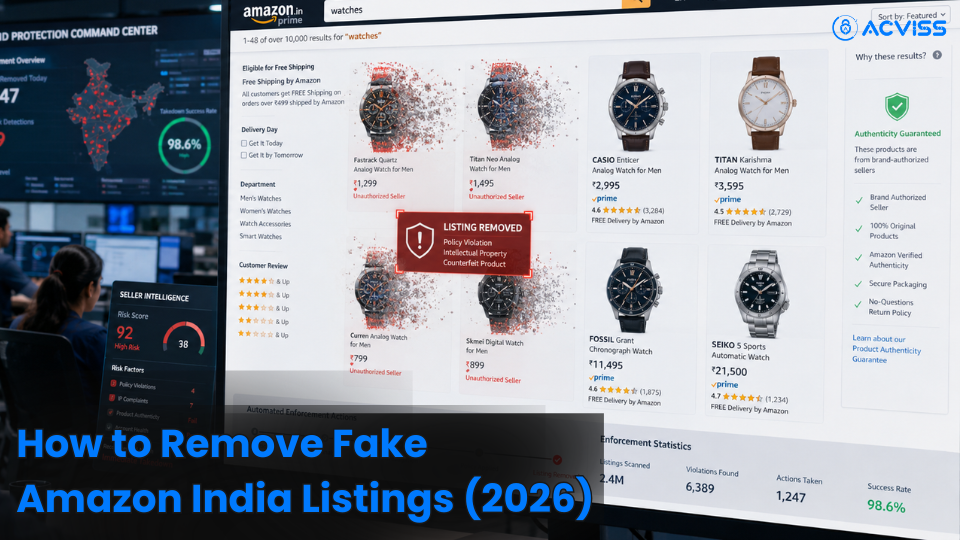
How to Remove Fake Product Listings from Amazon India in 2026
 Mithileshkumar R NaikMay 19, 202612 min read
TL;DR
- Amazon India’s Brand Registry and reporting tools give brands a formal path to remove fake listings, but finding every instance manually is slow.
- Each listing needs its ASIN identified and the right evidence submitted through Amazon’s process to get a fast takedown.
- Counterfeiters often relist quickly under different seller accounts, so ongoing monitoring matters more than a single takedown.
- Automated tools that scan continuously for new fake listings catch violations far faster than periodic manual searches.
 When brand managers discover fake versions of their products on Amazon India, the first instinct is often to treat every unauthorized listing as a counterfeiting problem. That instinct is understandable, but it leads to the wrong strategy if you do not first identify what you are actually dealing with. There are two distinct issues that look similar on the surface but require entirely different responses.
Counterfeit sellers are listing counterfeit listings for products that are not yours at all. They are using your brand name, your product images, and your trademark to sell cheap imitations to buyers who believe they are purchasing an authentic product. This is trademark infringement and fraud.
Unauthorized resellers are selling your actual, authentic products but doing so without your permission. They may be sourcing from grey-market channels, purchasing from your distributors and reselling at higher margins, or buying in bulk from other markets. The product is real, but the sale relationship is not one you authorized or control.
Both are damaging. Counterfeits harm your customers directly and expose your brand to liability. Unauthorized resellers undercut your pricing, damage relationships with authorized channel partners, and erode control over how your product is presented to buyers. But the enforcement tools for each are different, and conflating the two wastes time and goodwill with Amazon’s support teams.
This guide focuses primarily on counterfeit removal but covers the unauthorized seller problem where the processes overlap. It is written for brand managers dealing with fake product listings on Amazon.in in 2026.
When brand managers discover fake versions of their products on Amazon India, the first instinct is often to treat every unauthorized listing as a counterfeiting problem. That instinct is understandable, but it leads to the wrong strategy if you do not first identify what you are actually dealing with. There are two distinct issues that look similar on the surface but require entirely different responses.
Counterfeit sellers are listing counterfeit listings for products that are not yours at all. They are using your brand name, your product images, and your trademark to sell cheap imitations to buyers who believe they are purchasing an authentic product. This is trademark infringement and fraud.
Unauthorized resellers are selling your actual, authentic products but doing so without your permission. They may be sourcing from grey-market channels, purchasing from your distributors and reselling at higher margins, or buying in bulk from other markets. The product is real, but the sale relationship is not one you authorized or control.
Both are damaging. Counterfeits harm your customers directly and expose your brand to liability. Unauthorized resellers undercut your pricing, damage relationships with authorized channel partners, and erode control over how your product is presented to buyers. But the enforcement tools for each are different, and conflating the two wastes time and goodwill with Amazon’s support teams.
This guide focuses primarily on counterfeit removal but covers the unauthorized seller problem where the processes overlap. It is written for brand managers dealing with fake product listings on Amazon.in in 2026.
Why Amazon India Is a Major Counterfeit Channel
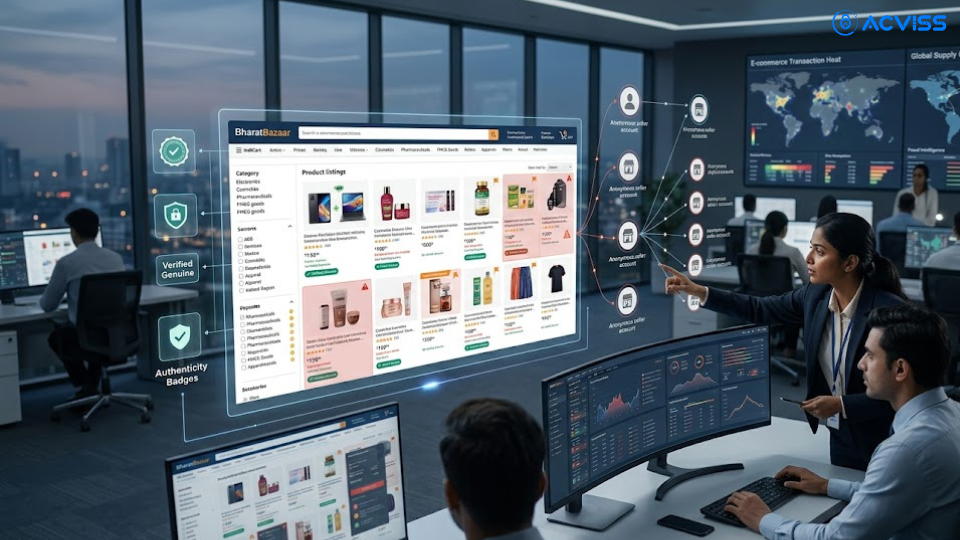 Amazon India is one of the country’s largest e-commerce platforms, with millions of sellers and hundreds of millions of product listings. Its marketplace model, which allows third-party sellers to list products alongside Amazon’s own inventory, creates a structure that bad actors can exploit, one channel among several covered in our overview of an anti-counterfeiting strategy.
Several factors make Amazon India a high-risk environment for counterfeiting:
Amazon India is one of the country’s largest e-commerce platforms, with millions of sellers and hundreds of millions of product listings. Its marketplace model, which allows third-party sellers to list products alongside Amazon’s own inventory, creates a structure that bad actors can exploit, one channel among several covered in our overview of an anti-counterfeiting strategy.
Several factors make Amazon India a high-risk environment for counterfeiting:
- Easy seller onboarding: Registering as a third-party seller on Amazon India requires relatively minimal documentation. Counterfeiters can set up an account, list under your brand, and be live within a short window.
- Cross-border sourcing: A significant portion of counterfeit goods sold on Indian e-commerce platforms originates from international supply chains, particularly from markets where manufacturing regulations differ. These products enter through informal import channels and land on platforms like Amazon India.
- Commingled inventory: Amazon’s Fulfilled by Amazon (FBA) program allows multiple sellers to ship the same product into shared warehouses. If one seller’s counterfeit inventory gets commingled with your authentic inventory, authentic buyers may receive fake products. This creates a customer experience problem that is hard to resolve quickly.
- High search visibility: Counterfeit listings often use your exact brand name and product keywords, appearing in search results directly alongside your authentic listings.
- Price-sensitive market dynamics: Indian buyers frequently filter by price. A counterfeit listed 25-40 percent below your authentic price looks like a deal to someone unfamiliar with your brand’s pricing standards.
Step 1: Enroll in Amazon Brand Registry India
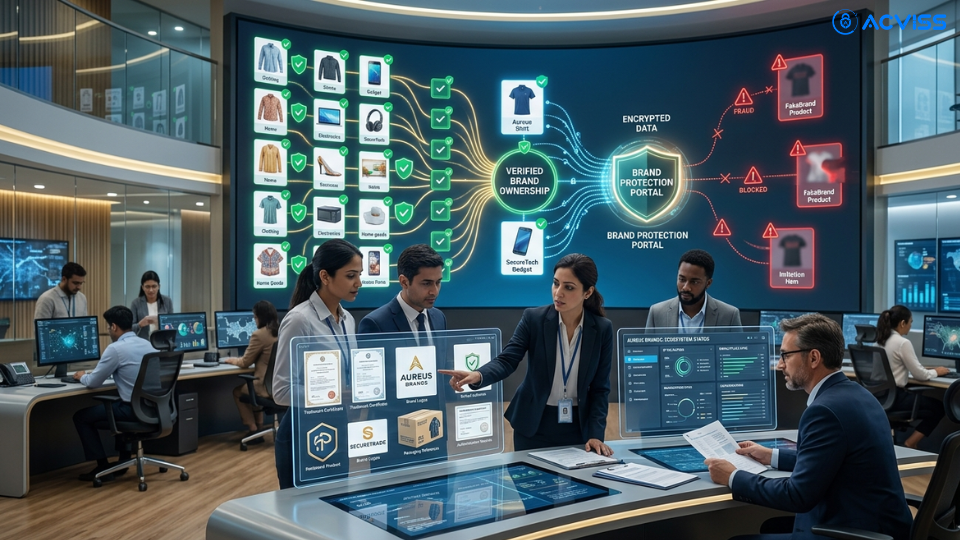 Amazon Brand Registry is your starting point for any serious enforcement effort on the platform. Without it, your options for reporting counterfeits and controlling your brand’s presence are significantly limited.
To enroll in Amazon Brand Registry India, you need:
Amazon Brand Registry is your starting point for any serious enforcement effort on the platform. Without it, your options for reporting counterfeits and controlling your brand’s presence are significantly limited.
To enroll in Amazon Brand Registry India, you need:
- A registered trademark in India with a word mark or image mark that appears on your products or packaging
- The trademark registration number issued by the CGPDTM (Controller General of Patents, Designs and Trade Marks)
- An active Amazon seller or vendor account registered in the same country as the trademark
- The ability to verify that you are the trademark owner or authorized representative
- Access to the Report a Violation (RAV) tool for submitting infringement reports
- The ability to add authorized sellers to your brand’s approved seller list
- Amazon’s Transparency program eligibility (covered in Step 4)
- Proactive listings protection, where Amazon proactively removes listings that violate your brand based on patterns it has learned from your previous reports
- A dedicated Brand Protection team point of contact for serious issues
Step 2: Use Amazon’s Report Infringement Tool
 Once you have Brand Registry access, the Report a Violation (RAV) tool is your primary mechanism for flagging counterfeit listings. Navigate to the Brand Registry portal at brandservices.amazon.in and access the “Report a Violation” section.
For each infringing listing, you will need to provide:
Once you have Brand Registry access, the Report a Violation (RAV) tool is your primary mechanism for flagging counterfeit listings. Navigate to the Brand Registry portal at brandservices.amazon.in and access the “Report a Violation” section.
For each infringing listing, you will need to provide:
- The product listing ASIN (Amazon Standard Identification Number), found in the product URL or under product details
- The type of infringement (counterfeit, trademark misuse, copyright infringement, etc.)
- A description of how the listing infringes your rights
- Supporting evidence (trademark certificate, images showing the difference between authentic and fake, test purchase results if available)
- If you have done a test purchase and can document the differences between the fake and authentic product, include photos side by side. This is the most compelling evidence for counterfeit reports.
- Be specific about which trademark right is being violated and provide the registration number. Vague complaints take longer to process.
- Submit multiple ASINs in a single report when the infringement involves the same seller across different listings.
- Keep records of every report submitted, including the report ID that Amazon assigns. You will need this for escalation.

See Truviss in action
See how Truviss automates fake listing takedowns on Amazon India.
Explore TruvissStep 3: File a DMCA or Trademark Complaint
In addition to the Report a Violation tool, Amazon accepts formal trademark complaints through its Infringement Report form and DMCA notices for copyright violations. If the counterfeiter is using your copyrighted product images, your original brand content, or your product descriptions verbatim, you can file a DMCA notice through Amazon’s designated agent. Amazon is required under the DMCA (which applies to its global operations) to respond to valid takedown notices by removing or disabling access to the infringing material. For trademark-specific complaints, use Amazon’s trademark complaint form (available through the Brand Registry help center or Amazon’s IP policy pages). You will need to provide:- Your trademark registration details including the registration number and registration country
- A description of the infringing use
- The ASIN or listing URL of the infringing product
- A statement of good faith, accuracy, and authority
Step 4: Use Amazon Transparency for High-Risk SKUs
Amazon Transparency is a product serialization program that adds an additional layer of authentication to your products before they are shipped to buyers. Each unit enrolled in Transparency gets a unique QR code applied at manufacturing. Amazon scans this code before shipping an FBA order. If the code is not present or does not match a valid code in Amazon’s database, the unit is flagged and not shipped. This is particularly valuable for your highest-risk SKUs: the products in your range that attract the most counterfeiting activity or carry the highest price points. Transparency does not prevent fake listings from appearing, but it prevents fake products from reaching buyers through FBA channels. Enrolling in Transparency requires:- Active Brand Registry enrollment
- Applying unique QR codes to each unit before shipping to Amazon’s warehouse (this needs to be built into your manufacturing or packaging process)
- Enrollment through Amazon’s Transparency program portal
Step 5: Escalate to Amazon Seller Support and Legal if Listings Persist
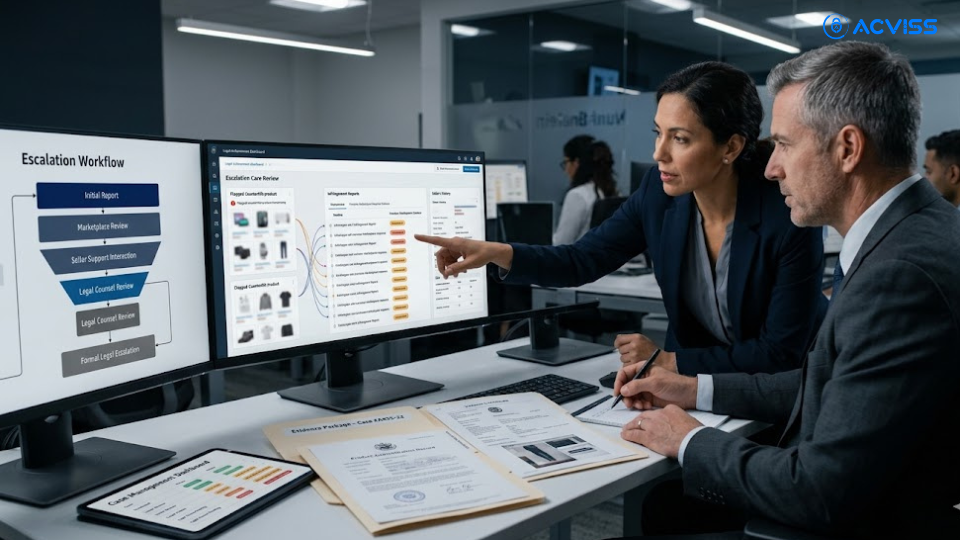 If a listing remains active after your Report a Violation submission, or if the same seller reappears after a takedown, escalation is necessary.
Within Amazon: Contact Amazon Seller Support and reference your original complaint ticket number. Request escalation to the Brand Protection team. If you are a large vendor or seller on the platform, engage your Amazon account manager directly. Document every interaction with dates, reference numbers, and names of support agents when available.
Send a formal legal notice: Have your legal counsel send a cease-and-desist notice to Amazon India (Amazon Seller Services Private Limited) under the Information Technology Act, 2000. As an intermediary under the IT Act, Amazon has a legal obligation to act on credible IP complaints that meet the requirements specified under the Act’s intermediary guidelines. A formal legal notice triggers a compliance obligation that cannot be dismissed as easily as a standard support ticket.
Pursue the seller directly: If you can identify the seller’s business details through the listing (GST number visible on tax invoices, business name in seller profile), you can send a legal notice directly to the seller. For serious cases involving large-scale counterfeiting operations, pursue civil action under the Trade Marks Act, 1999 and criminal complaints with the cybercrime authorities.
If a listing remains active after your Report a Violation submission, or if the same seller reappears after a takedown, escalation is necessary.
Within Amazon: Contact Amazon Seller Support and reference your original complaint ticket number. Request escalation to the Brand Protection team. If you are a large vendor or seller on the platform, engage your Amazon account manager directly. Document every interaction with dates, reference numbers, and names of support agents when available.
Send a formal legal notice: Have your legal counsel send a cease-and-desist notice to Amazon India (Amazon Seller Services Private Limited) under the Information Technology Act, 2000. As an intermediary under the IT Act, Amazon has a legal obligation to act on credible IP complaints that meet the requirements specified under the Act’s intermediary guidelines. A formal legal notice triggers a compliance obligation that cannot be dismissed as easily as a standard support ticket.
Pursue the seller directly: If you can identify the seller’s business details through the listing (GST number visible on tax invoices, business name in seller profile), you can send a legal notice directly to the seller. For serious cases involving large-scale counterfeiting operations, pursue civil action under the Trade Marks Act, 1999 and criminal complaints with the cybercrime authorities.
The Re-Listing Problem: Why Removal Is Not Enough
This is the most important thing to understand about counterfeit enforcement on Amazon India, or any marketplace: getting a listing removed does not solve the problem. It solves today’s problem. Counterfeit seller networks are designed for resilience. When Amazon removes a listing or suspends a seller account, the operator typically:- Creates a new seller account under a different name or business entity
- Relists the product with slightly modified images or a different title to avoid triggering the same detection signal
- Distributes listings across multiple seller accounts to reduce the impact of any single removal
How Truviss Monitors Amazon India 24/7
Truviss, Acviss’s online brand protection platform, runs continuous monitoring across Amazon India and more than 5,000 other marketplaces. It uses a combination of brand name matching, image recognition, and pricing signal analysis to detect infringing listings as they appear, not after a customer complaint or a manual search. When a potential infringement is detected, it is flagged in your dashboard and takedown actions are initiated without requiring your team to handle each case individually. For brand managers who have reached the limits of what manual enforcement can achieve, this kind of automated monitoring changes the economics of brand protection. Instead of dedicating team resources to a process that never ends, your team focuses on strategic decisions while the enforcement pipeline runs in the background. If you want to understand what this looks like for your specific product catalog and risk profile, you can book a demo with the Acviss team here.Frequently Asked Questions
How long does it typically take for Amazon India to remove a counterfeit listing?
For reports submitted through Brand Registry with clear evidence, Amazon typically responds within 3-7 business days. In practice, the timeline varies based on the quality of your submission, the current volume of reports Amazon is processing, and whether the seller disputes the complaint. Strong documentation consistently produces faster results. Escalated cases involving legal notices can move faster.Does Amazon Brand Registry guarantee that my products will be protected from counterfeits?
No. Brand Registry significantly improves your ability to detect and remove counterfeits, and Amazon’s proactive protection tools do catch some infringements before you report them, but it is not a guarantee. New fake listings can still appear, particularly if counterfeiting activity in your category is high. Brand Registry is the essential foundation, but it works best when combined with active monitoring and a consistent enforcement process.A seller is listing my authentic product without my permission. Is this the same as counterfeiting?
No, these are different issues. An unauthorized reseller selling authentic products is not necessarily engaging in trademark infringement or counterfeiting, particularly under the “first sale” doctrine. However, if the reseller is making claims about the product that are false, misrepresenting the warranty terms, or violating your MAP (minimum advertised price) policy, you have grounds for action. For unauthorized resellers, Amazon’s Brand Registry allows you to identify and track seller activity. Removing them requires a different legal and contractual approach than counterfeit removal.Can Amazon remove counterfeit listings if I do not have a registered trademark?
Brand Registry requires a registered trademark, which is also the basis for most trademark infringement complaints. Without a registration, your options are limited to copyright complaints (if you have original copyrighted content being misused) and Amazon’s general policy violation reporting. Getting your trademark registered should be a priority if you do not yet have one. The process through India’s CGPDTM typically takes 18-36 months for full registration, which is why early filing matters.Stop counterfeits on Amazon India before they damage your brand.
The window between a fake listing going live and your customers buying it can be hours. Truviss monitors Amazon India and 5,000+ other marketplaces around the clock so your team does not have to. Talk to an Acviss expert about what continuous enforcement looks like for your brand. Book a Free Demo with Acviss
Get fake listings off Amazon faster
Book a free demo and see how Truviss monitors Amazon India for counterfeit listings.
Book a Free DemoMore like this on:E-Commerce Marketplaces
Related reading

How to Reserve and Register a Trademark for Your Brand
A brand name isn’t protected just because you’re using it. Until it’s registered as a trademark, anyone else can file for
How to Remove Counterfeits on Meesho, IndiaMart and Myntra
Most brand protection conversations in India focus on Flipkart and Amazon, even as OECD research shows counterfeit trade increasingly moves through smaller and less-monitored online channels. Those platforms deserve attention, but