
In this article
Recent Posts
Brand Protection Arun KrishnanFeb 18, 20256 min read
The True Cost of Counterfeits: Why Brand Protection is Important
 Arun KrishnanFeb 18, 20256 min read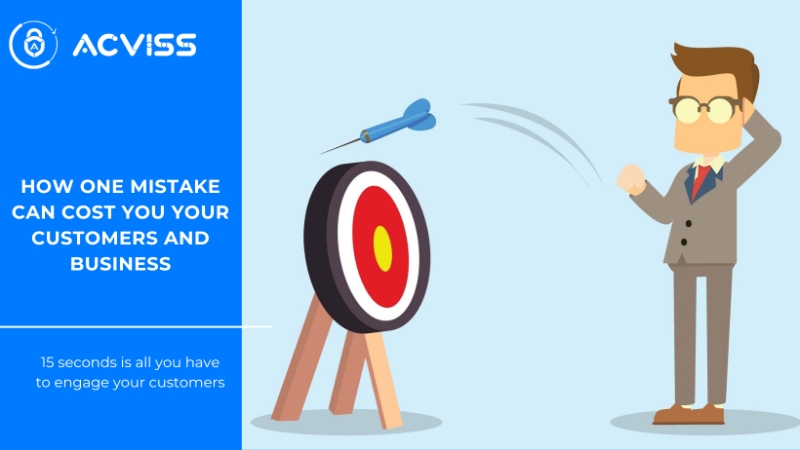
TL;DR
In today’s fast-paced digital world, brands face a critical challenge: capturing and retaining customer attention in just 15 seconds. However, this short attention span has far-reaching implications, especially in the realm of product authentication and brand protection. As consumers make quick decisions, the risks associated with counterfeit products have never been higher.
- Counterfeiting costs brands far more than the price of a single fake unit: lost sales, fraudulent warranty claims, and long-term reputational damage all compound.
- Consumers who unknowingly buy a counterfeit blame the brand for the poor experience, not the counterfeiter.
- Brand protection isn’t just a legal or PR concern, it directly affects customer retention and lifetime value.
- Product-level authentication gives brands a way to stop counterfeit damage before it reaches the customer.
Knowing your buyer’s behaviour
Time is the ultimate essence: Smartphones and high-speed internet connections have changed the browsing experience. People have too much content to look at in a short period. So, your customers do not have the time for lengthy authenticity verification processes. Has someone created a lookalike website for your brand? Are there fake business pages of your brand on social media? Chances are that your buyers will not pay attention to the minute details that will give away a replica of your product.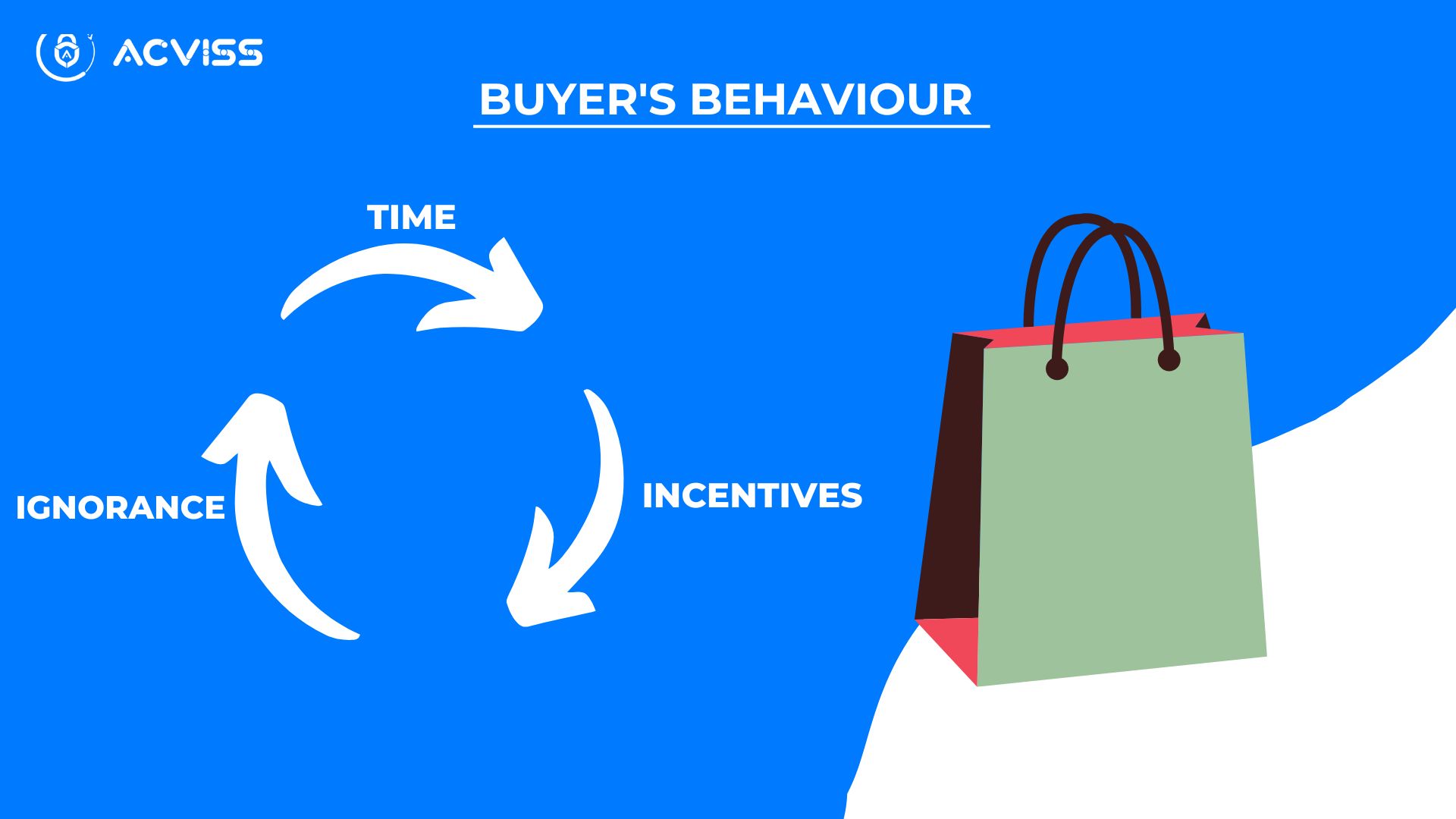 Most customers indeed value online reviews. A lot of buying decision is based on customer reviews. But fake reviews are a real problem.
Luring effect of discounts and undercutting prices: Offers and discounts are essential for customer engagement and marketing. But one of the appealing features of counterfeit products is that they are sold for very cheap. As a result, fake products and replicas may lure unsuspecting customers with suspicious offers and discounts. People get carried away with such offers and ignore the quality and authenticity of the products.
Most customers indeed value online reviews. A lot of buying decision is based on customer reviews. But fake reviews are a real problem.
Luring effect of discounts and undercutting prices: Offers and discounts are essential for customer engagement and marketing. But one of the appealing features of counterfeit products is that they are sold for very cheap. As a result, fake products and replicas may lure unsuspecting customers with suspicious offers and discounts. People get carried away with such offers and ignore the quality and authenticity of the products.
The Hidden Dangers of Counterfeits in the Digital Marketplace
1. The Deceptive Speed of Online Shopping
With smartphones and high-speed internet, the browsing experience has transformed dramatically. Consumers have access to vast amounts of content in short periods, leaving little time for thorough authenticity verification. This speed creates opportunities for counterfeiters to exploit:- Lookalike websites mimicking genuine brands
- Fake business pages on social media platforms
- Subtle differences in product details that go unnoticed
2. The Lure of Discounts and Undercut Prices
While offers and discounts are essential marketing tools, they’re also a favoured tactic of counterfeiters. Fake products often entice unsuspecting customers with suspiciously low prices, leading to:- Impulse purchases without proper quality checks
- Overlooking red flags in the pursuit of a “good deal”
- Compromised product safety and quality
3. The Knowledge Gap in Identifying Fakes
Even when consumers intend to purchase authentic products, they may lack the knowledge to spot counterfeits. Modern replicas are increasingly sophisticated, with differences too subtle for the average buyer to detect.
See Certify in action
See how Certify makes every product unit verifiable, cutting off counterfeits at the source.
Explore CertifyThe True Cost of Counterfeits to Brands
Ignoring the issue of counterfeits is a critical mistake for brands. The costs extend far beyond immediate revenue loss: Our guide to five steps to protect your brand covers what a proactive response actually looks like.- Loss of Customer Trust and Brand Reputation: Counterfeit products compromise quality and safety, leading to negative reviews and damaged brand image (OECD/EUIPO, 2019).
- Online Brand Abuse: Without proper brand protection measures, fake listings and lookalike products can appear on undesirable websites, tarnishing the brand’s reputation.
- Undetected Quality Issues: Without effective track and trace technology, brands may struggle to identify the source of negative feedback, mistaking counterfeit issues for genuine product problems.
- Customer Backlash: Consumers often blame the original brand for not taking action against counterfeits, leading to loss of loyalty and increased customer service costs.
- Supply Chain Disruption: Counterfeit products can damage relationships with distributors, wholesalers, and retailers, who may feel cheated by undercut prices.
Implementing Effective Anti-Counterfeiting Strategies
To combat these challenges, brands must prioritize anti-counterfeiting measures as part of their core business strategy:- Invest in Track and Trace Technology: Implement reliable systems to monitor your products throughout the supply chain, ensuring authenticity from production to point of sale.
- Utilize Product Authentication Tools: Employ technologies like QR codes, NFC tags, or blockchain solutions to allow customers to easily verify product authenticity.
- Proactive Online Brand Protection: Use automated tools to detect and take down fake listings, websites, and social media profiles that infringe on your brand.
- Educate Consumers: Provide clear guidelines on how to identify authentic products and report suspected counterfeits.
- Collaborate with Stakeholders: Work closely with suppliers, distributors, and retailers to create a united front against counterfeiters.
Frequently Asked Questions
1. What are the most effective anti-counterfeiting technologies available today?
Several effective technologies are proving highly effective in the fight against counterfeiting:- QR codes with secure encryption
- NFC (Near Field Communication) tags
- Blockchain-based track and trace systems
- Holographic seals
- DNA tagging
- AI-powered image recognition for online brand protection
2. How can small to medium-sized businesses protect their brand from counterfeits?
Small to medium-sized businesses can take several steps to protect their brand:- Register trademarks and patents
- Implement basic track and trace solutions
- Use tamper-evident packaging
- Educate customers on how to identify authentic products
- Monitor online marketplaces regularly
- Collaborate with e-commerce platforms to remove fake listings
- Consider joining industry associations that fight counterfeiting
3. What are the legal implications for businesses that fail to protect their customers from counterfeit products?
The legal implications can be significant:- Potential liability for customer harm caused by counterfeit products
- Risk of losing trademark rights if not actively protected
- Possible regulatory fines for inadequate consumer protection measures
- Damage to brand reputation leading to loss of business
4. How does product authentication benefit customers, and how can brands encourage its use?
Product authentication benefits customers by:- Ensuring product safety and quality
- Protecting against potential health risks from fake product
- Guaranteeing the full brand experience and warranty coverage
- Making authentication processes simple and quick (e.g., easy-to-scan QR codes)
- Offering rewards or loyalty points for verifying products
- Educating customers about the risks of counterfeits
- Providing clear instructions on how to authenticate products
- Integrating authentication into the overall brand experience
5. What emerging trends in anti-counterfeiting should brands be aware of for the future?
Several emerging trends are shaping the future of anti-counterfeiting:- Integration of IoT (Internet of Things) devices for real-time tracking
- Use of artificial intelligence for predictive analysis of counterfeiting risks
- Increased adoption of blockchain for transparent and immutable supply chain records
- Development of “smart packaging” that can communicate with smartphones
- Greater collaboration between brands, technology providers, and law enforcement
- Rising consumer awareness and demand for product authenticity
- Potential for stricter regulations and penalties for counterfeiting

The real cost of counterfeits is bigger than lost sales
Book a free demo and see how Certify protects your brand’s revenue and reputation.
Book a Free DemoMore like this on:Brand Protection
Related reading

How to Reserve and Register a Trademark for Your Brand
A brand name isn’t protected just because you’re using it. Until it’s registered as a trademark, anyone else can file for
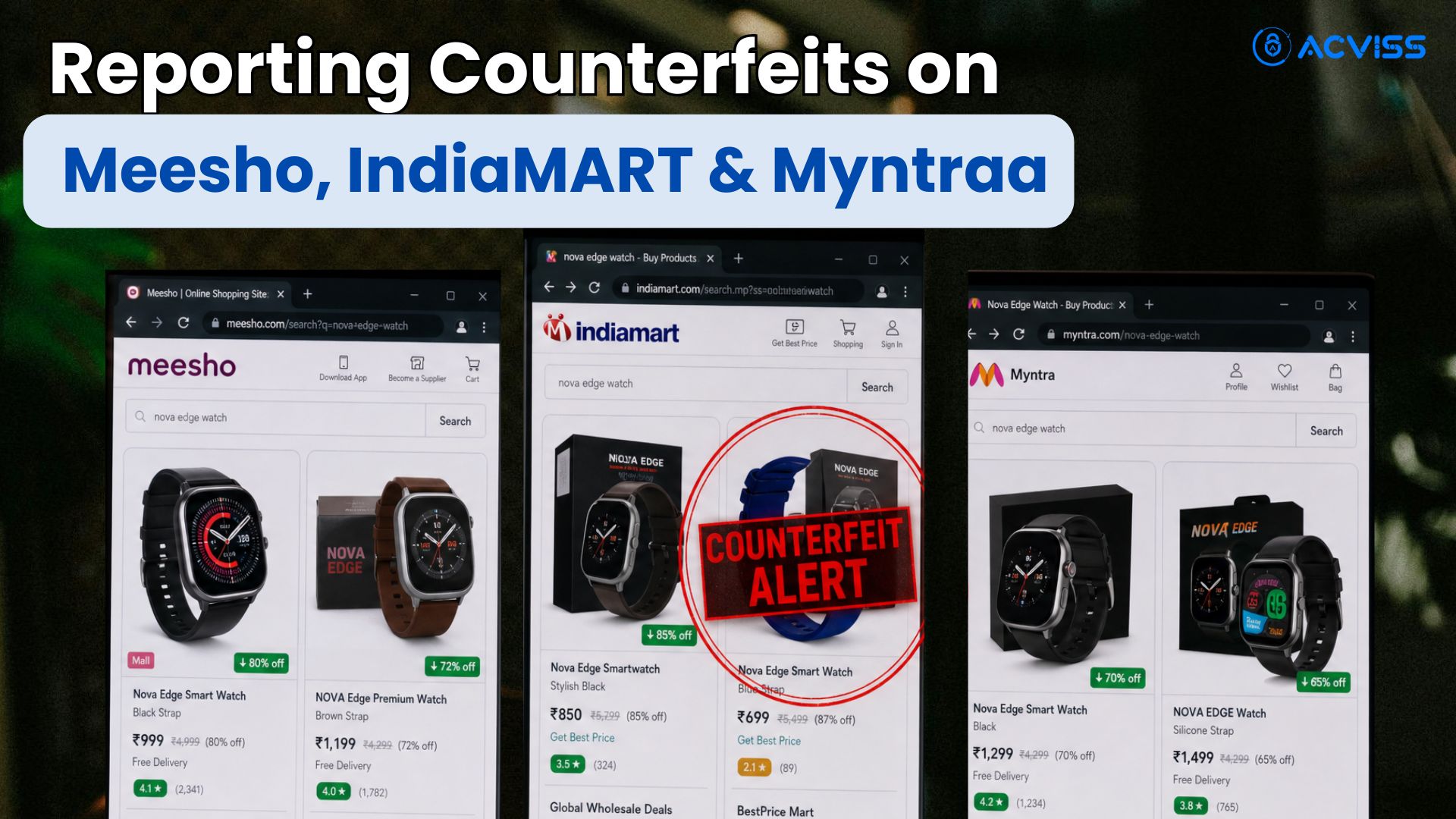
How to Remove Counterfeits on Meesho, IndiaMart and Myntra
Most brand protection conversations in India focus on Flipkart and Amazon. Those platforms deserve attention, but