
In this article
Recent Posts

TL;DR
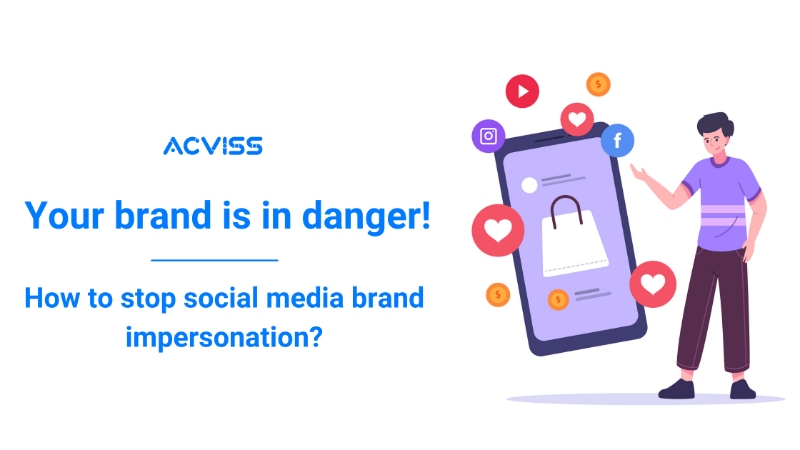
Social media is a sea of information. With Facebook alone having data of 2.7 billion active users, social media knows everything! How much time does your target audience spend viewing certain kinds of ads? What kind of movies and music do they prefer? With little research, you can even know the political view of your customers. No wonder social media has become more than a platform for socializing!- Social media’s massive reach, billions of active users across Facebook, Instagram, TikTok, and Twitter, makes it just as attractive to counterfeiters and impersonators as it is to legitimate brands.
- Both large and small brands are vulnerable: customers trust brand value, not company size, so any brand with a social presence is a target for identity theft.
- Brand impersonation shows up as phishing attacks, fake pages/websites mimicking a brand, and subtle tactics like fake news or unauthorized endorsements.
- Manual monitoring can’t keep pace with how fast fake pages and ads appear; AI/ML-enabled tools like Truviss provide real-time detection and alerts instead.
Entertainment to infotainment: social media has evolved to be a commercial platform
When brands first started social media marketing, they used ‘push marketing’ strategies. Social media users were once using the platform for casual browsing and entertainment. But today, people scroll through the social media pages of their brands to buy. Besides, social media offers granularity for target marketing. So brand protection is not only about your company. It is also about protecting the information of your customers and followers.Reachability is beyond imagination. What does it mean for brand impersonation and protection?
The reachability of social media is alluring. Social media marketing is as tempting for legitimate brands as for counterfeiters. Brand impersonation has become rampant due to the reach of social media.Never have brands had the opportunity to target more than a billion users with a single ad. Let’s look at the user statistics as of April 2021.- About 2.7 billion active users are on Facebook.
- Once an image-sharing platform, Instagram has become the birthplace of influencer marketing. Gaining huge popularity over the recent years, Instagram has 1.3 billion active users.
- If your customers love TikTok, your brand can also enjoy using it. TikTok boasts of about 730 million active users.
- The microblogging platform ‘Twitter’ has become a tool for engaging with customers. It makes sense because Twitter has 400 million active users.

See Truviss in action
See how Truviss scans social platforms in real time to catch impersonation before it spreads.
Explore TruvissSocial media strategy needs a brand protection strategy
Experts in anti-counterfeit technology say that there are two myths about brand protection:- Large brands believe that they are too big to get harmed by brand impersonation on social media. But customers do not know your leaders, promoters, or manufacturers. They are not interested in your business model. The only thing that your customers trust is your brand value. Having many followers on social media makes your brand vulnerable to identity theft. Counterfeiters see an opportunity to exploit the vast user database you have. But what they also use and rob you of is your customer’s trust factor.
- Small brands see themselves as too insignificant to be targeted by fraudsters. Remember, you may have a small presence on social media. But the internet is a vast place with many blind spots. Any incident of brand impersonation can impact your loyal customers.
Understanding brand impersonation and its types:
If you are a famous brand, you will have fan pages, parody accounts, and more. But these are not examples of brand impersonation. Brand impersonation is an identity theft of any element of your brand, with an intent to commit fraud. India’s CERT-In tracks this as a growing category of reported cyber incidents. The entry bar and criteria are easy for social media platforms. So anyone with internet access can create a social media account. The laws about cybercrimes are now evolving, but a lot needs to be still done. Ambiguity in regulations aids brand impersonation.- Phishing attacks: About 74% of consumers make buying decisions on social media. About 31% of buyers search for the products they are looking for on social media. Gone are the days when users were scared about giving their payment details. Since data is precious, counterfeiters abuse user data.
- Explicit brand impersonation: Have you noticed some weird comments on your official campaigns? Are they trying to hijack buyers? Fraudsters use sophisticated ways to create fake brand pages and websites. With aggressive and targeted marketing, fraudsters can lure your loyal customers away. Beyond unethical marketing practices, brand impersonation makes way for counterfeit products.
- Subtle tactics of impersonation: Your brand is always under the threat of fake news. Fraudsters can also use your brand to endorse their products.
Brand impersonation has become sophisticated, but so have brand-protection strategies.
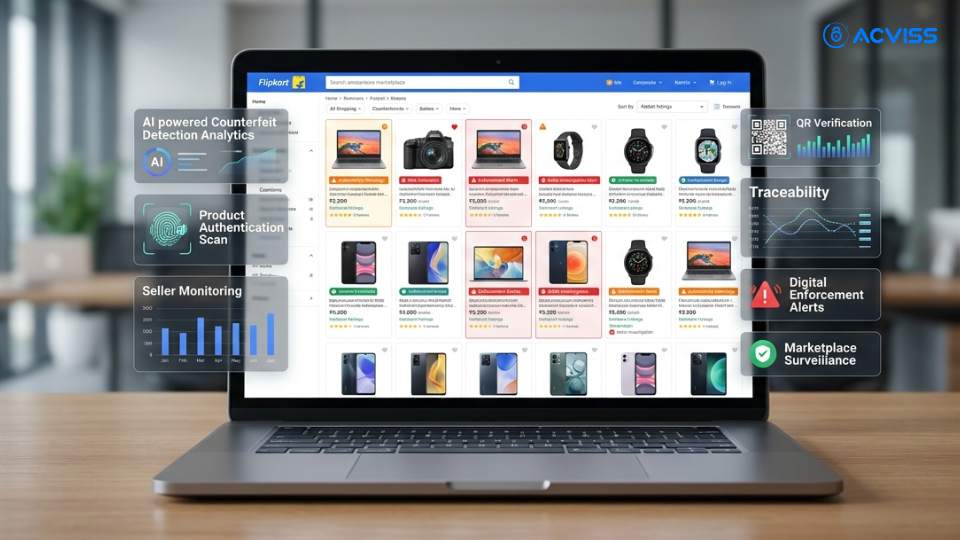
Companies can use AI and ML-enabled tools to automate brand protection. With track and trace technology, automated tools make real-time monitoring easy. With real-time alerts, brands can tackle social media impersonation before impacting them.Truviss by ACVISS takes in the brand data and starts scanning the internet. It then creates a listing of all your products, domains, and apps. With Truviss, you can get real-time alerts of brand impersonation across the internet.
Stop brand impersonation before it costs you customers
Book a free demo and see how Truviss monitors social media for fake pages, phishing, and impersonation.
Book a Free DemoMore like this on:Brand Protection