

In this article
- Brand Monitoring Finds Signals. Intelligence Explains Them.
- Why Alert Volume Is a Poor Measure of Protection
- Counterfeiters Do Not Operate in Silos
- The Supply Chain Is Part of the Intelligence Picture
- Online Brand Monitoring Needs to Become Investigative
- Where Truviss Fits: From Online Brand Monitoring to Brand Intelligence
- What Should Enterprises Look for in a Brand Protection Platform?
- Monitoring Is a Capability. Intelligence Is an Operating Model.
Counterfeit Intelligence vs Brand Monitoring: Why They Aren’t the Same Thing
 Arun KrishnanSep 3, 20269 min read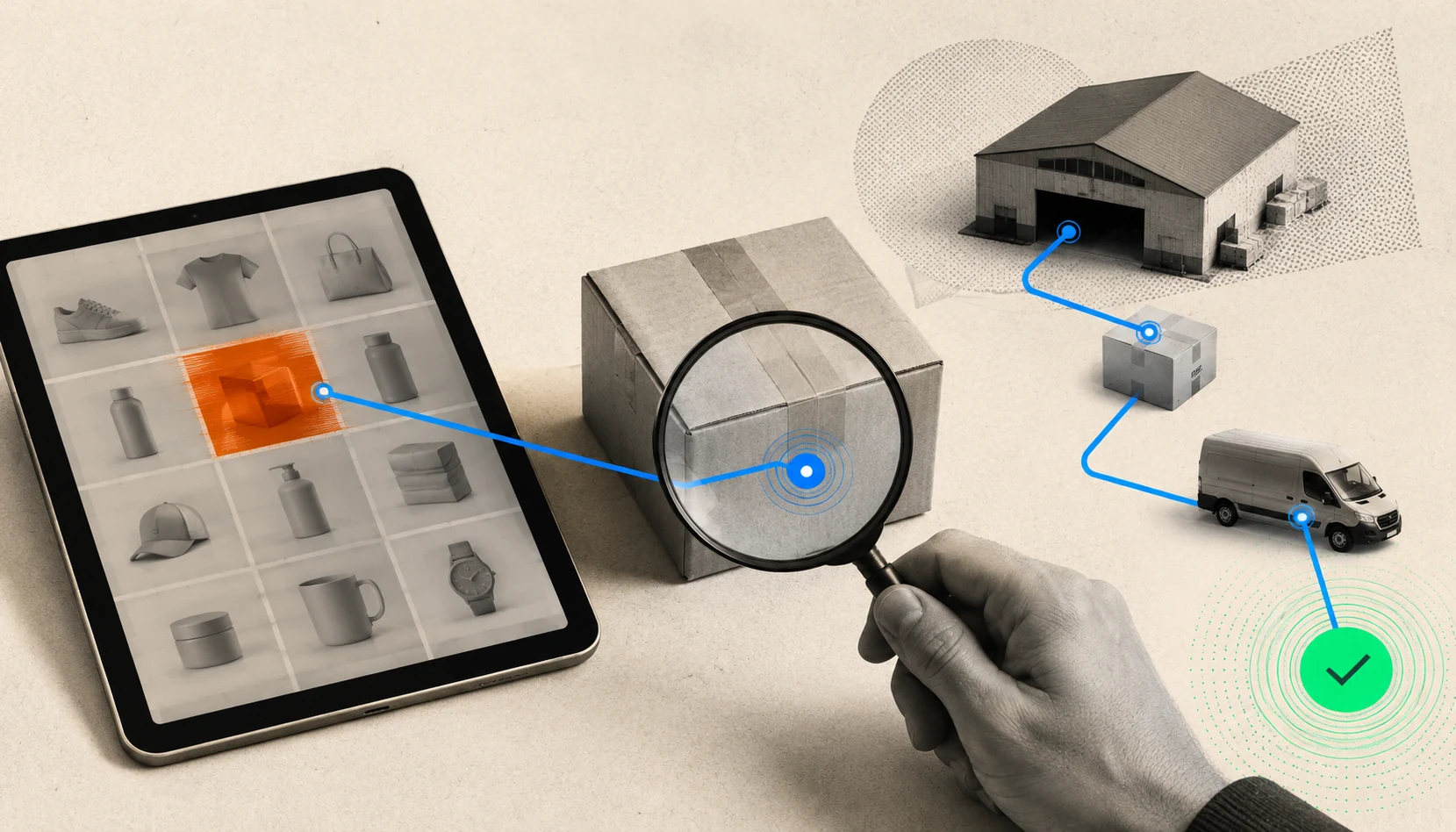
TL;DR
- Brand monitoring finds suspicious signals; counterfeit intelligence determines what they mean.
- Alert volume is not protection performance unless threats are validated and prioritised.
- Connected evidence reveals seller networks, distribution routes, and repeat activity across channels.
- Truviss combines monitoring, investigation, enforcement, and continuous learning.
A brand can know that its name is being misused online and still have very little idea about the threat behind it. A monitoring platform may identify a suspicious marketplace listing, a lookalike domain or a social media account, but that alert alone does not explain whether the activity is isolated, commercially significant, connected to a wider counterfeit network, or worth immediate enforcement.
That distinction matters because digital brand abuse is no longer limited to individual fake listings. Counterfeiters increasingly operate across marketplaces, social platforms, websites, advertisements and physical supply chains, using repeated assets, seller accounts and distribution routes. The operational question has therefore moved beyond “What is using our brand?” to “What is happening, who is behind it, and what should we do next?”
Brand Monitoring Finds Signals. Intelligence Explains Them.
Traditional brand monitoring is primarily a visibility function. It searches defined digital environments for references to a brand, product, trademark, logo or other protected asset and generates alerts when potentially relevant activity is detected.
That remains important. A business cannot investigate threats it cannot see.
The problem begins when organisations treat detection as equivalent to understanding. A search result is not automatically a threat, and a large volume of alerts does not necessarily indicate an effective protection programme.
For example, a monitoring system might identify:
A seller offering a product using a protected brand name
A domain that resembles the company’s official website
An unauthorised social media account
A mobile application using the company’s branding
A paid advertisement directing customers to an unfamiliar website
Each is a useful signal. None, by itself, establishes the full risk.
Counterfeit intelligence adds context around those signals. It attempts to determine intent, relationships, scale, business impact and the appropriate response. This can involve combining automated detection with validation, historical activity, seller behaviour, product information, domain relationships, geographic indicators and other intelligence.
The difference can be expressed simply:
| Brand Monitoring | Counterfeit Intelligence |
|---|---|
| Finds potentially relevant activity | Determines what the activity means |
| Generates alerts | Validates and contextualises threats |
| Looks at individual occurrences | Connects related occurrences |
| Measures visibility | Measures risk and impact |
| Supports investigation | Directs investigation and enforcement |
| Often produces raw data | Produces actionable intelligence |
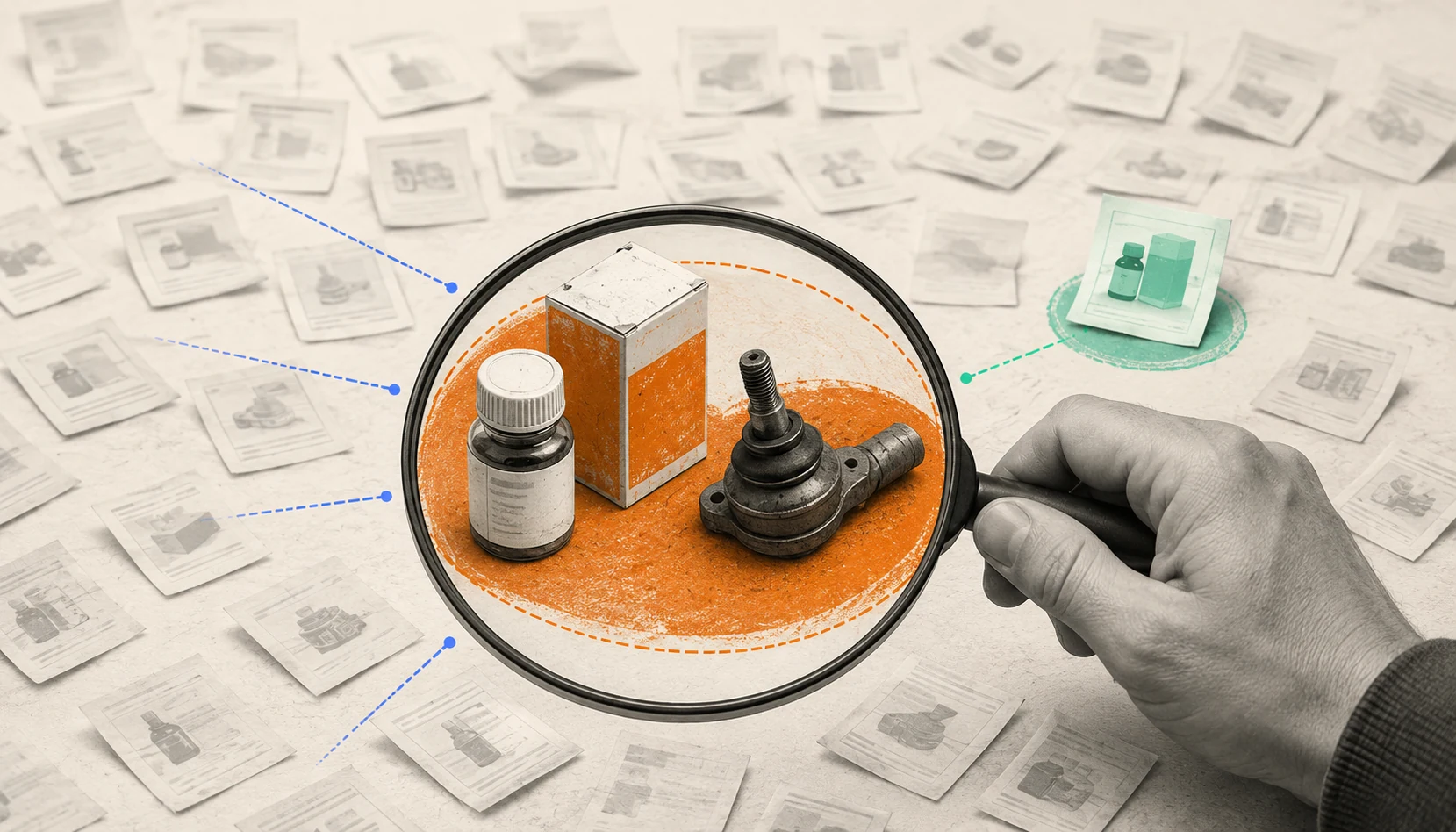
This is particularly important for brands operating across multiple digital channels. One counterfeit listing may look insignificant until investigators discover that the same product images, descriptions, contact details or seller behaviour appear across dozens of listings and domains.
The individual alerts are separate. The threat is not.
Why Alert Volume Is a Poor Measure of Protection
One of the easiest mistakes in online brand protection is to measure programme performance by the number of threats detected.
It sounds impressive to report thousands of infringements. Operationally, however, the more useful questions are different:
How many were genuine threats? How quickly were they validated? Which ones represented the greatest commercial or consumer risk? How many were removed? And did the activity reappear elsewhere?
A large alert feed can actually become a liability if internal teams have to manually determine which results are legitimate.
This creates alert fatigue. Legal, compliance, security and brand teams spend time reviewing authorised distributors, legitimate resellers, news coverage and unrelated mentions while more consequential threats compete for attention.
An intelligence-led programme therefore needs prioritisation.
A counterfeit pharmaceutical listing, for example, may warrant a fundamentally different response from an unauthorised seller offering a low-value accessory. Similarly, a fake automotive component can carry substantially greater safety implications than a misleading social media page.
The objective is not to find everything with equal urgency. It is to identify what matters most and why. Dark-store inventory for quick-commerce is one channel that needs exactly this kind of prioritisation, covered in the quick-commerce dark-store blind spot.
Counterfeiters Do Not Operate in Silos
Another limitation of conventional monitoring is that it can encourage an overly fragmented view of counterfeit activity.
A seller on one marketplace may appear unrelated to a social media account promoting the same product. A suspicious domain may appear to be a separate operation from an online advertisement. A distributor in one region may have no obvious connection to another seller several hundred kilometres away.
That does not mean there is no connection.
Counterfeit operations can reuse product photography, descriptions, contact information, payment infrastructure, domains, logistics arrangements and seller identities. They can also move between channels when an account or listing is removed.
This is where threat clustering becomes valuable.
Instead of investigating every listing independently, intelligence teams can look for relationships between:
- Seller and account identities
- Domains and websites
- Product images and descriptions
- Advertisements and landing pages
- Geographic locations
- Pricing patterns
- Distribution and logistics indicators
- Repeated counterfeit products
The result is a more useful picture of the operation rather than a collection of disconnected alerts.

This distinction becomes even more important as counterfeit trade increasingly intersects with legitimate supply chains. Protecting long-term customer lifetime value from that erosion is covered in rewards and re-engagement for D2C loyalty. The OECD and EUIPO estimate that counterfeit and pirated goods represented up to 2.3% of global trade in 2021, equivalent to approximately USD 467 billion. Their 2025 analysis also highlights how counterfeiters exploit e-commerce, small shipments and increasingly localised production and distribution models.
The Supply Chain Is Part of the Intelligence Picture
Online brand protection is sometimes treated as a purely digital problem. That can create a significant blind spot.
A counterfeit listing exists online, but the underlying product may be moving through a physical distribution network. Investigating the digital seller without understanding product origin, destination markets or supply-chain patterns can leave the root problem untouched.
This is particularly relevant in pharmaceuticals, automotive, electronics, agrochemicals and regulated manufacturing, where product authenticity can have safety and compliance implications.
The OECD and EUIPO’s research highlights another practical challenge: counterfeiters increasingly exploit fragmented supply chains and smaller shipments, making conventional enforcement and inspection more difficult.
For brand protection teams, this changes the value of intelligence.
A suspicious listing should potentially answer questions such as:
Where is the product being sold? Where could it have originated? Is the seller connected to other sellers? Is the same product appearing in another market? Is there evidence of legitimate inventory being diverted or a completely separate counterfeit supply chain?
That information can influence whether the response belongs with legal, marketplace enforcement, supply-chain operations, customs, compliance or security teams.
Online Brand Monitoring Needs to Become Investigative
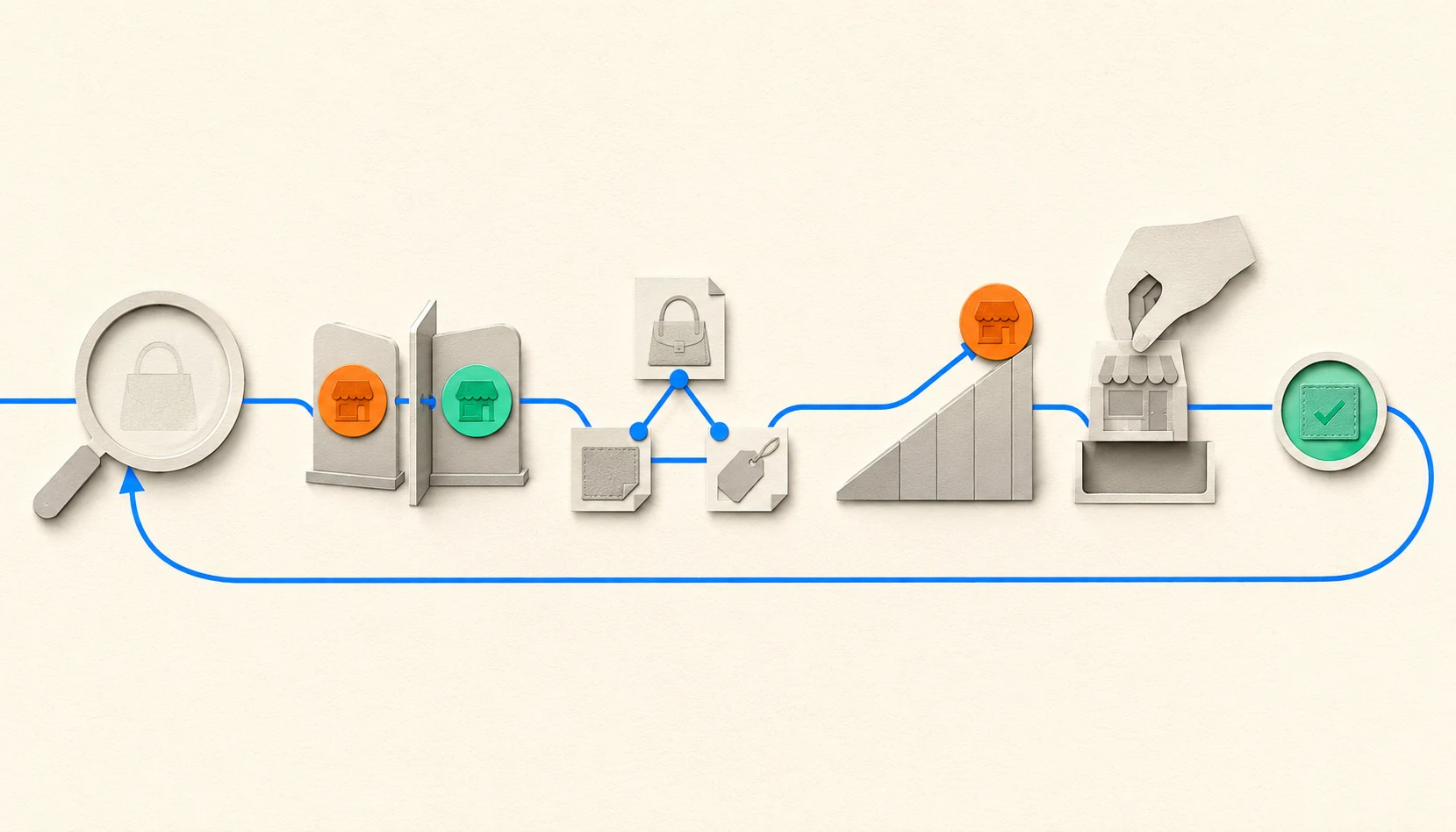
A mature programme can be viewed as a lifecycle rather than a monitoring dashboard.
1. Discovery
Search across marketplaces, websites, social platforms, advertisements, app ecosystems and other relevant digital environments.
The objective is broad visibility, including variations of brand names, misspellings, product names and other identifiers.
2. Validation
Not every match is an infringement.
AI can help classify and prioritise large volumes of results, but human validation remains valuable for ambiguous cases. The objective is to distinguish genuine threats from legitimate partners, authorised sellers and irrelevant matches.
3. Intelligence Analysis
Once a threat is confirmed, investigate the surrounding context.
Look for related domains, accounts, products, sellers, advertisements and historical activity. This is where isolated alerts can become an identifiable network.
4. Prioritisation
Rank threats according to commercial and operational impact.
Useful factors can include consumer safety, revenue diversion, brand exposure, scale, seller reach, product category, geographic significance and evidence of organised activity. In the most serious cases, that organised activity extends to funding broader criminal enterprises, including terrorism — covered in how counterfeiting funds terrorism.
5. Enforcement
Detection without action creates an enforcement gap.
Takedown requests, platform complaints, registrar actions, legal notices and other interventions need to be executed using the correct evidence and processes for each platform.
6. Continuous Learning
Every investigation should improve the next one. That kind of learning loop depends on tracking the right data points in the first place, covered in what a counterfeit detection system should actually examine.
Confirmed infringements, false positives, new seller patterns, emerging terminology and successful enforcement outcomes can feed back into detection models and investigation rules.
This is what separates a static monitoring system from an intelligence programme.
Where Truviss Fits: From Online Brand Monitoring to Brand Intelligence
This is the category where Truviss by Acviss is most relevant.
Truviss is designed around online brand protection, combining AI-driven detection with intelligence and investigation across the digital ecosystem. Rather than treating a suspicious listing as an isolated alert, the objective is to help brands understand and act on digital misuse of their identity and products.
Its value is particularly relevant where brands need visibility across multiple threat surfaces, including:
Counterfeit and unauthorised product listings
Lookalike or malicious domains, including sites distributing malicious software under a brand’s name (covered in preventing malicious software)
Fake social media profiles
Fraudulent advertisements
Unauthorised applications
Brand and product impersonation
An important part of this approach is AI brand protection that can recognise more than exact trademark matches. Brand abuse can involve misspellings, altered names, visual similarities and other variations designed to evade basic keyword searches.
However, detection is only the first layer.
The stronger proposition is the combination of monitoring, intelligence, investigation and enforcement. A brand protection team can use the resulting intelligence to determine which threats deserve immediate attention, investigate relationships between activities and build a more informed enforcement workflow.
This is especially useful when online activity needs to be connected to the physical product and supply chain.
For example, several apparently unrelated listings may promote the same counterfeit product using identical imagery and descriptions. Investigating those signals together can reveal a broader distribution pattern that would be difficult to identify when every alert is treated independently.
The same principle applies beyond counterfeiting. A fake website, impersonating social account or fraudulent advertisement can be part of a wider attempt to redirect customers, collect information or misuse brand trust.
The FTC reported that consumers lost USD 3.5 billion to imposter scams in 2025, with impersonation occurring through channels including social media, search results, text and other digital touchpoints.
The implication for enterprises is straightforward: brand protection increasingly overlaps with fraud prevention, cybersecurity, customer protection and revenue preservation.
Need intelligence beyond alert monitoring?
See how Truviss connects detection, investigation, prioritisation, and enforcement.
What Should Enterprises Look for in a Brand Protection Platform?
The technology evaluation should begin with the operational outcome, not the size of the dashboard.
Before selecting a solution, teams should assess whether it can answer five questions:
Can it find the threats?
Coverage should extend beyond a single marketplace or search engine and reflect the channels where customers actually discover products.
Can it distinguish threats from noise?
Detection without meaningful validation simply transfers the workload to internal teams.
Can it connect related activity?
The ability to identify patterns across sellers, domains, listings and accounts can be more valuable than detecting another isolated infringement.
Can it support enforcement?
A platform that identifies thousands of infringements but leaves every takedown to the customer creates a substantial operational burden.
Can intelligence improve over time?
Threat patterns change. New seller identities, domains, terminology and distribution methods emerge continuously. The system should therefore support continuous learning rather than operate as a static watchlist.
Monitoring Is a Capability. Intelligence Is an Operating Model.
The distinction between brand monitoring and counterfeit intelligence is ultimately not about choosing one technology over another.
Monitoring remains the foundation. Without discovery, there is no visibility.
But visibility alone does not tell an enterprise which threat represents the greatest risk, whether several incidents are connected, where the underlying operation may sit, or what action is likely to produce the best outcome.
That is why modern online brand protection increasingly needs to operate as an intelligence-led function.
For digital risk teams, the strategic shift is from counting alerts to understanding threats; from isolated listings to connected networks; and from detection to measurable enforcement outcomes.
As counterfeiters become more adaptive and digital fraud increasingly exploits trusted brand identities, organisations will need to connect online intelligence with product authentication, supply-chain visibility and investigation workflows. The brands best positioned to manage this risk will not necessarily be those that collect the most data, but those that can turn fragmented signals into decisions quickly.
Interested in strengthening your online brand protection strategy? Get in touch with us to explore how Truviss can help turn digital brand monitoring into actionable intelligence.
Turn fragmented alerts into decisions
Connect online monitoring with counterfeit investigation and enforcement through Truviss.
Related reading
Best Sproxil Alternatives for Product Authentication (2026)
Read the latest Acviss guidance on choosing and operating modern brand protection.
Best Scantrust Alternatives for Secure QR Authentication (2026)
Read the latest Acviss guidance on choosing and operating modern brand protection.