
- Trademark, copyright, and company registration are not the same thing
- How trademark reservation works globally
- Registering a trademark in India, step by step
- Registering a clothing brand name specifically
- Common reasons applications get rejected or opposed
- Global vs. India: what actually differs
- What happens after you’re registered
- Registration is a filing. Enforcement is what makes it count
How to Reserve and Register a Trademark for Your Brand
 Mithileshkumar R NaikJul 24, 20266 min read
- Registering a company name and registering a trademark are not the same thing . Onlya trademark protects your brand name from being used by someone else.
- Filing early matters: without registration, another business can legally file for your brand name first and force you to rebrand.
- Trademark reservation works differently by country, through national IP offices like the USPTO, UKIPO, EUIPO, or India’s Controller General.
- Confirming the name is actually available comes before filing, not after.
A brand name isn’t protected just because you’re using it. Until it’s registered as a trademark, anyone else can file for it first, sometimes in a different country entirely, and legally force you to rebrand after you’ve already built a customer base around that name.
This happens more often than founders expect, especially with clothing and D2C brands, where names are short, memorable, and easy for someone else to spot and file first. Here’s how trademark reservation actually works, globally and in India specifically, once you’ve already checked that your name is available.
Trademark, copyright, and company registration are not the same thing
These three get confused constantly, and mixing them up costs founders time.
Registering a company name with a business registrar protects your legal entity name, not your brand name in the market. A brand name, slogan, or logo used to identify your products is protected through a trademark. Copyright protects original creative works, like the artistic design of a logo, not the name itself.
If you haven’t already confirmed your name isn’t taken, that’s the actual first step, not this one. See our step-by-step guide to checking brand trademarks before filing anything.
How trademark reservation works globally
Once a name is confirmed available, filing happens through a national IP office: the USPTO in the United States, UKIPO in the United Kingdom, or the EUIPO for a single filing that covers all EU member states at once.
For brands operating in multiple countries, the Madrid System, administered by the World Intellectual Property Organization (WIPO), lets you file one international application and extend protection to any of its 130+ member countries from a single base filing, instead of filing separately in each one.
Regardless of country, the stages are broadly the same: application filing, formal examination, publication for opposition, and finally a registration certificate. Timelines vary enormously by jurisdiction and whether anyone opposes the filing, from around six months in some countries to two or three years in others.
One detail that trips people up: a trademark is registered against specific goods or services classes under the international Nice Classification system, not the name in the abstract. This is exactly why a clothing brand needs to file under the correct apparel class specifically, not just “register the name” generically.
Registering a trademark in India, step by step
India has its own process through the Trademark Registry, and it’s where most of our readers are filing.
- Search first. Confirm the name and logo aren’t already registered or too close to an existing mark, using the check-trademark process linked above.
- Identify the correct class. Clothing brands typically file under Class 25 (apparel), and often also Class 35 (retail and e-commerce services) if selling online.
- File Form TM-A through the IP India e-filing portal, the government’s official trademark registry system.
- Examination. The Trademark Registry reviews the application for conflicts and issues an examination report. If there are objections, you need to respond within the given deadline.
- Publication. The mark is published in the Trademark Journal for four months, during which anyone can file an opposition.
- Registration certificate is issued if no opposition is filed, or once any opposition is resolved. Total time in India typically runs from around eight months to two-plus years, depending on objections and opposition.
- Renewal. An Indian trademark lasts ten years and can be renewed indefinitely after that.

See Acviss in action
A registered trademark only protects you if you can actually catch the infringement. See how Acviss finds it first.
Explore AcvissRegistering a clothing brand name specifically
Apparel, Class 25, is one of the most contested trademark classes globally. A huge number of similar marks already exist in this category, which means a thorough search matters even more here than in less crowded industries.
If you’re selling through your own D2C store or marketplaces, it’s also worth filing under Class 35 for retail and e-commerce services, alongside Class 25 for the physical goods.
Getting registered isn’t the finish line either. A registered mark still needs watching, because copycats and lookalike sellers don’t stop just because you have a certificate. That’s where enforcement, not registration, becomes the ongoing job.
Common reasons applications get rejected or opposed
Most rejections and oppositions come down to a handful of recurring issues, and knowing them upfront saves a lot of back-and-forth with the registry later.
- Descriptiveness. A name that just describes the product (“Soft Cotton Tees”) is much harder to register than a distinctive, invented, or arbitrary name, because trademark law protects distinctiveness, not description.
- Similarity to an existing mark. Even a name that isn’t identical can be refused if it’s phonetically or visually close enough to an already-registered mark in the same class to cause confusion.
- Wrong or incomplete class selection. Filing under the wrong Nice class, or missing a class you actually need (like retail services for an online-only clothing brand), means the registration won’t cover how the brand actually operates.
- Third-party opposition during publication. Even a clean application can be opposed by another business during the publication window if they believe it conflicts with their own mark, which extends the timeline while it’s contested.
A proper search before filing, the same one covered in our check-trademark guide, catches most of the similarity and class issues before they become a formal objection.
Global vs. India: what actually differs
The stages are similar everywhere, examination, publication, opposition window, registration, but the practical differences that matter for a founder are timeline, cost structure, and opposition risk.
A single-country filing (UK, US, or an EU-wide EUIPO filing) tends to move faster when uncontested, often six to twelve months. India’s process, with its four-month publication window and a large existing volume of apparel-class filings, more often runs toward the longer end, eight months to two-plus years, especially for contested marks in a crowded class like clothing.
For a brand selling in multiple markets, filing through the Madrid System from a single base registration is usually cheaper and simpler than filing separately in every country, but it still runs each country’s examination independently, so an objection in one country doesn’t block approval in the others.
What happens after you’re registered
A registered trademark is only as strong as your ability to detect when it’s being infringed, whether that’s fake listings using your brand name, copycat sellers on a marketplace, or lookalike domains registered to trade off your name.
Truviss monitors marketplaces, social platforms, and the web for unauthorised use of a registered mark, and helps action a marketplace takedown once infringement is confirmed.
Registration is a filing. Enforcement is what makes it count
Getting a trademark registered is a legal filing, not lasting protection on its own. The actual protection comes from catching and acting on infringement once the mark exists. If you’ve just registered, or you’re about to, talk to Acviss about monitoring it once it’s live.

Trademark registered, but is anyone watching for misuse?
Book a free demo and see how Acviss’s anti-counterfeiting solution catches infringement and counterfeit sellers before they cost you the brand.
Book a Free DemoRelated reading
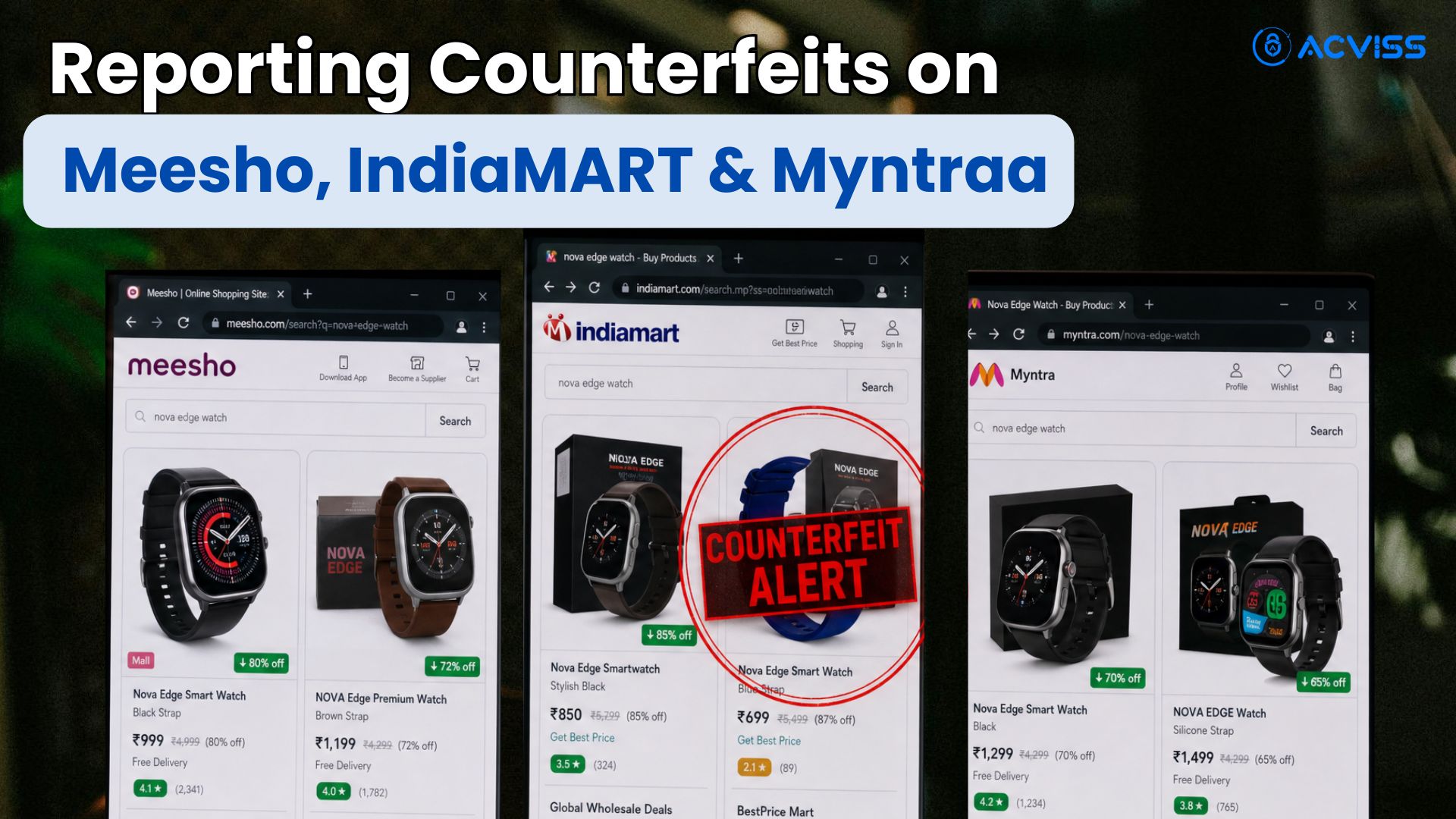
How to Remove Counterfeits on Meesho, IndiaMart and Myntra
Most brand protection conversations in India focus on Flipkart and Amazon. Those platforms deserve attention, but

How to Calculate ROI of Anti-Counterfeiting Investment
Most anti-counterfeiting investments never get funded. Not because the problem is not real, but because