
- Brands have a marketplace playbook. They don’t have a dark-store one.
- Why this isn’t the same risk model as marketplace fraud
- The categories most exposed are the ones bought fastest
- What brands should actually be asking quick-commerce platforms for
- Where the real fix already exists. It just needs to reach this channel.
Quick-Commerce Counterfeit Risk: The Dark-Store Blind Spot
- Marketplace counterfeit takedowns (Amazon, Flipkart, Meesho, IndiaMart) target a seller listing; quick-commerce dark stores have no seller to flag.
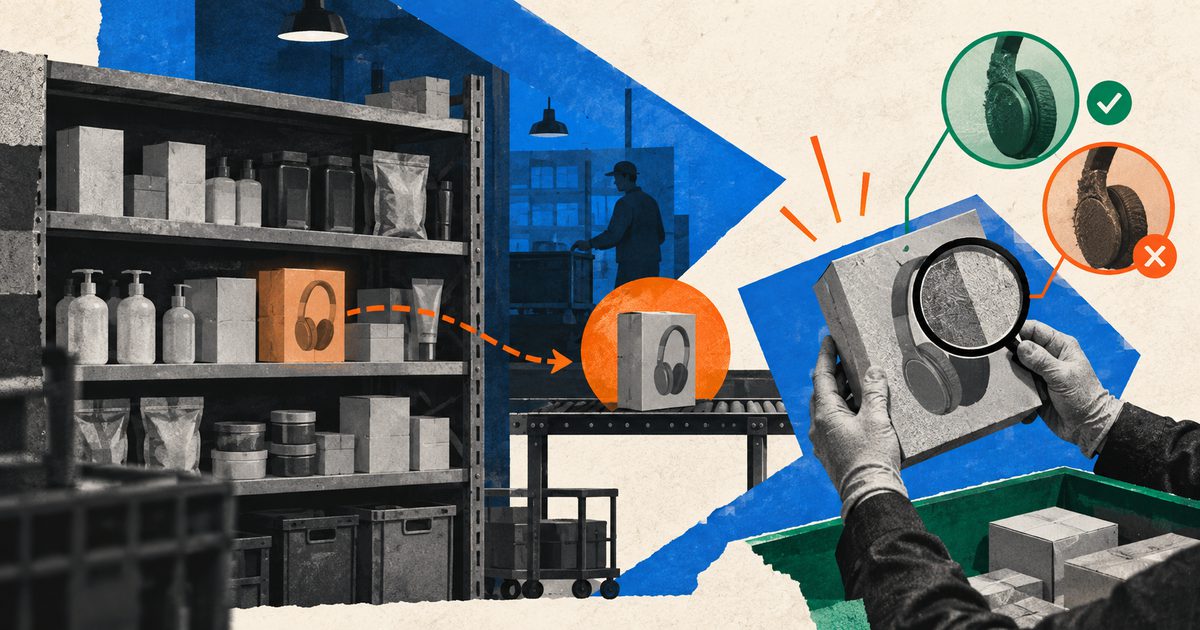
- Dark-store inventory is centrally stocked by the platform or a franchise partner, making it a supply-chain traceability problem, not a takedown problem.
- FMCG, cosmetics and small electronics accessories are most exposed, the fast-moving categories bought in a 10-15 minute delivery window with zero authentication friction.
- Brands should ask platforms for inventory sourcing audits and batch/lot traceability at the dark-store level, not just hygiene self-audits.
In August 2026, Karnataka’s food safety officials sealed a Zepto dark store in Hoskote. Maharashtra suspended Blinkit facilities in Malad, Dharavi and Pune. Inspectors found cockroaches near produce, expired packs still on shelves, and broken cold rooms. The raids made headlines as a hygiene story, and that’s a real problem worth fixing on its own.
The raids proved something else in passing, too: regulators are already standing inside dark-store warehouses, checking what’s on the shelf. They’re checking for contamination and expiry. Nobody is checking whether the product on that shelf is actually genuine.
Brands have a marketplace playbook. They don’t have a dark-store one.
Over the past few years, brands selling in India built a fairly mature response to online counterfeit risk. If a fake listing shows up on Amazon or Flipkart, there’s a process: identify the seller, gather evidence, file a takedown, escalate if the platform stalls. Meesho, IndiaMart and Myntra run their own versions of the same loop. It isn’t fast and it isn’t free, but it’s a known playbook, and it exists because marketplace fraud has a fixed shape: a seller storefront, a listing page, a reviewable history.
Quick-commerce inventory has none of that shape.
A Blinkit, Zepto or Instamart dark store doesn’t have individual sellers a brand can flag. It’s centrally stocked, either by the platform itself or by a franchise/local partner fulfilling its procurement, and what lands in that warehouse is pre-positioned physical stock, not a listing a brand-protection team can screenshot and report. There’s no seller ID to name, no storefront to get suspended, no review history to point to as evidence. The standard playbook simply has nothing to grab onto.
Why this isn’t the same risk model as marketplace fraud
The distinction matters more than it sounds. Online brand protection tooling, the kind built to scan marketplace listings, social storefronts and lookalike domains, is built around a simple assumption: somewhere, there’s an entity (a seller account, a page, a domain) that can be identified and acted against. Marketplace counterfeit enforcement is fundamentally a listing problem.
Dark-store counterfeit risk is an inventory problem. The question isn’t “who’s selling this fake online,” it’s “how did this unit end up in this warehouse, and can anyone trace it back.” That’s a supply-chain traceability question, not a takedown question, closer in shape to the grey-market diversion problem brands already fight through distribution than to marketplace listing fraud. It needs a different kind of answer entirely.
India’s quick-commerce dark-store count has gone from roughly 1,800 at the end of FY24 to over 4,000 by FY25, with projections putting it near 5,500 by FY26. That’s a lot of warehouses receiving inventory on tight, high-frequency replenishment cycles: a fundamentally different supply chain layer from traditional distribution, built for speed, not scrutiny.

See Origin in action
See how Origin traces product movement from manufacturing to point of sale, no matter how the last mile is fulfilled.
Explore Origin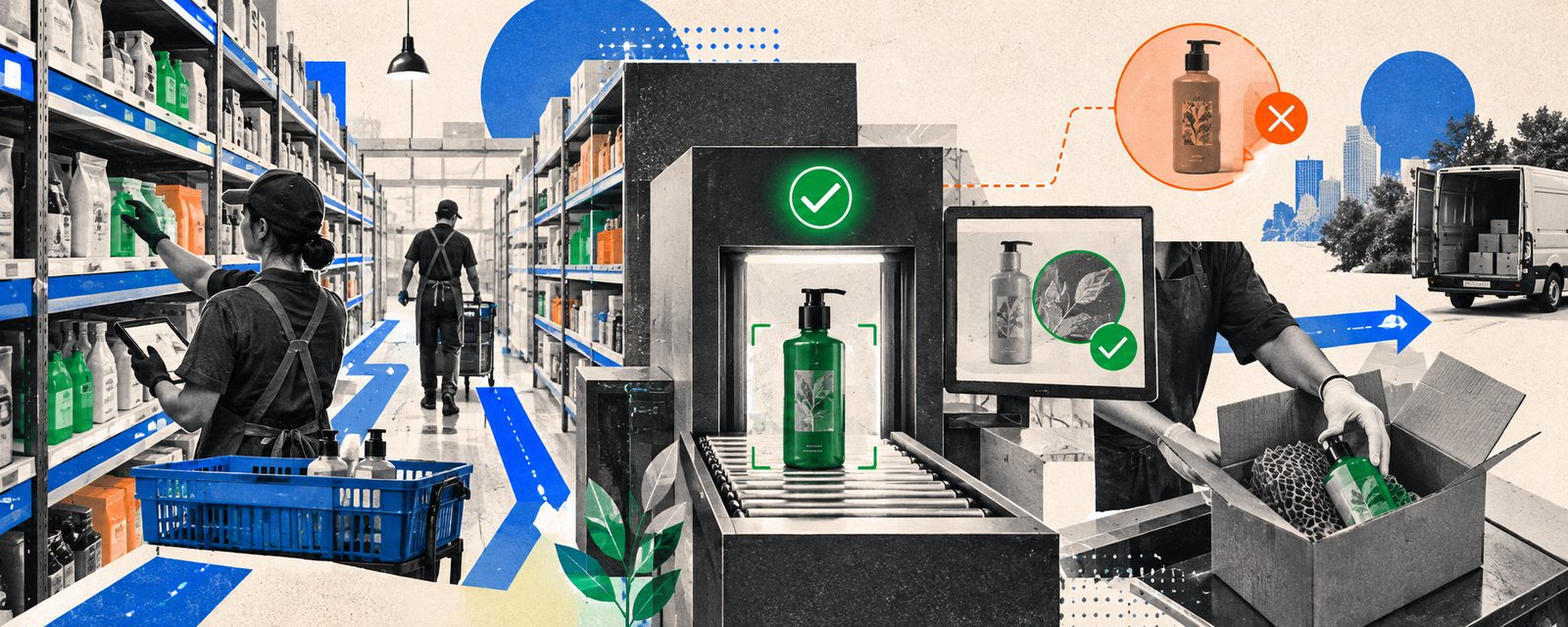
The categories most exposed are the ones bought fastest
Not every product category carries the same risk here. The categories most exposed on quick-commerce are the fast-moving, low-consideration ones: packaged FMCG, personal care and cosmetics, and small electronics accessories like chargers, cables and earphones. These are exactly the products a shopper adds to a 10-15 minute delivery cart without a second thought.
Compare that to a marketplace purchase. A buyer on Amazon or Flipkart can at least glance at seller ratings, read a few reviews, check “sold by” before checkout, friction that, however imperfect, gives a counterfeit a chance to get caught before it ships. A quick-commerce buyer sees a product tile and a countdown timer. There’s no seller to vet, no review thread to scan, and the entire point of the format is to remove exactly that kind of friction. For fast-moving categories, that works directly against the consumer.
What brands should actually be asking quick-commerce platforms for
The government has already pushed platforms toward self-audits. The Central Consumer Protection Authority’s advisory asked ecommerce and quick-commerce platforms to complete a self-audit within three months, and 26 platforms have since declared compliance. But that push has been framed around dark patterns and deceptive design, not inventory authenticity. Brands shouldn’t wait for that framing to expand on its own. There are two specific asks worth making directly.
- Inventory sourcing audits. Where did this SKU enter the dark-store network, and who supplied it? Is that chain of custody the same one the brand’s authorized distribution already runs through, or has it been sourced through a separate, unverified route to fill fast-replenishment demand?
- Batch/lot traceability at the dark-store level, not just at the warehouse of origin. Most supply-chain visibility work stops at the regional distribution center. Quick-commerce needs that visibility extended one layer further: down to which batch or lot is physically sitting in which dark store right now, not just which batch shipped out of a factory months earlier. This is the same gap Acviss has flagged before in why an ERP alone doesn’t count as traceability and in event-based traceability versus document compliance, just applied to a new channel.
Neither ask is about slowing delivery down. Both are about making inventory provenance checkable at all, something that, right now, simply isn’t possible for most brands watching their products move through this channel.
Where the real fix already exists. It just needs to reach this channel.
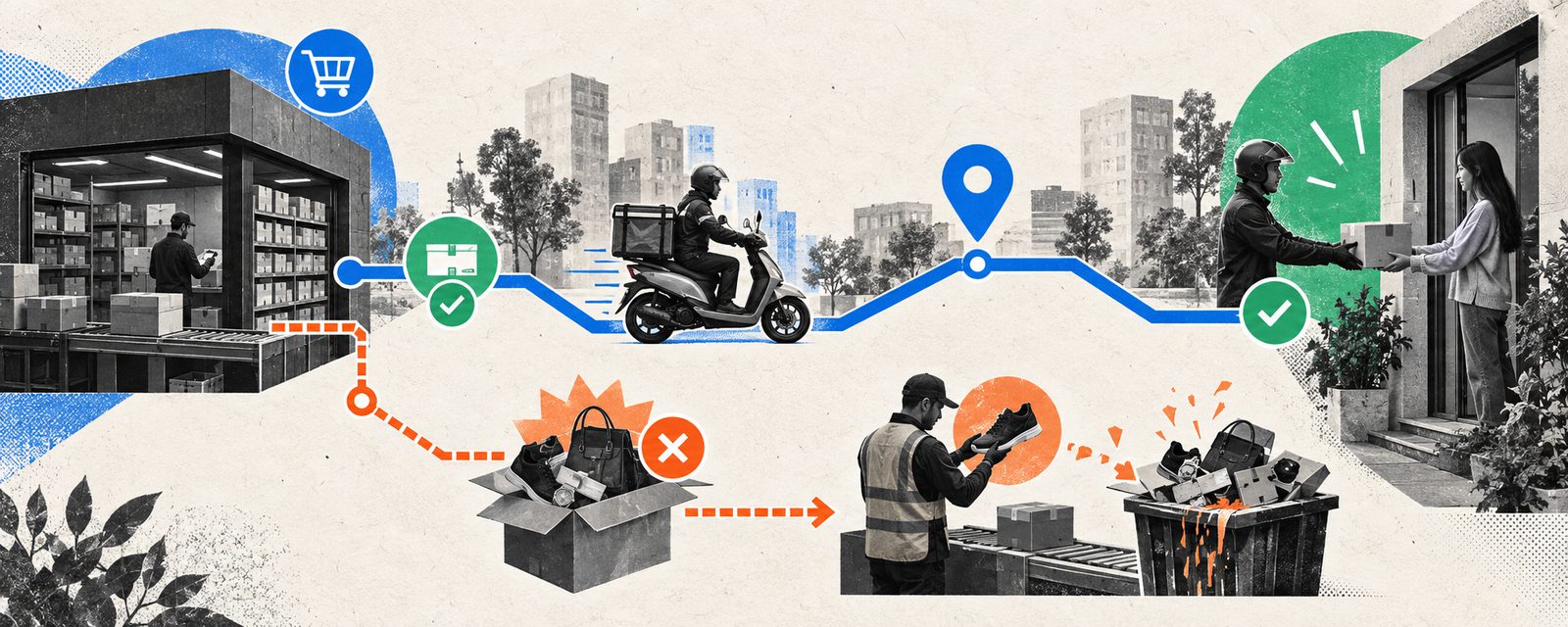
This is squarely a supply-chain traceability problem, which is what Origin is built for: tracking product movement from manufacturing through to the point of sale, with blockchain-backed records and QR-based serialization that don’t stop being reliable just because the last mile is a dark store instead of a traditional retail shelf. The same infrastructure that gives a brand visibility into distributor-level diversion can extend to answering exactly the sourcing and batch-level questions dark-store inventory raises.
Unit-level authentication matters here too. Certify‘s scan-to-verify model, a WhatsApp or web scan with no app download, is exactly the kind of check a platform’s own compliance team, or a brand’s field auditor, could run on dark-store stock directly, the same way it already works at retail.
To be clear about scope: Acviss doesn’t have a dark-store-specific integration live with Blinkit, Zepto or Instamart today. What already exists is the traceability and authentication infrastructure this channel needs. The gap is that nobody’s pointed it at quick-commerce yet. That’s a conversation worth having before the next round of raids turns up something worse than an expired pack.
If your brand sells through quick-commerce and can’t currently answer “where did this specific unit come from,” book a demo to talk through what supply chain visibility into this channel would actually take.
Sources:
- Inc42, “Raids On Zepto, Blinkit: The Ugly Side Of Dark Stores” (Aug 2026)
- Business Standard, “Who inspects India’s dark stores as quick commerce expands rapidly?”
- FoodNavigator-Asia, “Dark stores and deep risks: What APAC can learn from India’s Q-commerce” (Aug 2026)
- Press Information Bureau, Government of India, “26 Leading E-Commerce Platforms Declare Compliance with Self-Audit to Eliminate Dark Patterns”

Know what’s on the shelf before regulators do
Book a free demo and see how Origin and Certify extend supply chain visibility into quick-commerce inventory.
Book a Free Demo
Related reading

How to Reserve and Register a Trademark for Your Brand
A brand name isn’t protected just because you’re using it. Until it’s registered as a trademark, anyone else can file for
How to Remove Counterfeits on Meesho, IndiaMart and Myntra
In this article Meesho: How Counterfeits Enter and How to Report Them IndiaMart: The B2B Counterfeit Problem Myntra: Brand Registry