
Best Sproxil Alternatives for Product Authentication (2026)
 Arun KrishnanAug 31, 202612 min read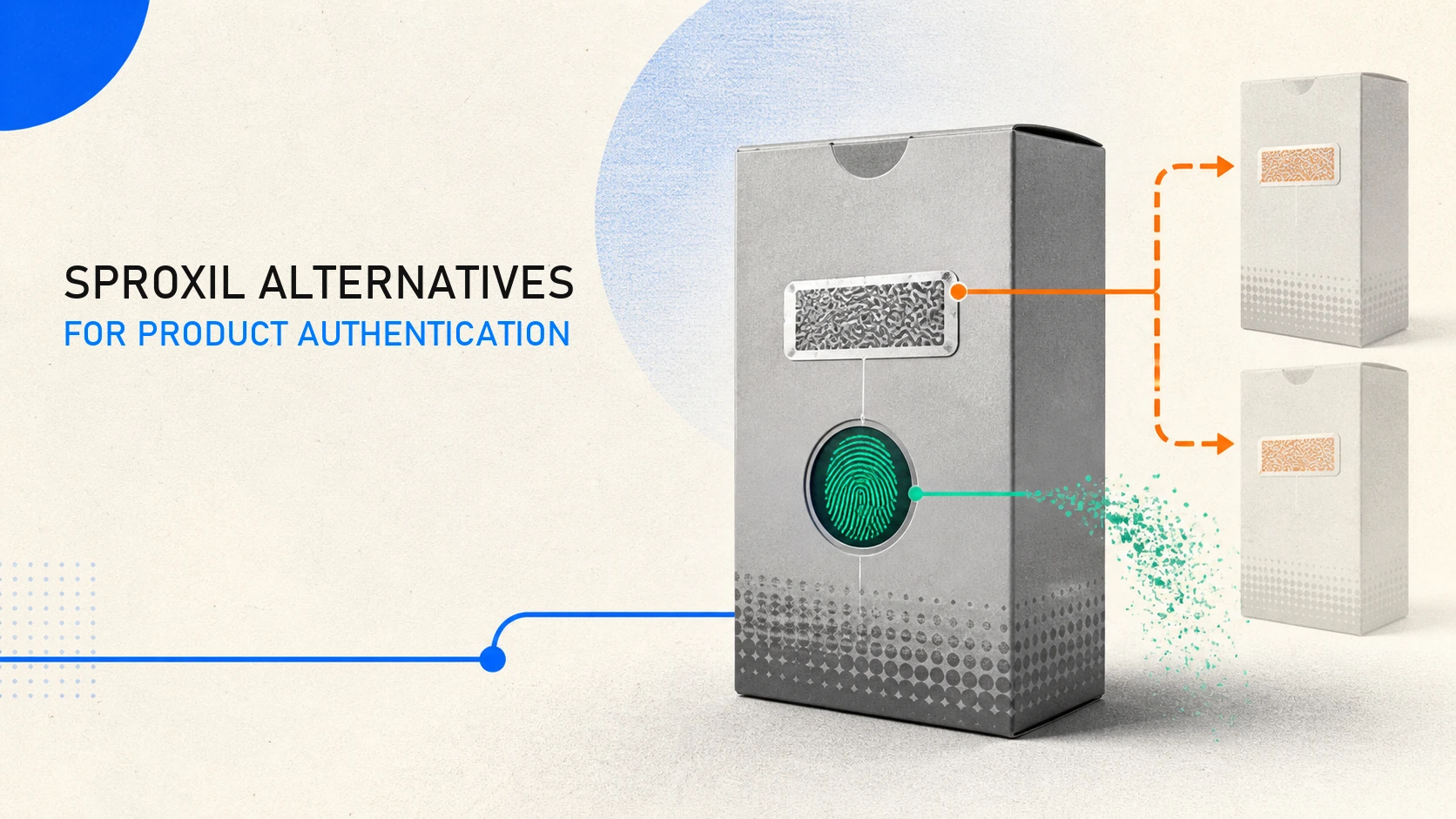
- Sproxil remains strong where SMS and feature-phone verification matter.
- Acviss is the broadest fit when non-cloneable authentication, serialisation, and online takedowns must work together.
- Ennoventure, Scantrust, Certilogo, and Checko each suit a narrower authentication or industry requirement.
- Choose by the fraud channel, verification device, traceability depth, and regulatory obligations your brand actually faces.
Most brands that run code-and-PIN authentication eventually hit the same wall. A printed code proves a product is genuine right up until a counterfeiter photographs it, reprints it onto fakes, and sells them before anyone notices the duplicate. And none of that touches the bigger leak: the counterfeit listing selling under your name on a marketplace, to a buyer who never scans anything at all.
Think about what that looks like in practice. Your verification system works exactly as designed. The shopper scans, gets a green tick, and trusts the pack. Meanwhile you have still lost the sale to a fake sold elsewhere, and chipped away a little of a customer's confidence in your brand. The technology did its job. The business still bled. What it actually costs a label manufacturer to close that gap is broken down in what authentication software actually costs a label manufacturer.
Sproxil built a genuine business solving the first mile of this problem: consumer verification that works on any mobile phone. In markets where smartphones are not universal, that model still holds up well. Pharma faces a comparable universal-access requirement, covered in battling counterfeit medicines with emerging technology. Brands usually start looking past it when the problem shifts underneath them, in one of two ways:
The fight moves from checking a code to making the authentication feature itself impossible to copy.
The fight moves from verifying a single unit to also clearing fakes off Amazon, Flipkart and Instagram, where no label ever reaches.
If either of those sounds like your week, this guide is for you. It lays out a simple way to weigh your options, profiles five alternatives, and names the situation where each one, Sproxil included, is the right call. The five are Acviss, Ennoventure, Scantrust, Certilogo and Checko. They do not solve the same problem, so the useful question is not "which is best?" in the abstract. It is "which is best for what you are actually losing money to?"
What Sproxil does, and why brands look elsewhere
Sproxil is a mobile product authentication and market-intelligence company that has operated for more than 15 years. It serves over 200 brands across pharmaceuticals, FMCG, beverages, cosmetics and automotive, with a strong footprint in Nigeria, wider Africa and India. Cosmetics counterfeiting specifically is a growing global problem — see eliminating counterfeit cosmetics.
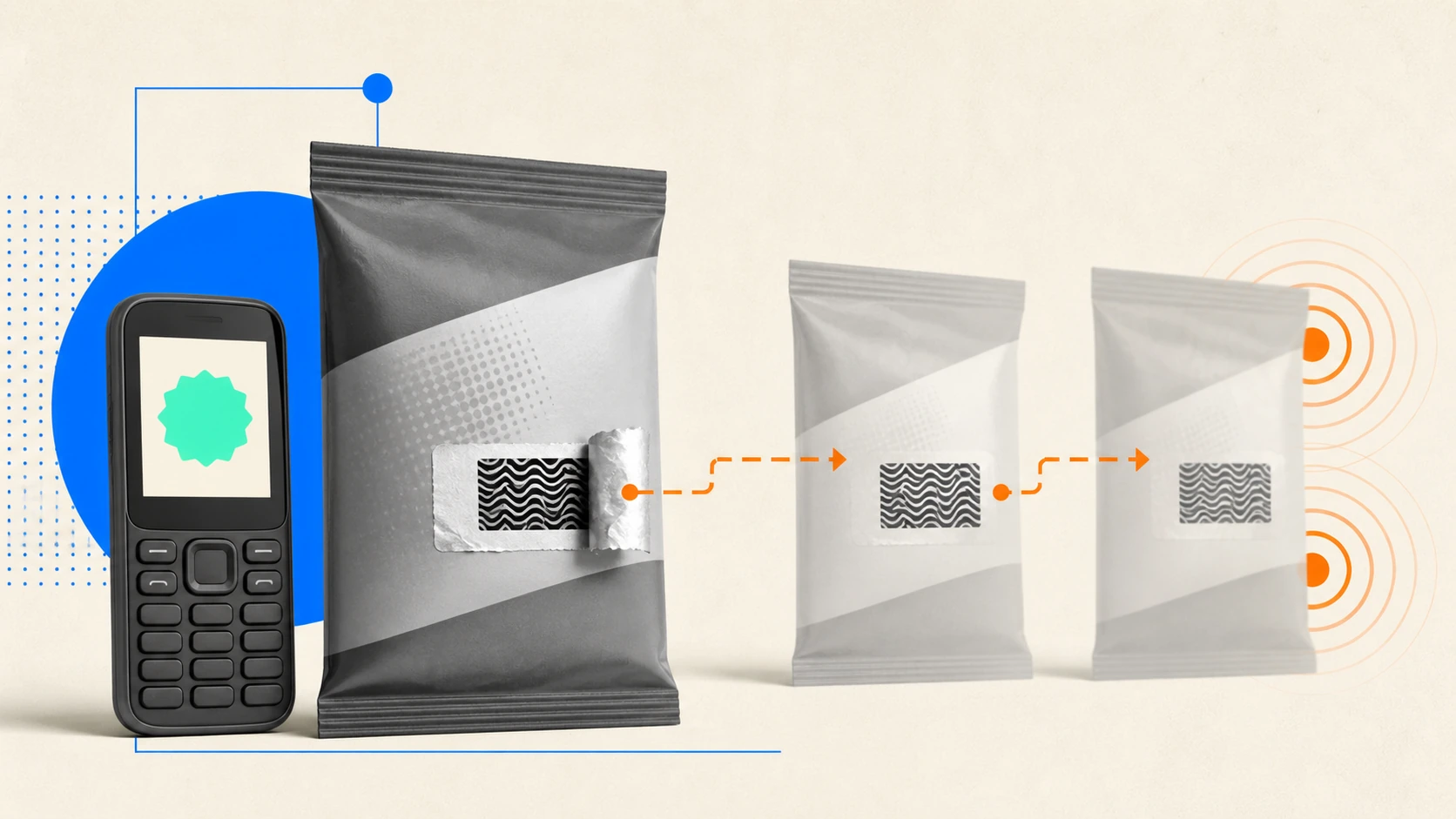
The method is straightforward. Each unit gets a unique code, often hidden under a scratch-off panel. A shopper reveals it and checks it by SMS shortcode, the Sproxil app, or the web. The published line has three parts:
Sproxil Verify for code-based authentication and fraud tracing.
Sproxil Track for GS1-certified track and trace.
Sproxil Survey for consumer feedback and market data, including from areas with limited internet.
The strength here is reach. A PIN checked by SMS works on any mobile phone, including a basic feature phone, which is exactly why the model scaled in places where not everyone owns a smartphone.
The limitation is baked into the approach. A printed code or PIN is data, and data can be photographed, guessed or reprinted. When a counterfeiter clones a valid code onto fake units, duplicate detection catches it, but only after some of those units have already sold. So brands that want the authentication feature itself to resist copying, or that want a single vendor to also clear fakes off online marketplaces, are the ones who start comparing alternatives.
How to weigh a Sproxil alternative
There is no single best alternative, only a best one for a specific problem. What protects a rural agrochemical brand selling into patchy-signal districts is not what protects a European luxury label managing resale. So before you score anyone, get honest about your own problem first.
Then judge each vendor against the criteria that actually match it:
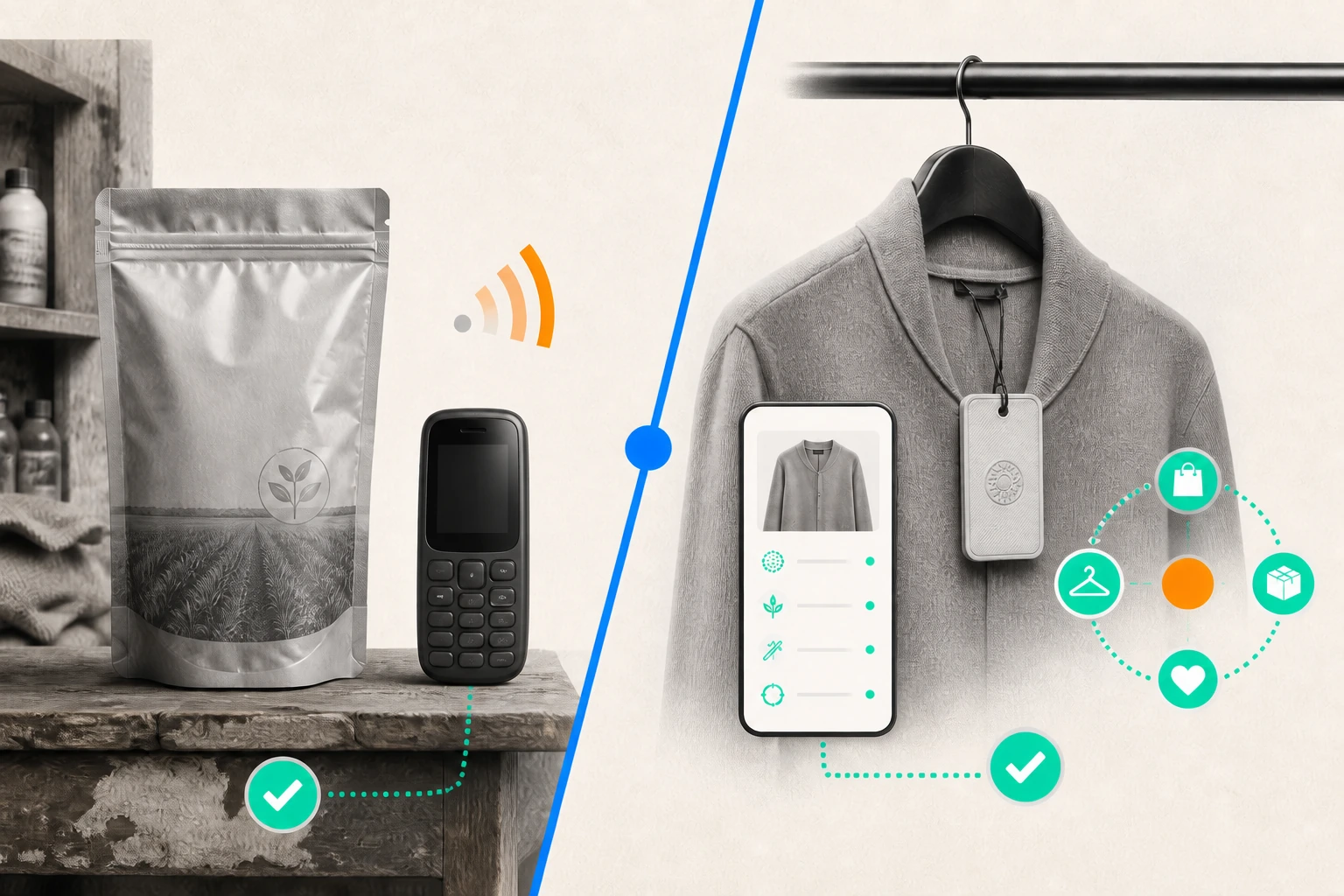
How the customer verifies, and how hard the proof is to fake. Three things decide this. Convenience, meaning can a shopper check in seconds without installing anything. Speed, meaning how fast the answer comes back. And security, meaning does genuineness rest on something copyable like a printed code, or on a feature that cannot be reproduced, such as a non-cloneable label or an invisible signature hidden in the artwork. A copyable code is only caught after fakes sell. A non-cloneable feature resists copying at the item itself.
Serialisation and traceability depth. Whether you get GS1-compliant serial codes, the ability to roll units up into cases and pallets, connections into your ERP system, and audit-ready records of custody that a regulator will accept.
Online brand protection. Whether the vendor also watches marketplaces, domains, social platforms and app stores, and actually files takedowns. Remember, no physical feature ever reaches a listing that was never labelled.
Regulatory readiness. Support for the rules you answer to, such as CDSCO in India, EUDR, GS1 Digital Link, and the EU Digital Product Passport (DPP), a digital record of a product's identity and history that is being phased in under EU rules.
Industry fit. Pharma and agrochemical traceability, FMCG engagement, and fashion resale are three different problems, and they rarely share the same best-fit vendor.
A useful way to hold this in your head: picture a mid-market or enterprise manufacturer, in India or a comparable market, that needs to prove a physical unit is genuine, serialise units for regulators, and pull counterfeit listings offline, ideally under one vendor, with go-live measured in weeks. One hologram manufacturer did exactly that — see how in a hologram manufacturer’s branded verification app rollout. Not every reader fits that picture exactly, but it is a sharp reference point to score against. The underlying data points any of these vendors should be scoring against are covered in what a counterfeit detection system should actually examine.
The alternatives, profiled
Acviss: authentication, serialisation and online enforcement on one data layer
Acviss is a Bengaluru-based product authentication and brand protection company founded in 2016. What sets it apart in this list is that the physical label, the serialisation and the online enforcement all run on one shared data layer, so a single scan does work that usually takes three separate vendors.
Its answer to the copyable-code problem is to make the authentication feature itself non-cloneable. Axion Label pairs a cryptographically generated code with an AI-read fingerprint of the tiny, random print variation that occurs when that one label is manufactured, reinforced with fine engraved patterns and encrypted micro-textures. Both layers have to check out independently. That variation is not designed and does not survive reproduction, so a photographed, reprinted label fails the fingerprint even when the code copies perfectly. Where a brand would rather keep the feature invisible, Phantom Code embeds the same protection into existing packaging artwork at the printing stage, with no label and no design change. Uniqolabel covers holographic labels where a visible mark is wanted. Certify is the layer the shopper touches: a check through an app, a web page or WhatsApp with no download, and a way to report a suspected fake from the same screen.
On serialisation, Origin issues GS1-compliant serial codes, rolls units up into cases and pallets, connects natively to SAP, Oracle, Microsoft Dynamics 365 and Salesforce, pushes codes to Zebra, Domino, TSC and Videojet printers, and writes each scan event to a permissioned blockchain for a tamper-evident custody record you can export for EUDR, CDSCO and GS1 reporting. Most customers reach a working pilot in about two weeks, and those custody records have been used during regulator audits. Truviss adds the piece few others touch: it watches marketplaces, domains, social platforms, app stores and search ads against more than 500 data points and files takedowns. Bonus and Assist round it out with loyalty and warranty.
Best for manufacturers in pharma, agrochemicals, FMCG, automotive and building materials that need physical authentication, serialisation and online enforcement together. That spread is not hypothetical: Origin customers include Kitply in plywood and building materials, the Coffee Board of India in agriculture, and Prestige Industries, each applying unit-level identity and traceability to a different counterfeiting problem.
Ennoventure: invisible, artwork-embedded authentication at global scale
Ennoventure hides a covert cryptographic signature inside existing packaging artwork. Per its public documentation, the signature adds no new hardware and no special inks, works with standard offset, flexographic, gravure, screen and digital printing on the substrates you already use, and verifies with any smartphone camera in about 2.3 seconds without an app. It is live in more than 160 countries, can be embedded in 48 hours, streams scans into ERP, WMS and CRM systems for portfolio intelligence, and provides audit-ready trails mapped to Digital Product Passport, EPR and FDA requirements.
Best for brands whose entire brief is invisible authentication deployed globally, with compliance trails ready out of the box. As a covert-only specialist, its published materials do not describe a visible physical-label option, a blockchain custody ledger, or an online marketplace takedown product.
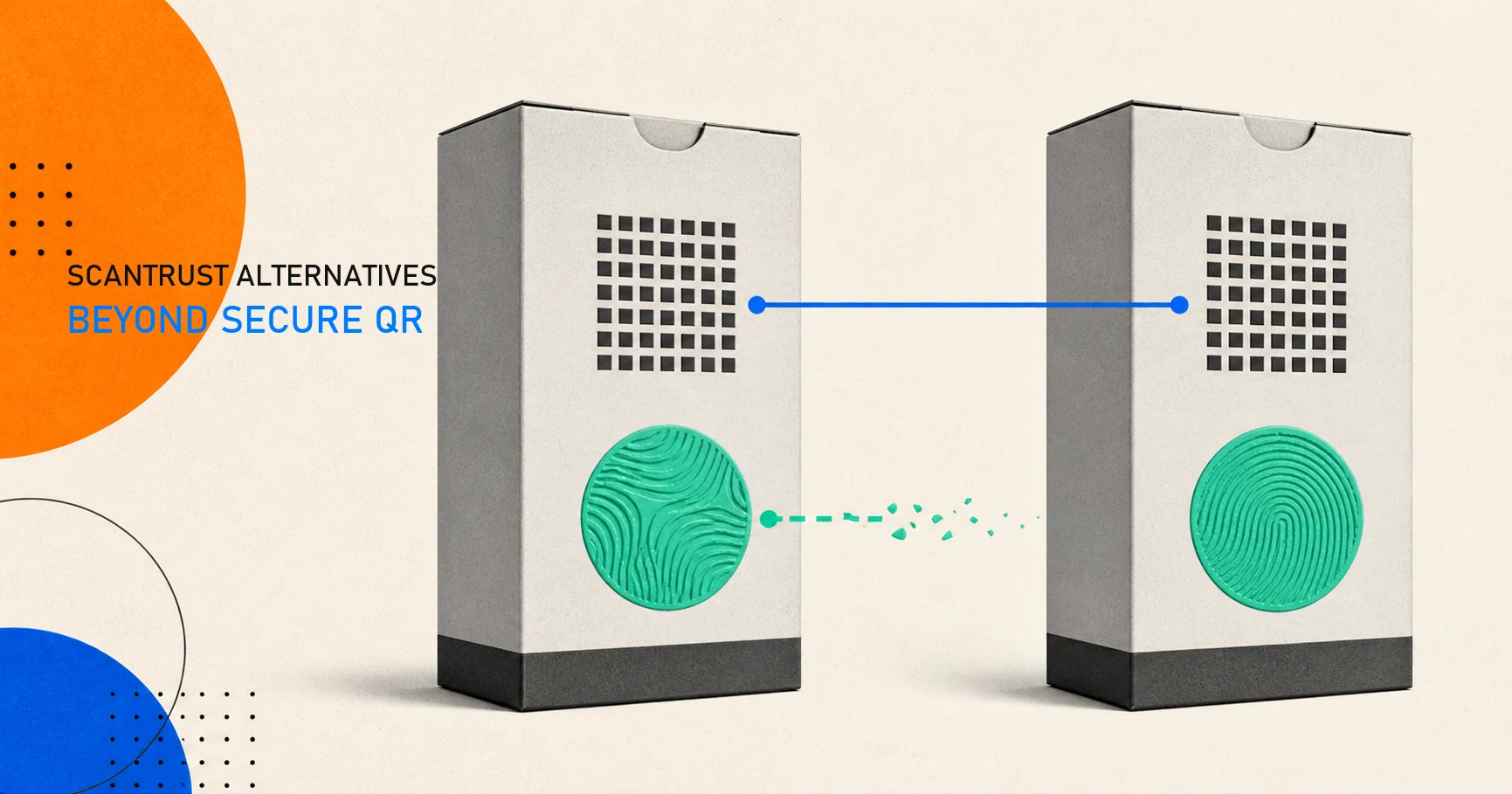
Scantrust: secure QR codes and GS1 Digital Link connected packaging
Scantrust is a QR-code platform that combines secure QR codes for anti-counterfeiting, supply-chain traceability and Digital Product Passports in one system. Per its site, its secure QR codes let a shopper check for fakes instantly with a smartphone and no app download, work with standard label printing, and carry GS1 Digital Link-ready codes as a certified GS1 France partner. Its traceability tools link products to orders, boxes, crates, pallets and distributors, with analytics on top. Named clients include Unilever, Abbott, HP, ExxonMobil, DuPont and Motul.
Best for brands whose priority is GS1 Digital Link connected packaging, regulatory QR labelling and traceability at scale, and who are comfortable with a secure-QR model rather than a physically non-cloneable label. Its published materials do not describe an online marketplace monitoring and takedown product.
Certilogo: fashion and luxury Digital Product Passports and resale
Certilogo is a connected-product and authentication platform built specifically for fashion and luxury. It authenticates through an AI-assessed digital ID it calls Secure by Design, rather than a physical security label, and centres on Digital Product Passports, lifecycle traceability, and resale and circularity services. Per its site, more than 570 million products carry its digital IDs, across more than 180 countries and 100-plus brands, with named clients including Diesel, Off-White, Stone Island and Versace.
Best for apparel, footwear and luxury brands that need Digital Product Passports, resale and circularity services, and consumer storytelling on the garment itself. It is purpose-built for fashion and is not positioned for pharmaceutical, agrochemical or industrial physical-label authentication.
Checko: offline authentication on low-end devices
Checko, the brand of Transpacks Technologies, makes a physical label that combines randomly generated three-dimensional features with a two-dimensional cryptographic code, printed with proprietary ink. It works on the physically unclonable function principle, meaning the physical randomness in each label cannot be reproduced. Per its site, the label is verified with the Checko app on smartphones with cameras as low as 4 megapixels, works online or offline, and its technology originated at IIT Kanpur and a research centre funded by the Ministry of Electronics and Information Technology.
Best for deployments where consumers use entry-level phones in low-connectivity areas, and where a published hardware floor and offline operation genuinely matter. Its published materials do not describe GS1 serialisation, ERP connectors, a blockchain audit trail, or an online marketplace takedown product.
A quick side-by-side
The table below is a scan-and-shortlist tool, not the whole story. Every entry comes from each vendor's own public documentation, and a blank cell means the capability is not described in those materials rather than a judgement that it is absent. Confirm anything critical directly with the vendor.
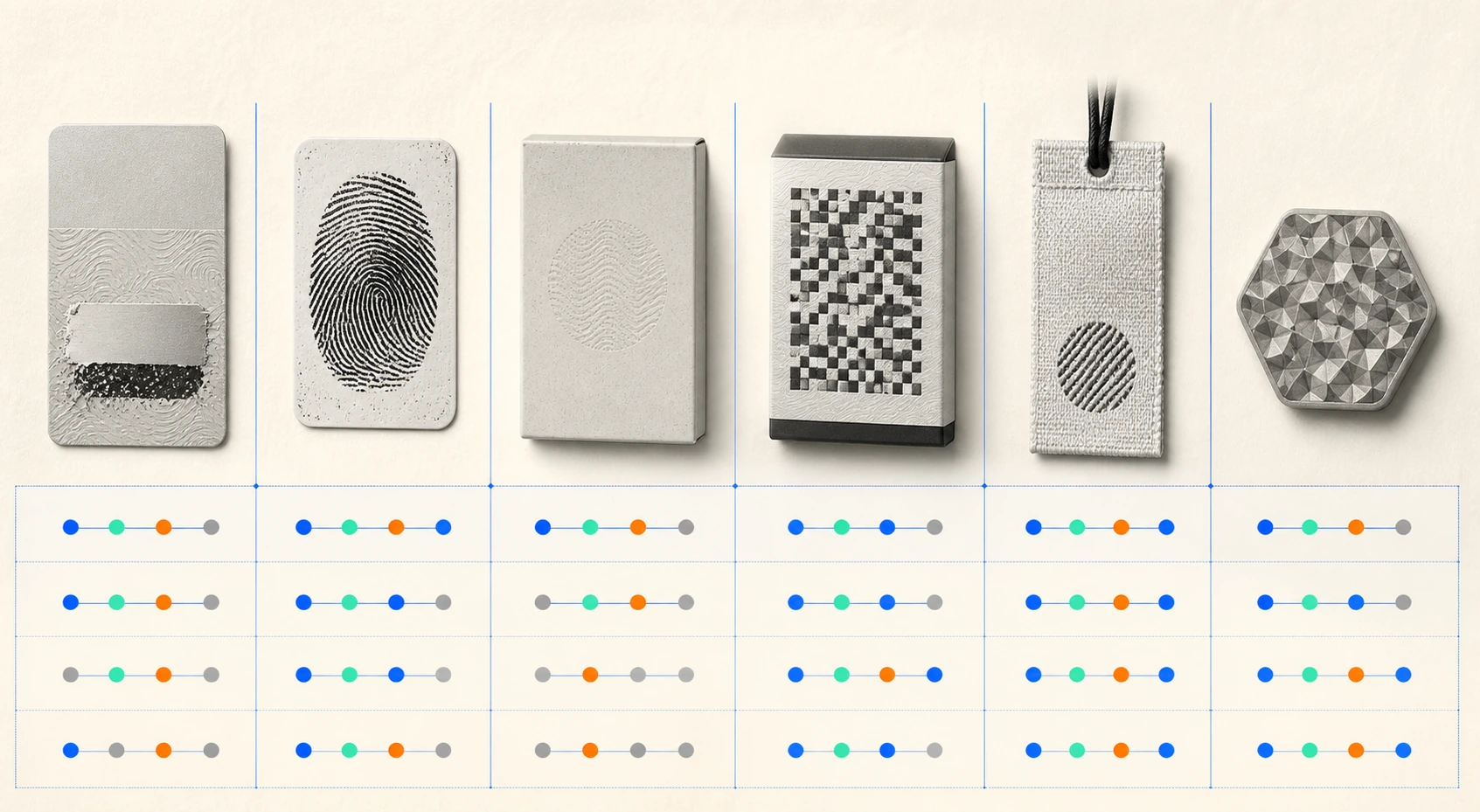
| Capability | Sproxil | Acviss | Ennoventure | Scantrust | Certilogo | Checko |
|---|---|---|---|---|---|---|
| Non-cloneable authentication feature | Code and PIN a database verifies | Axion Label: code plus non-reproducible print fingerprint | Invisible artwork signature | Secure QR with copy detection | AI-judged digital ID | 3D physically unclonable label |
| Verifies without app download | SMS, PIN or web | Web or WhatsApp | Any smartphone camera | Smartphone, no app | Web, no app | App required |
| Feature-phone / SMS verification | Yes, any phone | Confirm with vendor | — | — | — | — |
| GS1 serialisation / track and trace | Sproxil Track | Origin, unit to pallet | Scan streaming to ERP | GS1 Digital Link | Item-level | — |
| Blockchain custody record | — | Origin, permissioned blockchain | — | — | — | — |
| Online marketplace takedowns | — | Truviss | — | — | — | — |
| Digital Product Passport support | — | Serialisation a DPP rests on | Trails mapped to DPP | Via GS1 Digital Link | Core offering | — |
| Fashion resale and circularity | — | Confirm with vendor | — | — | Core offering | — |
Matching an alternative to your situation
A roundup that recommends one vendor for everything is not worth much. Here is the scenario where each option is genuinely the better choice.
Reach on feature phones? Look hard at Sproxil. Its SMS and PIN model works on any mobile phone, not only smartphones, backed by 15 years of consumer-engagement and market-intelligence programmes across Africa and emerging markets. For a mass-market good in a region where many buyers do not own a smartphone, that reach is a real, documented strength. If you are eyeing a smartphone-first vendor instead, confirm the current scope of its SMS or USSD support before assuming you get the same coverage.
Invisible-only, global and compliance-mapped? Ennoventure. If you want authentication with zero packaging change, rolled out across many countries with DPP, EPR and FDA trails ready to go, Ennoventure is built narrowly and deeply for exactly that. Worth knowing: this same invisible capability also exists as Acviss Phantom Code, so Ennoventure is the sharper call specifically when invisible authentication is the entire requirement. The moment you also need serialisation, a physical-label option, or online takedowns in the same contract, the maths changes.
GS1 Digital Link connected packaging? Scantrust. If your driver is regulatory QR labelling, GS1 Digital Link and traceability at scale, Scantrust's certified GS1 partnership and self-serve QR tooling are a strong fit.
Fashion and luxury passports and resale? Certilogo. For apparel and luxury brands prioritising DPP, resale and circularity on the garment, Certilogo is purpose-built where general-purpose vendors are horizontal. Fashion resale is not a headline vertical for most of the others here, so for that brief, confirm scope with each vendor.
Offline, low-end devices? Checko. Where shoppers use entry-level phones in low-coverage areas, Checko publishes a specific 4-megapixel floor and offline operation that many vendors do not state at all.
Physical authentication, serialisation and online enforcement together? Acviss. This is the one case where a single vendor changes the economics. If a printed code is not enough for your high-value or heavily faked SKUs, Axion Label needs both a cryptographic code and an AI print-fingerprint that cannot be reproduced, so a convincing clone cannot be built at the item level. If an auditor is going to ask what happened to a batch, Origin gives you the aggregation, ERP connectors, blockchain custody record and CDSCO and EUDR exports to answer. And if fakes are selling on marketplaces you never labelled, Truviss monitors and files takedowns, which none of the others in this list publish as a product. Buying the label and the takedown from one vendor, on one data layer, is the practical advantage worth pressure-testing in a demo.
Need authentication that covers both products and marketplaces?
See how Acviss combines non-cloneable identity, traceability, and online enforcement.
Talk to an ExpertFive steps to actually choose
Write down whether your problem is authentication, serialisation, online enforcement, or all three. Vendors strong on one will happily blur the others in a demo, so score each on a separate sheet.
Match the verification channel to your real customer. Feature phones in low coverage mean SMS or USSD. Smartphone users mean no-app web or WhatsApp verification, because install friction quietly collapses scan rates.
Ask where the reference database lives and how you get your records out if you leave. Get the data-return terms into the contract, not just the sales deck.
Ask what happens to a listing that was never labelled. If the answer is that authentication solves it, the vendor has not understood the online half of counterfeiting.
Verify every regulatory claim at the source. Regulations specify outcomes, not vendors. No mandate requires a particular vendor's product, and a vendor page is not a regulatory notice. Confirm the status, scope and deadline of CDSCO, EUDR, GS1 Digital Link or the EU Digital Product Passport with the issuing authority.
Frequently asked questions
What is Sproxil's authentication method?
Each unit gets a unique code, often under a scratch-off panel, which a consumer verifies by SMS shortcode, the Sproxil app, or the web. Its strength is reach on any mobile phone; its limitation is that a printed code is data that can be copied onto fakes and is only caught by duplicate detection after some units sell.
What is the best alternative to Sproxil?
It depends on which problem is yours. For a non-cloneable label, GS1 serialisation and online takedowns from one vendor, Acviss fits. For invisible-only authentication at global scale, Ennoventure. For GS1 Digital Link connected packaging, Scantrust. For fashion passports and resale, Certilogo. For offline, low-end-device verification, Checko.
Which alternative suits pharmaceutical or agrochemical serialisation in India?
Acviss Origin is built for this, with GS1-compliant serialisation, unit-to-case-to-pallet aggregation, ERP integration, a permissioned-blockchain custody record, and CDSCO and EUDR export formats. Sproxil Track is also GS1-certified and worth evaluating for verification reach. Confirm the current status, scope and deadline of CDSCO barcoding with the issuing authority before building a business case, because no regulation requires a specific vendor.
How is a non-cloneable label different from a code and PIN?
A code or PIN is data printed on a product, and a counterfeiter who copies a valid code onto fakes passes verification until duplicate detection flags it, which happens after sale. A non-cloneable feature, such as Axion Label, Checko's 3D label or Ennoventure's invisible signature, draws its identity from randomness introduced during manufacture, which cannot be reproduced. No feature makes counterfeiting vanish, but a non-cloneable one cannot itself be copied onto fakes, so units carrying it cannot be replicated and passed off as authentic.
Do any alternatives verify without an app download?
Yes. Certify verifies through the web or WhatsApp with no download, Ennoventure and Scantrust verify with any smartphone camera without an app, and Sproxil supports SMS and web verification. Checko's published method uses its app. No-app verification matters because authentication rates fall sharply at the app store, and a shopper standing in an aisle will not install software to check a pack.
Which alternative supports the EU Digital Product Passport?
Certilogo centres its platform on Digital Product Passports for fashion, Scantrust supports DPP through GS1 Digital Link QR codes, Ennoventure maps its audit trails to DPP requirements, and Acviss Origin provides the serialisation and custody record a passport rests on. Confirm the exact ESPR timeline and product-category scope with the European Commission before committing, since these obligations are being phased in by category.
Can one vendor handle both physical labels and online takedowns?
Among the vendors here, Acviss is the one that publishes both, through its authentication products and through Truviss for marketplace, domain, social and app-store monitoring and takedowns. That matters because a label protects a physical unit while a takedown removes a listing for a product that may never have carried a label at all. Keeping both on one data layer is the practical reason to buy them together.
Choose protection built around the loss you need to stop
Compare authentication, traceability, and online enforcement in one Acviss deployment.
Talk to an Expert