
7 Best Anti-Counterfeit Software Solutions for Indian Brands 2026
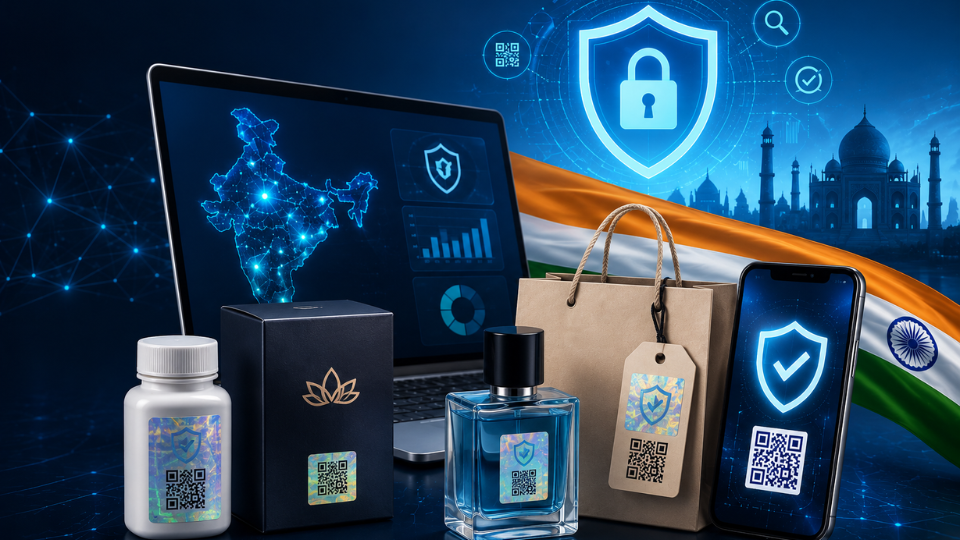
- Indian brands have several anti-counterfeit software options, spanning holograms, QR-based authentication, invisible markers, and blockchain-based traceability.
- Each authentication approach has different consumer adoption requirements and cost profiles, so the right fit depends on the product category and price point.
- India-headquartered vendors offer an advantage for local support and faster response on ground-level enforcement.
- Buyers should weigh non-clonability, ease of consumer verification, and integration with existing packaging lines before choosing a solution.
Understanding what anti-counterfeiting actually means in practice helps set the right evaluation criteria for any vendor shortlist.
 The OECD/EUIPO tracks the scale of global trade in counterfeit and pirated goods.
Choosing the wrong anti-counterfeiting solution is an expensive mistake that reveals itself slowly. You invest in a system, roll it out across your product line, and six months later discover that counterfeit products are passing your own authentication checks, or that fake listings on Meesho and IndiaMart have been multiplying while your solution was focused only on physical label verification. By then, the brand damage and lost revenue are real, and switching costs make the situation worse.
The challenge for Indian brands is that the counterfeiting threat is multi-dimensional. You face fake products in physical retail markets, counterfeit listings across dozens of e-commerce platforms, grey-market goods entering through opaque supply chains, and warranty fraud that your operations team may not even connect to counterfeiting. No single point solution addresses all of these.
A solution that excels at physical product authentication but has no capability for online marketplace monitoring leaves half your threat surface unaddressed. A solution built for global pharmaceutical serialization may be technically excellent but entirely wrong for a consumer goods brand operating primarily in India’s domestic market. A system requiring a dedicated mobile app for consumer verification will see adoption rates that disappoint, especially in markets where buyers are accustomed to simple WhatsApp-based interactions.
This guide reviews seven anti-counterfeiting solutions available to Indian brands in 2026. The goal is to give you an honest picture of where each solution performs well, where it has limitations, and which criteria should drive your decision.
What “anti-counterfeit software” actually means
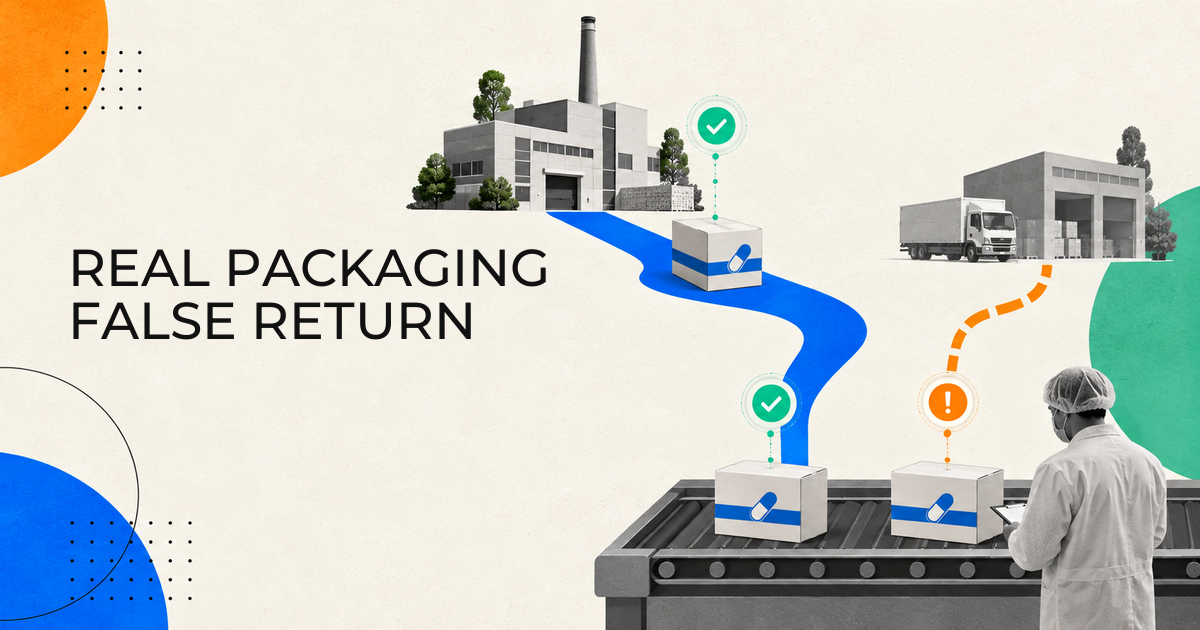
Before comparing vendors, it helps to be precise about what this category label is actually covering, because it is doing more work than most sales pages admit. Strip away the marketing language and “anti-counterfeit software” collapses into three distinct jobs, each solving a different problem for a different buyer.
Point-of-check authentication answers one question: is this specific unit, right now, in this person’s hand, real? A field inspector, distributor, or shopper scans a code or checks a marker and gets a yes-or-no answer on that one unit — it proves what the product is, not where it has been.
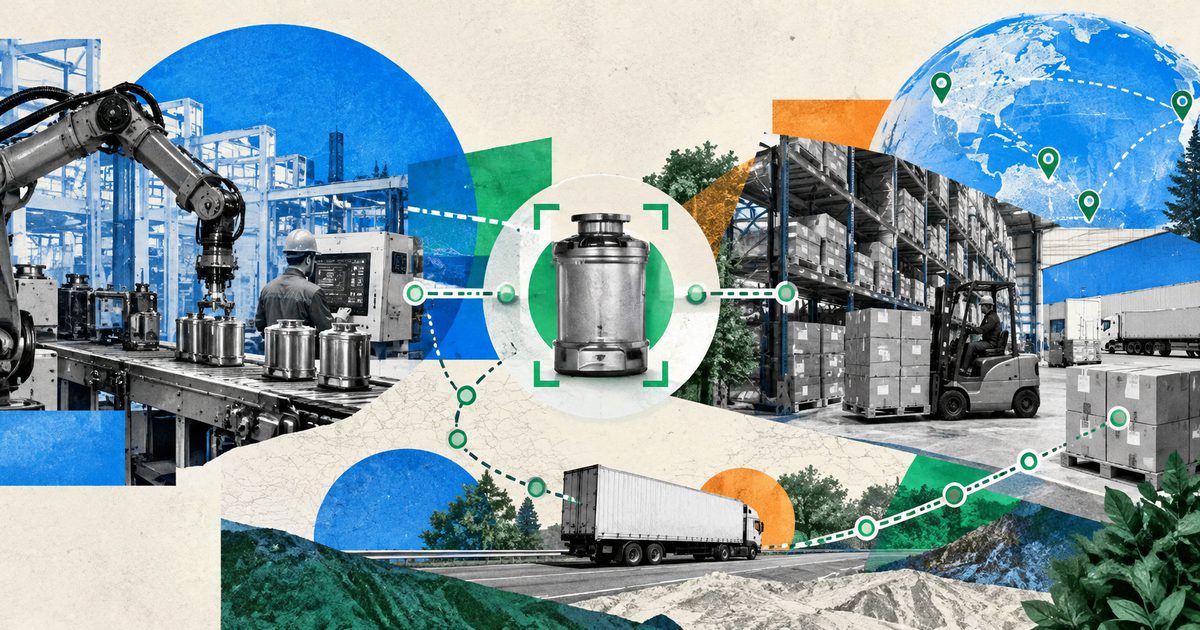
Supply chain traceability answers a different question: where has every unit gone, and can you prove it? This is the batch-level, ERP-integrated side of the category — serialization, track-and-trace, the paper trail a compliance audit or recall investigation actually needs. It usually cannot tell a shopper in a store whether the specific bottle on the shelf is genuine, because that is not the job it was built for.
Online and marketplace enforcement is the third, and the one loosely folded into “anti-counterfeit software” most often. This is finding fake listings, cloned storefronts, and impersonator accounts across e-commerce platforms and social media, then getting them taken down — a monitoring and enforcement problem with nothing to do with the physical product at all (see Online Brand Protection: The Complete Guide for D2C and Marketplace Brands for the full breakdown).
Most vendor pages sell as if they cover all three. Almost none of them actually do — which is exactly why the comparison below evaluates each solution against which of these jobs it was actually built for, not just its marketing category.
| What’s happening | What you actually need | What “solved” looks like |
|---|---|---|
| Customers or inspectors report products that look wrong, or you want shoppers to self-verify | Point-of-check authentication | A scan or check that gives a clear real/fake answer on the specific unit |
| Audits, recalls, or distributor questions about where product actually went | Supply chain traceability | A batch-level record that reconstructs the full chain of custody |
| Fake listings, cloned storefronts, or impersonator accounts undercutting your price online | Marketplace/online enforcement | Listings found and taken down before they scale |
Most manufacturers eventually need more than one of these. Very few need all three from day one, and none of them are interchangeable substitutes for each other — keep that in mind as you read through where each vendor below actually fits.
How to Compare Anti-Counterfeiting Solutions: Key Criteria
Before reviewing the solutions, here is the framework used for evaluation. These criteria are drawn from the specific challenges Indian brands face in 2026.
| Criterion | Why It Matters for Indian Brands |
|---|---|
| Marketplace coverage | India’s counterfeit problem spans Flipkart, Amazon India, Meesho, IndiaMart, Myntra, and many more. Coverage breadth matters. |
| Authentication method | QR codes, holograms, digital watermarks, blockchain, each has different consumer adoption and spoofability profiles. |
| Supply chain traceability | Can you trace where counterfeits are entering your supply chain, or only detect them at the consumer end? |
| India-specific support | Local team, regional language support, India marketplace integrations, understanding of Indian consumer behavior. |
| WhatsApp verification | India has 500M+ WhatsApp users. No-app authentication via WhatsApp drives significantly higher consumer scan rates. |
| Pricing model | Per-label vs. subscription vs. volume-based. Impacts total cost of ownership at different production scales. |
| Deployment speed | How quickly can you go live? Weeks or months? Important when counterfeiting activity is active and growing. |
1. Acviss (Certify + Truviss + Origin)
Acviss is a Bangalore-based brand protection company that offers three interconnected products addressing the full scope of the counterfeiting problem: physical product authentication, online marketplace enforcement, and supply chain traceability.
Certify is Acviss’s product authentication solution. Each product receives a unique, cryptographically secured authentication code. Consumers verify authenticity through WhatsApp or a web browser scan, with no app download required. The no-app requirement is a meaningful differentiator in the Indian market, where asking consumers to install a dedicated app typically results in very low adoption. Certify is built around the verification behavior Indian consumers already have: opening WhatsApp and scanning a code. Acviss holds three patents related to its authentication technology.
Truviss is Acviss’s online brand protection platform. It monitors more than 5,000 marketplaces and e-commerce platforms continuously, including Flipkart, Amazon India, Meesho, IndiaMart, and Myntra, detecting infringing listings using brand name matching, image recognition, and pricing anomaly signals. When a potential infringement is detected, takedown workflows are initiated automatically. Your team sees a consolidated view of active violations, pending removals, and re-listing activity across all monitored platforms. For brands dealing with counterfeiting activity on multiple platforms simultaneously, this is the operational capability that makes multi-platform enforcement manageable.
Origin is Acviss’s blockchain-based supply chain traceability solution. It provides end-to-end visibility into product movement from manufacturer through distribution to retail, creating an immutable record that makes grey-market entry points identifiable. For brands where counterfeits or diverted goods are entering through supply chain leakage rather than marketplace listings alone, Origin addresses the problem at its source.
Best for: Indian brands that need a complete solution covering physical authentication, online enforcement, and supply chain visibility. Particularly strong for brands that sell across multiple Indian marketplaces and need India-first deployment support. ISO 27001 certified. Has protected 80+ brands and secured 2B+ products.
Limitations: The three-product stack means there is a larger initial implementation scope compared to point solutions. If you need only physical label authentication, some simpler alternatives may deploy faster.
Marketplace coverage: 5,000+ platforms. WhatsApp verification: Yes. Supply chain traceability: Yes (Origin). India support: Strong: India-headquartered team.
See Acviss in action for your brand category
2. Ennoventure
Ennoventure is a Bangalore-based company with a genuinely differentiated approach: invisible authentication embedded directly into printed artwork. Rather than applying a separate QR code or hologram label, Ennoventure’s technology hides authentication signals within the product’s existing packaging design. A consumer or inspector uses their smartphone camera to reveal the hidden signal.
The no-additional-label approach is a meaningful advantage for brands where packaging aesthetics are a priority, or where adding a visible security label creates a cost or design constraint. There is no separate label to source, apply, or manage in the supply chain.
Ennoventure has built particularly strong expertise in pharmaceuticals and FMCG, sectors where packaging regulatory requirements are strict and packaging redesign cycles are slow. The solution’s ability to work within existing packaging without visible modification is a strong fit for these categories.
Best for: Pharma and FMCG brands focused on physical product authentication where preserving packaging aesthetics is a priority and where packaging is reprinted regularly enough to incorporate the technology.
Limitations: No online marketplace monitoring capability. If your counterfeiting problem includes fake listings on e-commerce platforms, you will need a separate solution for that. Also requires involvement in the packaging print process, which can slow down initial deployment.
Marketplace coverage: None. WhatsApp verification: Not primary. Supply chain traceability: Limited. India support: Strong.

See Certify in action
See where Certify stands among India’s leading anti-counterfeit software solutions.
Explore Certify3. NeuroTags
NeuroTags is an Indian startup that uses a dual-tag authentication system: a combination of a public-facing QR code and a hidden inner tag. The logic is that a counterfeiter can copy the visible QR code, but cannot easily access and replicate the hidden inner tag without destroying the packaging. When a consumer scans the public code, the system checks both tags to confirm authenticity.
NeuroTags also incorporates AI-based analytics on scan data, allowing you to identify suspicious scanning patterns that might indicate counterfeit activity or grey-market distribution. If a product’s codes are being scanned in a geography far from its intended distribution zone, that is a signal worth investigating.
The platform supports consumer engagement features alongside authentication, making it possible to use the verification interaction as a touchpoint for warranty registration, loyalty programs, and post-purchase communication.
Best for: Brands looking for QR-based authentication with a dual-layer security mechanism and interest in using the verification touchpoint for consumer engagement alongside brand protection.
Limitations: No dedicated online marketplace monitoring. The dual-tag system’s security depends on the inner tag remaining genuinely hidden and inaccessible, which requires careful packaging design and quality control.
Marketplace coverage: None. WhatsApp verification: Limited. Supply chain traceability: Partial (scan data analytics). India support: India-headquartered.
4. VCQRU
VCQRU is a Delhi-based anti-counterfeiting company that combines QR codes with optical microstructure technology. The optical microstructures provide a physical authentication layer that is significantly harder to replicate than a standard QR code alone, requiring specialized equipment to copy. The QR code layer handles digital verification and consumer engagement.
VCQRU has built a particularly strong presence in North India and has worked with brands across apparel, alcohol, and consumer goods. Their solution includes integration points for loyalty programs, allowing the authentication scan to simultaneously verify the product and register the consumer in a rewards program.
Best for: Brands with significant distribution in North India’s markets, or brands that want to combine physical authentication with loyalty program integration in a single scan interaction.
Limitations: Geographic concentration is primarily North India, which may be a consideration for brands with pan-India or South India-heavy distribution. No online marketplace monitoring capability.
Marketplace coverage: None. WhatsApp verification: Limited. Supply chain traceability: Basic. India support: Strong in North India.
5. Red Points
Red Points is a Barcelona-headquartered online brand protection company with a global presence. Its primary strength is online brand protection: detecting and removing counterfeit and infringing listings across e-commerce platforms, social media, and websites at scale.
The platform uses machine learning to continuously monitor marketplaces globally, identify infringing listings, and initiate automated takedown requests. Its global platform coverage is broad, making it a strong choice for brands with significant international counterfeiting exposure across global platforms like Amazon US, AliExpress, eBay, and others.
Where Red Points is less strong for Indian brands specifically: its India marketplace coverage and enforcement workflows for Meesho, IndiaMart, Myntra, and regional Indian platforms are less developed than its global marketplace capabilities. Indian brands whose counterfeiting problem is primarily domestic, concentrated in Indian marketplaces, may find that the India-specific coverage depth does not match what India-first platforms offer.
Best for: Indian brands with significant international brand presence and global marketplace counterfeiting exposure. Companies that need strong global platform coverage and are willing to trade off some India-specific depth.
Limitations: No physical product authentication capability. Less depth in India-specific marketplace enforcement compared to India-first platforms. Pricing is structured for global enterprise clients, which may be a consideration for mid-market Indian brands.
Marketplace coverage: Global, 1,000+ platforms but variable India depth. WhatsApp verification: No. Supply chain traceability: No. India support: Limited local team.
6. PharmaSecure
PharmaSecure is focused specifically on the pharmaceutical sector. The company provides serialization, track-and-trace, and authentication solutions designed to meet India’s regulatory requirements for pharmaceutical manufacturers, including compliance with CDSCO (Central Drugs Standard Control Organisation) serialization mandates.
Within its target sector, PharmaSecure is a well-regarded solution. Its strength is regulatory compliance depth: the system is built around India’s pharmaceutical traceability requirements, and the company has significant experience deploying serialization infrastructure at pharma manufacturing facilities.
PharmaSecure is not relevant outside the pharmaceutical sector. If your brand makes any consumer product that is not regulated by CDSCO, this solution is not a fit and is included here only because Indian brand managers in pharma-adjacent categories sometimes consider it.
Best for: Pharmaceutical manufacturers in India needing CDSCO-compliant serialization and supply chain traceability.
Limitations: Pharma-only. No online marketplace monitoring. No consumer goods application.
Marketplace coverage: None. WhatsApp verification: No. Supply chain traceability: Yes (pharma-specific). India support: Strong in pharma.
7. Holostik India
Holostik India is one of the country’s largest manufacturers of holographic security labels and packaging. The company supplies tamper-evident holograms, security seals, and authentication labels to brands, government agencies, and financial institutions across India.
For physical label-based authentication, Holostik is a well-established option with significant production capacity and India-wide distribution. Holograms remain a familiar security signal for Indian consumers and enforcement agencies, and Holostik’s manufacturing quality is strong.
The core limitation is that Holostik’s solution is entirely physical: there is no digital verification layer, no online monitoring, and no supply chain data collection. A consumer cannot scan a Holostik label to verify authenticity; they look at it and assess whether it appears to be genuine. This visual inspection model has well-known vulnerabilities, particularly as counterfeit hologram quality has improved. It also generates no consumer data or scan analytics.
Best for: Brands that need cost-effective physical tamper-evidence and are operating in markets where a visual hologram serves the primary verification purpose, particularly for enforcement agency identification rather than consumer self-verification.
Limitations: Physical-only. No digital verification, no consumer scan capability, no online monitoring, no supply chain data. Sophisticated counterfeiters can replicate holographic labels, particularly at scale.
Marketplace coverage: None. WhatsApp verification: No. Supply chain traceability: No. India support: Strong.
How to Choose the Right Solution for Your Brand

With seven options reviewed, here is a practical framework for narrowing down to the right choice for your situation.
Start with where your counterfeiting problem actually lives
Before evaluating any solution, answer this question clearly: where are you seeing the most counterfeit activity? If it is primarily fake listings on Flipkart, Meesho, and Amazon India, your priority is online brand protection, not physical authentication. If customers are buying what they think are authentic products from physical retail outlets, physical authentication is the starting point. If you can trace counterfeit goods back to supply chain leakage, traceability is what you need first.
Many brands have all three problems simultaneously. In that case, a full-stack solution (like Acviss) that covers all three dimensions is more efficient than assembling three separate point solutions with different vendor relationships, integration requirements, and data silos.
Factor in India-specific market realities
Several criteria become especially important when you consider how Indian markets actually operate:
- WhatsApp verification matters more than most vendors acknowledge. India has the world’s highest WhatsApp penetration among major economies. Any consumer authentication flow that requires a separate app download will see adoption rates a fraction of what WhatsApp-based verification achieves. If consumer scan rates matter to your authentication program, WhatsApp support is not a nice-to-have.
- India marketplace depth matters. Global platforms may cover Amazon India at a surface level but lack the workflows, relationships, and enforcement capability for Meesho, IndiaMart, and the dozens of smaller Indian regional platforms where counterfeits also proliferate.
- Local team support matters when things go wrong. When a enforcement dispute requires rapid escalation or a deployment issue needs resolving quickly, having a local team in the same time zone and regulatory environment is a practical advantage.
Evaluate honestly at your current scale
The right solution at 50 SKUs is not necessarily the right solution at 500 SKUs. Some solutions that look attractive for early-stage deployment become limitations at scale. Conversely, full-stack enterprise solutions may be more than you need if you are protecting a narrow product range. Ask vendors specifically how their solution performs at your production volume and SKU count, with reference customers at a similar scale if possible.
Think about the switching cost
Anti-counterfeiting infrastructure gets embedded into your manufacturing and packaging processes. Changing systems later involves reprinting labels, retraining teams, and potentially leaving a gap in your protection coverage during transition. The decision you make now has a long tail. That is an argument for choosing a solution with genuine depth and roadmap visibility rather than the cheapest option available today.
Frequently Asked Questions
Do I need both physical authentication and online brand protection, or can I choose one?
In most cases, you need both, but the priority depends on where your losses are occurring. If fake listings on e-commerce platforms are your primary revenue and reputation risk right now, start with online brand protection. If customer complaints about fake physical products are your bigger problem, start with authentication. For brands with scale, running only one and not the other leaves a meaningful gap in your brand protection.
What does WhatsApp-based authentication actually mean, and is it secure?
WhatsApp-based authentication means a consumer can scan a product’s authentication code and receive an instant verification response through a WhatsApp message, without installing a separate app. From a security standpoint, the verification itself happens server-side, validating the unique cryptographic identifier on the label against a secure database. The WhatsApp channel is just the consumer interface. The security level is comparable to app-based verification as long as the underlying label technology is adequately tamper-resistant.
What is the typical timeline to deploy an anti-counterfeiting solution?
This varies significantly by solution type and your existing infrastructure. Physical label authentication solutions typically take 4-8 weeks to go live from contract to first production run with authenticated labels, assuming your packaging process can accommodate the change. Online marketplace monitoring solutions can typically be activated faster, often within 2-3 weeks of onboarding, since they do not require changes to physical production. Full-stack deployments covering physical and digital take longer but provide complete coverage from launch.
Our brand is mid-sized. Are these solutions only for large companies?
The largest vendors historically focused on global multinationals, but the Indian anti-counterfeiting market has matured significantly. Several of the solutions reviewed here, including Acviss, NeuroTags, and VCQRU, work with Indian brands at various scales including mid-market companies. Pricing models have also evolved: volume-based and subscription structures make the economics accessible to brands that are not shipping tens of millions of units. If counterfeiting is actively hurting your revenue or customer trust, the cost of a solution is almost always lower than the ongoing cost of inaction.
Want to see how Acviss compares for your specific brand category and counterfeiting challenge?
The Acviss team works with Indian brands across consumer goods, apparel, pharma, electronics, and more. A 30-minute demo will show you exactly what Certify, Truviss, and Origin look like for your product range, your marketplaces, and your supply chain.

Compare anti-counterfeit software before you commit
Book a free demo and see how Certify stacks up for Indian brands.
Book a Free Demo
Related reading
Best Scantrust Alternatives for Secure QR Authentication (2026)
In this article Why brands search for Scantrust alternatives What Scantrust does, and where secure QR codes leave a gap
WhatsApp Product Authentication: How a Shopper Verifies a Genuine Product With No App
In this article Why a shopper cannot tell a genuine product from a fake at the shelf What WhatsApp product