

- One login, six enforcement environments
- Same first-to-file principle, six separate registries
- Livestream and short-video selling outrun a standard listing scan
- Lazada is competing for its own sellers’ attention
- What to register and record before you list in a second country
- Where to start if you can only watch one or two markets
- Staying ahead across all six markets
 Arun KrishnanSep 29, 20267 min read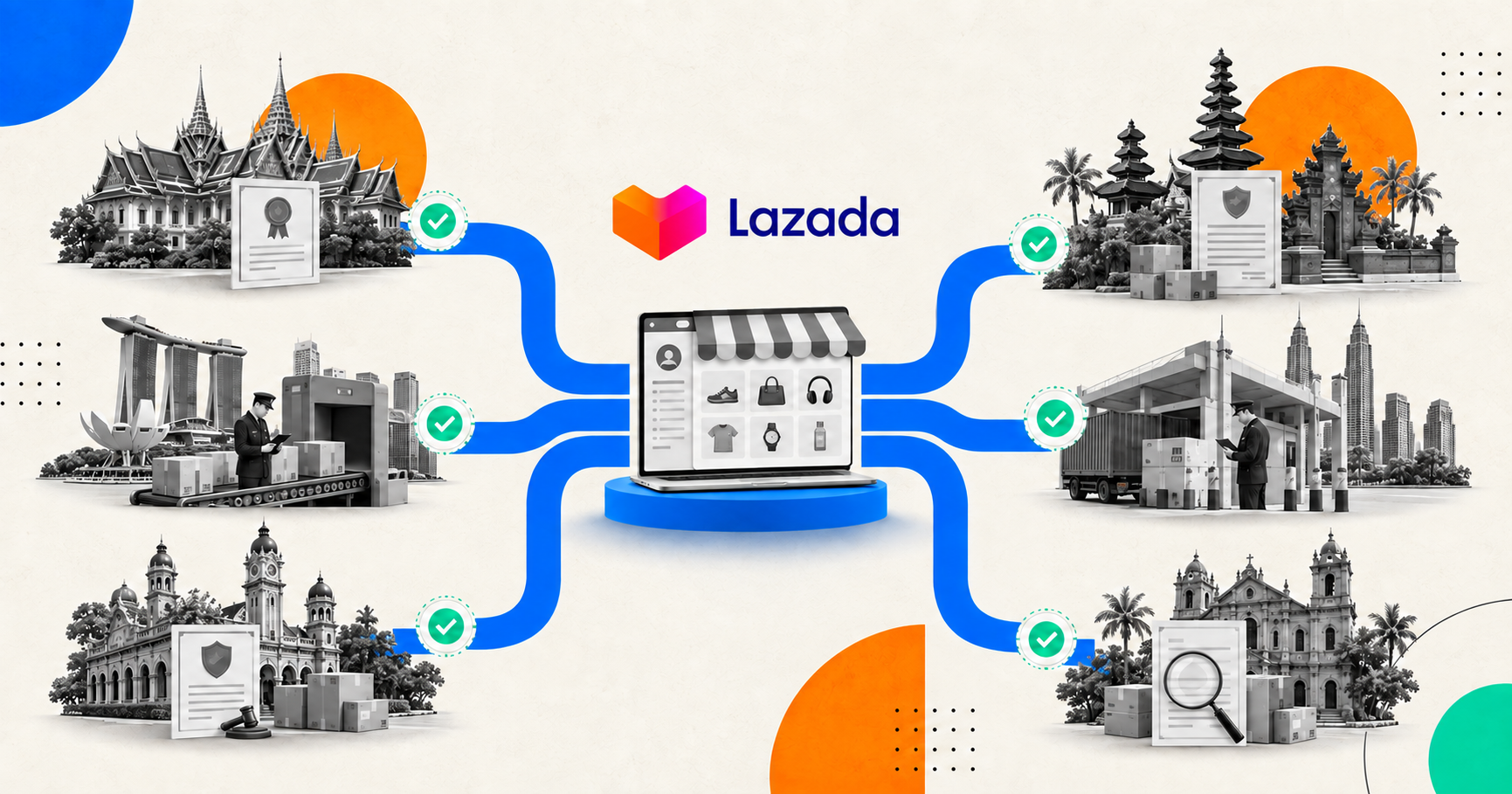
- Lazada operates as one brand across Indonesia, Vietnam, the Philippines, Thailand, Malaysia and Singapore, but each country runs its own trademark registry, customs process and enforcement timeline.
- Livestream and short-video selling is growing fast across the region and is harder for a standard listing-monitoring tool to catch than a static product page.
- Lazada is no longer the default leader on its own platform’s category: Shopee holds a commanding share of regional GMV and TikTok Shop is the fastest-growing challenger, and that competition changes how sellers behave on Lazada itself.
- A brand that can only monitor one or two countries at first should start where its own sales and complaints already concentrate, not where Lazada’s overall GMV happens to be largest.
Most brand-protection playbooks for Lazada get written the same way a brand would write one for Amazon: pick the marketplace, set up monitoring, start filing takedowns. That approach works when a marketplace is a single market with a single legal system behind it.
Lazada is not that. It is one login, one seller dashboard and one app, sitting on top of six national markets: Indonesia, Vietnam, the Philippines, Thailand, Malaysia and Singapore. A brand that treats “Lazada” as one enforcement problem is really solving, at best, one-sixth of it.
One login, six enforcement environments
A single Lazada seller account can list into any of its six markets, and a single storefront can look identical from Jakarta to Singapore. Nothing in the shopping experience signals that the legal ground underneath each listing is different.
But a counterfeit listing selling into Vietnam and one selling into Singapore are not the same problem. Different courts, different customs authorities, and in most cases a different local entity actually has to file the complaint. Lazada’s own seller terms prohibit counterfeit and IP-infringing listings platform-wide, and its IPR protection process reviews takedown requests centrally. That central process still routes back into six sets of national rights and six sets of national remedies once a brand wants to go beyond a marketplace takedown.
Treating Lazada as one market is not a modelling error that costs a brand nothing. It is the reason a takedown works in one country and stalls in another, for what looks like the same complaint.
Same first-to-file principle, six separate registries
The good news, if there is any, is that the underlying rule is consistent. Indonesia, Vietnam and the Philippines all run first-to-file trademark systems: rights belong to whoever registers first, not whoever used the mark first, and an unregistered brand has no trademark infringement claim to bring at all. Thailand, Malaysia and Singapore follow the same first-to-file logic through their own trademark laws.
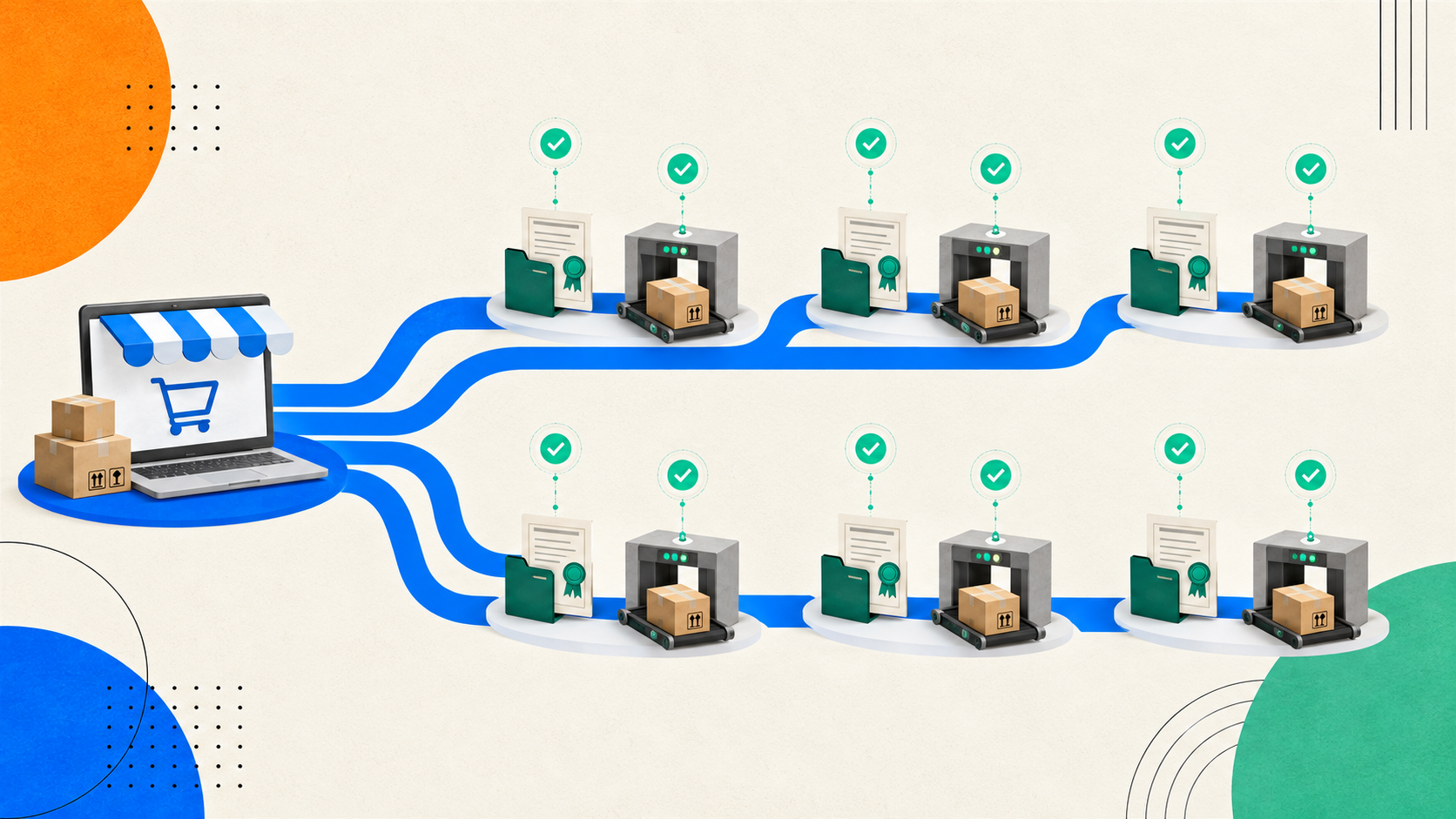
The bad news is that “the same principle” does not mean “the same registration.” Indonesia’s marks are filed with its Directorate General of Intellectual Property, Vietnam’s with the Intellectual Property Office of Vietnam, the Philippines’ with IPOPHL, and Thailand, Malaysia and Singapore each run a separate national office again. There is no single Southeast Asian filing that covers all six the way an EU trademark covers the bloc.
Customs recordal follows the same pattern. A trademark registered in one of the six does not give customs in any of the other five a reason to stop a shipment. Each border authority can only act on a mark it has on file for that specific country.
| Country | Trademark office | Filing basis |
|---|---|---|
| Indonesia | Directorate General of Intellectual Property | First-to-file |
| Vietnam | Intellectual Property Office of Vietnam | First-to-file |
| Philippines | IPOPHL | First-to-file |
| Thailand | Department of Intellectual Property | First-to-file |
| Malaysia | MyIPO | First-to-file |
| Singapore | IPOS | First-to-file |
None of this needs to be a surprise at enforcement time. It only becomes one when a brand assumes that a single Lazada seller account implies a single legal footprint underneath it.
Livestream and short-video selling outrun a standard listing scan
A conventional monitoring tool watches product pages: title, images, price, seller name. That model assumes the thing being sold sits still long enough to be indexed.
Livestream and short-video selling break that assumption. Southeast Asia has been one of the fastest-adopting regions for this format, and the region’s platforms treat live and video commerce as a growth priority rather than a niche feature. A host can show a counterfeit product on camera, quote a price verbally, and close the sale through an in-stream link, all without ever generating a static listing that a scanner would recognise as a product page.
The scale of the enforcement gap this creates is already visible on the platform where it has been studied most closely. TikTok Shop’s own enforcement disclosures describe removing 800,000 infringing videos and livestreams and fielding 180,000 takedown requests through its IP Protection Centre in a single year, and still needed 1,400 dedicated IP staff to keep pace. Lazada runs its own livestream selling feature under the same regional buying habits; a monitoring approach built only for static listings will miss exactly the format that is growing fastest.
The practical fix is not to abandon listing monitoring. It is to extend it to cover streamed and short-video sessions specifically, since that is a different monitoring surface from a product page, not a variation on one.

Selling live on Lazada, Shopee or TikTok Shop?
See what continuous monitoring needs to cover once selling moves off the static product page.
Lazada is competing for its own sellers’ attention
Lazada is not the largest platform in the region it built. Independent tracking of the three dominant platforms put Shopee’s regional GMV share at roughly 52% in 2024, with Shopee, Lazada and TikTok Shop together controlling over 84% of the combined market, up from 79% the year before, according to Momentum Works. TikTok Shop has been the fastest-growing of the three, while Lazada has focused on stabilising its share rather than expanding it.
That competitive position changes seller behaviour on Lazada itself. A seller with a limited inventory of counterfeit stock has every incentive to spread it across whichever platform converts fastest in a given country, and to undercut on price wherever competition between Shopee, Lazada and TikTok Shop is pushing prices down anyway. A brand watching Lazada in isolation will see price and seller patterns that only make sense once Shopee and TikTok Shop are in the same view.
Indonesia remains the single largest market in the region by GMV, and Lazada’s own strength skews toward Thailand, Indonesia and the Philippines rather than being even across all six countries. Monitoring built around Lazada’s average performance regionally will under-weight exactly the countries where it actually matters most.
What to register and record before you list in a second country
Most of what follows is easier to do before a product reaches a Lazada storefront in a new country than after the first counterfeit complaint arrives.
1. Register the mark in every country you will actually sell in
Rights are territorial and first-to-file across all six countries. Register in Indonesia, Vietnam, the Philippines, Thailand, Malaysia and Singapore ahead of listing, not after a copycat listing appears.
2. Record the mark with customs in each country of entry
A customs recordal depends on a national registration existing first. Plan the two together, country by country, rather than assuming one covers the rest.
3. Write down who is authorised to sell, per country
An authorised distributor in the Philippines is not automatically authorised in Vietnam. List sellers and distributors by country, not as one regional roster.
4. Capture a listing baseline across Lazada, Shopee and TikTok Shop
Record current listings, prices and sellers on all three platforms before a launch, not only on Lazada. A new seller or an unusual price drop only means something once there is a baseline to compare it against.
5. Decide who acts on a livestream complaint, and how
A takedown route built for static listings will not obviously cover a livestream session. Agree in advance whether that goes through the same process or a separate one.
Where to start if you can only watch one or two markets
Full six-country coverage from day one is the ideal, not the realistic starting point for most brands. When resources force a choice, the largest market by Lazada GMV is the wrong first filter.
The better filter is where a brand’s own sales, distributor complaints or customer support tickets already concentrate. A market generating real complaint volume today has already told a brand where the exposure is, regardless of how that market ranks in Lazada’s own regional numbers.
A second reasonable filter is where the brand’s registration and customs recordal are already furthest along, since enforcement without a registered right has very little to act on beyond a platform-level takedown request. Prioritising a market with strong complaint signal but no local trademark yet means the first step is legal, not monitoring.
Staying ahead across all six markets
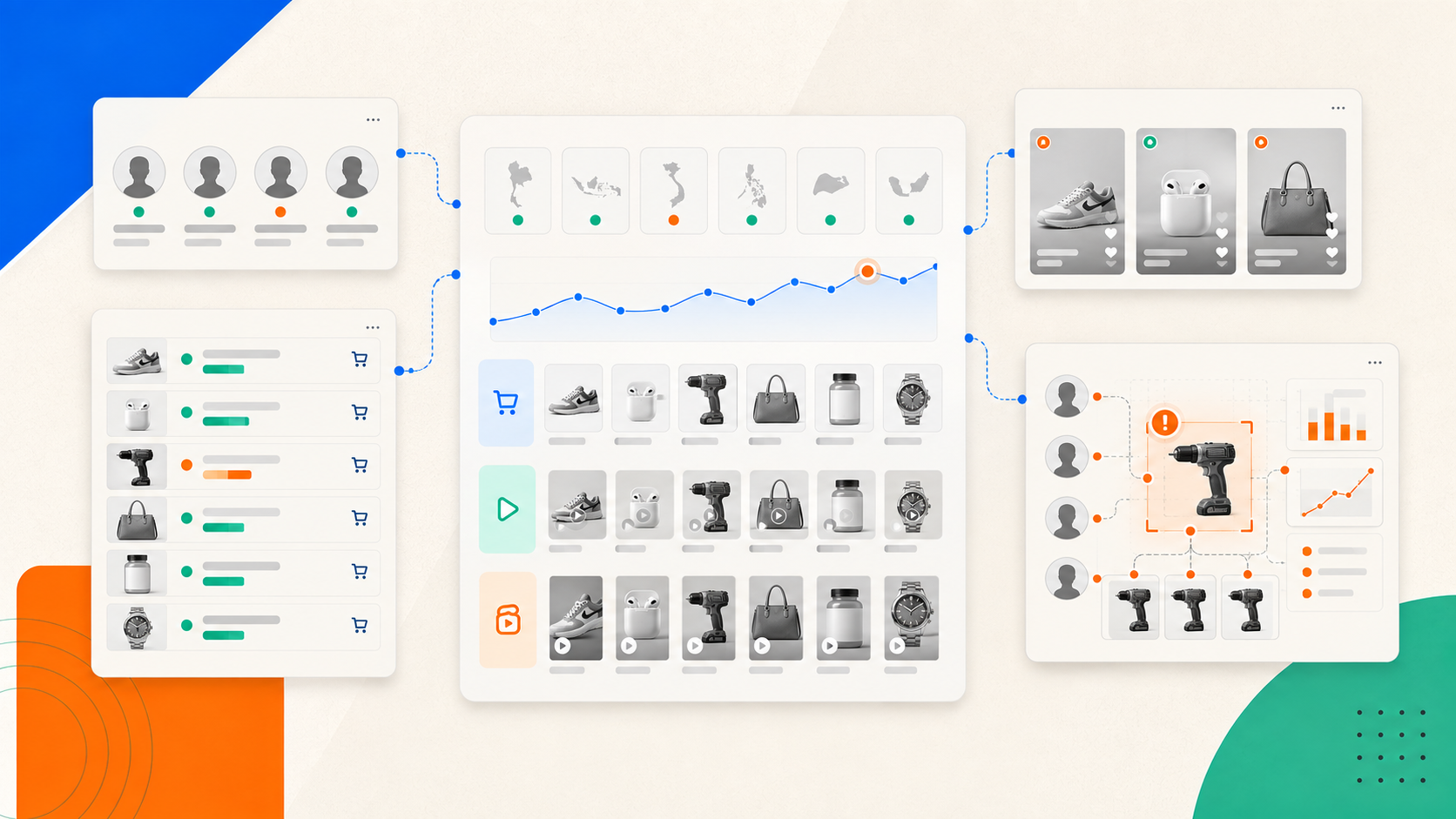
Truviss is built to run this the way Lazada actually needs it run: onboarding a brand’s trademarks and product images once, then watching listings, sellers and prices continuously across Lazada and the other marketplaces a brand competes on in the same countries, with flagged matches routed to a human reviewer before any enforcement action goes out.
For a brand selling into Southeast Asia through Lazada, that means one onboarding step feeding monitoring across all six countries at once, rather than standing up a separate watch for each one. Registrations and customs recordals still have to be done country by country. What monitoring adds is a single place that shows which of those six enforcement environments actually needs attention this week.
The registrations decide whether a brand has the right to act. Monitoring decides where and when to use it.
Lazada earned its reputation as a single, region-wide marketplace by making the seller side of the business feel that simple. Brand protection has to work the opposite way: six countries, six registries, one dashboard watching all of them at once.

Launching on Lazada across more than one country?
Talk to Acviss about what online brand protection should cover before your products reach marketplaces in Southeast Asia.