
Counterfeit Chargers: The Fire-Hazard Brands Can’t Ignore
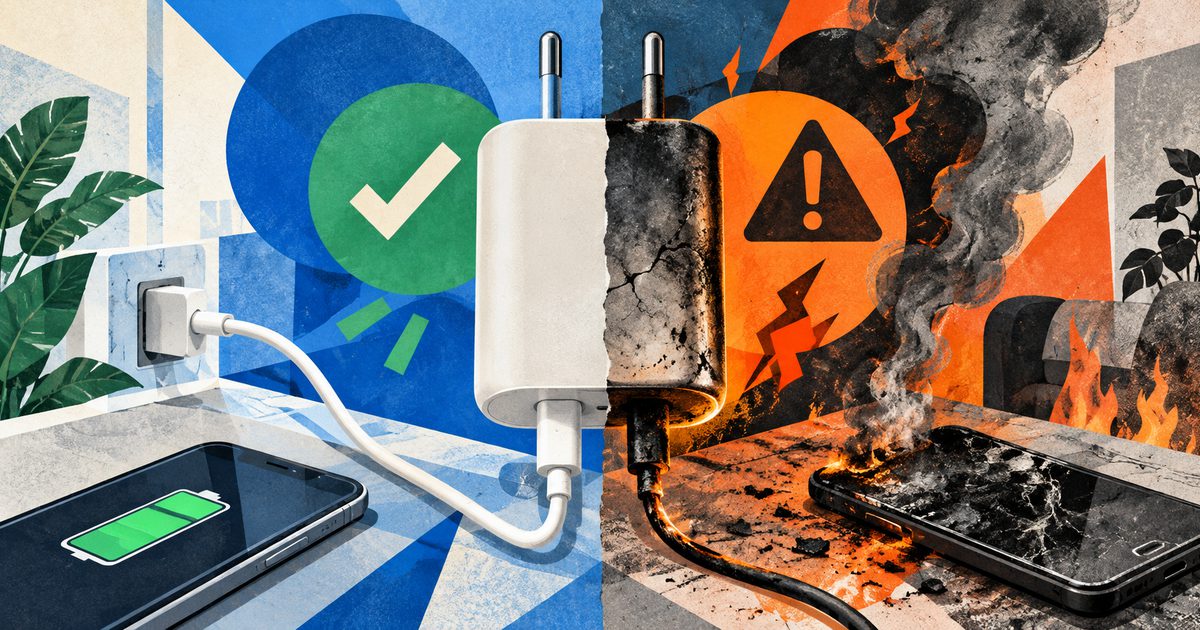
- Counterfeit chargers and power banks fail in a specific, predictable way: no thermal fuse, poor voltage regulation, substandard capacitors, ending in overheating and sometimes fire.
- Independent testing (Electrical Safety First, Which?) found the majority of counterfeit phone chargers on sale pose a genuine fire or shock risk, sold through mainstream retailers and marketplaces.
- The safety mark a cautious buyer is told to check for is often counterfeited too, defeating the one safeguard most consumer-safety advice relies on.
- When a fire happens, the brand whose name and packaging appear on the fake absorbs the reputational damage, even though it never manufactured the unsafe unit.
A counterfeit charger fails in a very specific way. There’s no thermal fuse, the one component whose entire job is to cut power before heat becomes flame. The capacitor inside is rated for a lower temperature than the one it’s imitating. Voltage isn’t regulated within a tight tolerance, so it spikes under load instead of holding steady. None of this shows up when you plug the charger in and it works fine, for a while. It shows up the day the internal temperature crosses a threshold nobody designed the unit to survive.
This isn’t a hypothetical. Electrical Safety First, working with Apple, tested 50 counterfeit and lookalike iPhone chargers bought from UK online marketplaces and discount stores and found that 98% posed a fire or electric-shock risk. Separately, Which? tested 15 chargers sourced from mainstream retailers, including Amazon, B&Q, Debenhams, and marketplace sellers on Shein and Temu, and found 8 presented potential fire or explosion hazards, with 9 posing serious electric-shock risk. These weren’t obscure imports bought from a back-alley stall. They were sold through trusted, mainstream retail and marketplace channels. Separately, counterfeit lithium-ion power banks missing basic overcharge protection have caused real thermal-runaway incidents during shipping and transit, not just in a lab.
Acviss has written before about counterfeiting that turns from a brand problem into a safety problem: fake N95 masks that don’t filter what they claim to, counterfeit baby food, medicines that don’t contain the right dose, automotive parts that fail under stress. Each of those categories eventually produced a headline involving real harm before brands and regulators moved. Counterfeit electronics and chargers belong on that same list, and the industry hasn’t treated it that way yet. The news cycle is subtler than a product recall: it’s a house fire, a damaged device, a burn injury, reported locally and rarely traced back to the counterfeit origin in the first wave of coverage.
The mechanism: why a fake charger actually catches fire
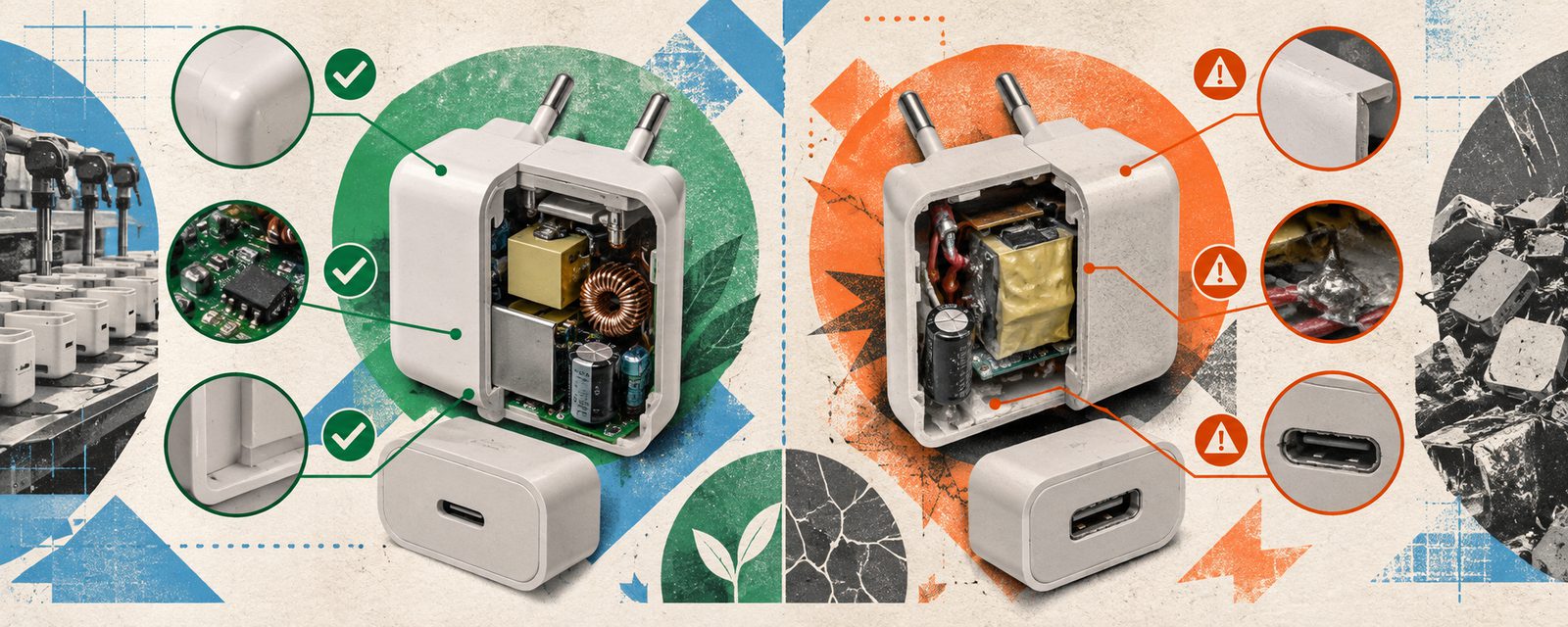
Three manufacturing shortcuts sit behind almost every counterfeit-charger fire risk, and all three are invisible to a buyer at the point of sale.
No or poor voltage regulation. A genuine charger steps down mains voltage and holds the output within a narrow, tested tolerance. A counterfeit unit built to the lowest possible cost skips the regulation circuitry that does this reliably, so voltage spikes under load. That spike is what damages a connected device’s battery over repeated use, and in the charger itself it’s what pushes internal components past their rated limits.
Substandard components. Which?’s teardown testing found internal electrical components positioned too close together, inadequate insulation, and failures under high-voltage stress tests that a genuine unit is designed to pass. One counterfeit Apple USB-C adaptor Which? tested made arcing noises within 10 seconds of testing and was found to contain modelling clay inside the housing instead of proper components. A genuine Apple charger typically contains over 60 individual components; the counterfeits examined in related testing averaged around 25.
Certification bypass. None of the above goes through independent safety testing before the product reaches a shelf. In India that testing sits with BIS/ISI-style certification; in other markets it’s UL or CE. Skipping that process isn’t only about avoiding a cost or a delay. It’s the process that exists specifically to catch the first two shortcuts before a product ships. A counterfeiter who skips it isn’t cutting a corner. They’re removing the one check that would have stopped the product at the door. Anti-counterfeit labelling exists precisely to make that bypass detectable at a glance, when it’s built to resist cloning rather than just look official.
| Genuine charger | Counterfeit charger | |
|---|---|---|
| Voltage regulation | Held within tested tolerance | Unregulated, spikes under load |
| Thermal fuse | Present, rated and tested | Absent, or non-functional |
| Certification status | Independently tested and marked | Mark applied without testing, or absent |
The certification mark gets counterfeited too
The advice every consumer-safety article gives is the same: look for the safety mark. Check for a BIS/ISI stamp, a UL listing, a CE mark, before you buy. It’s sound advice, and it’s also the exact safeguard counterfeiters have learned to defeat directly, by printing the mark on a product that was never submitted for the test behind it.
A fake certification mark isn’t a forgery in the sense of a poorly reproduced logo. It’s often visually identical to the real thing, because reproducing a printed symbol is trivial compared with actually building and testing a compliant charger. The buyer has no realistic way to verify, at the point of purchase, whether the specific unit in front of them was tested or not. Databases exist for some certification schemes, but checking a model number against a registry mid-purchase, in a market stall or on a marketplace listing, isn’t something most buyers do, and for many counterfeit units there’s no legitimate model number to check in the first place.
This is where the fire-hazard problem stops being only a manufacturing-quality issue and becomes an authentication problem. If the mark itself can be faked, the fix isn’t a better mark. It’s a way to verify the specific unit, not the printed symbol on it.

See Certify in action
See how Certify lets a buyer or investigator verify a specific charger’s authenticity in seconds, no app required.
Explore Certify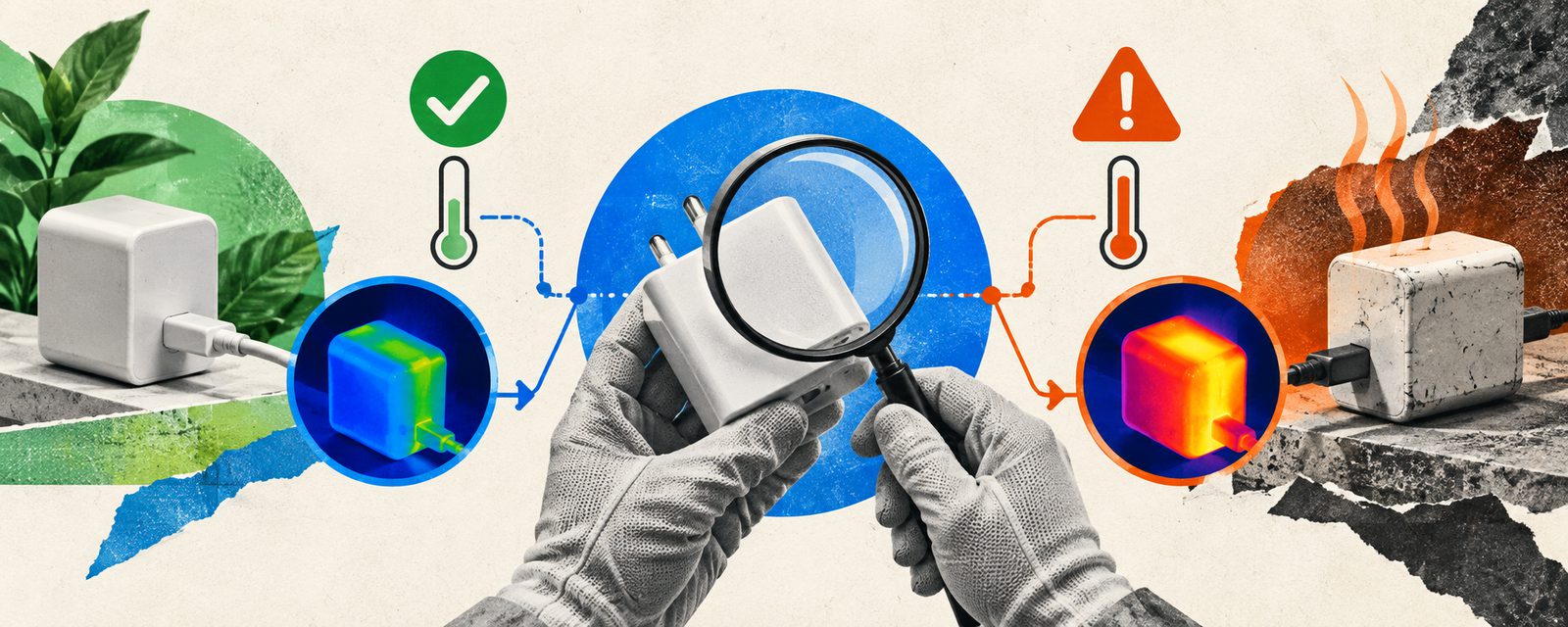
The brand absorbs the fire, even though it didn’t build it
Here’s the part most consumer-safety coverage skips entirely: when a counterfeit charger causes a fire, the brand whose name and packaging appear on it takes the reputational hit, regardless of the fact that it never manufactured, tested, or shipped that specific unit.
News coverage of “a [Brand] charger caught fire” rarely distinguishes counterfeit from genuine in its first cycle. By the time a correction or clarification is issued, if one is issued at all, the association between the brand name and the incident has already spread through social media, local news, and word of mouth. In some markets, this exposure isn’t only reputational. A fire traced to a product carrying a brand’s likeness can trigger regulator inquiries or product-liability questions the brand then has to spend real resources disproving.
The uncomfortable truth is that a brand can’t manufacture its way out of this exposure. Making better chargers doesn’t stop a counterfeiter from putting your logo on their unregulated, uncertified one. This is a brand-protection problem sitting on top of a product-safety problem, and it needs a fix at the authentication layer, not the factory floor.
Where product authentication actually closes this gap
Three tools fit this specific problem, chosen by the angle each covers, not by industry:
Certify handles the consumer-facing verification moment. A buyer, a retailer, or an investigator looking into what caused a fire can scan a unit and get an authentication result through WhatsApp or a browser, no app required. This is the check that should exist at the exact point where “look for the safety mark” advice currently fails, because it verifies the unit itself rather than a symbol printed on it.
Uniqolabel fits the retail and distribution side of the same problem. A retailer stocking chargers and power banks can verify authenticity before a unit ever reaches a shelf, without needing a smartphone or any consumer-facing step. For a category where the fake often looks identical to the genuine article at a glance, a check that happens before the point of sale closes part of the gap that consumer vigilance alone can’t.
Axion Label is the harder-to-clone option for categories under sustained counterfeiting pressure. Electronics accessories, chargers and power banks specifically, are exactly that kind of category given the scale of the testing findings cited above. AI-enabled security labelling raises the bar for a counterfeiter who has already shown they’re willing to fake a certification mark; it’s a reasonable next step when standard anti-counterfeit labels have already been targeted.
Two adjacent products are worth naming honestly rather than force-fitting into this specific problem. Origin, Acviss’s supply-chain traceability product, becomes relevant if a brand’s actual exposure is counterfeit inflow through its distribution network rather than point-of-sale fakes. Truviss, the online marketplace monitoring product, is the right tool if the exposure is concentrated in online listings rather than physical retail. Neither replaces unit-level authentication for the specific fire-hazard problem this post covers, but either might be the right complement depending on where a brand’s counterfeit volume is actually entering the market.
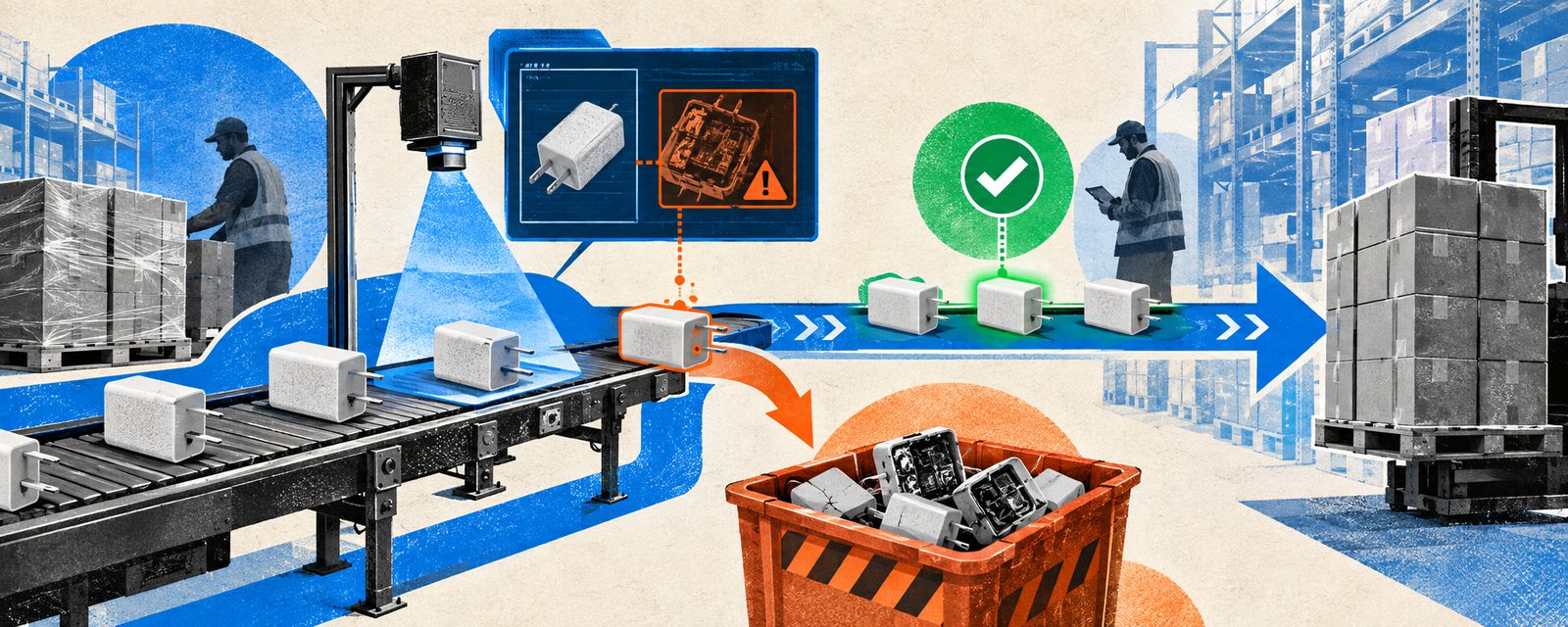
The fix is verification, before the next fire is a headline
The danger compounds because it’s invisible at three separate points: the voltage regulation nobody can see, the components nobody can inspect without opening the unit, and the certification mark that’s often faked convincingly enough to pass a glance. A brand doesn’t get to choose whether a counterfeiter puts its name on an unsafe charger. It only gets to choose whether there’s a way to tell the fake from the genuine before, or after, it fails.
If electronics accessories are a category your brand sells into, or licenses its name into through partners and resellers, the question worth asking isn’t whether counterfeits exist. It’s whether anyone, a buyer, a retailer, or your own team investigating an incident, can actually verify a specific unit right now. Book a demo to talk through authentication for electronics accessories, or see how other brands have approached unit-level verification in our case studies.

Selling or licensing electronics accessories under your brand name?
Book a free demo and see how Certify, Uniqolabel, and Axion Label close the authentication gap before the next fire makes it a headline.
Book a Free Demo
Related reading

How to Reserve and Register a Trademark for Your Brand
A brand name isn’t protected just because you’re using it. Until it’s registered as a trademark, anyone else can file for
How to Remove Counterfeits on Meesho, IndiaMart and Myntra
In this article Meesho: How Counterfeits Enter and How to Report Them IndiaMart: The B2B Counterfeit Problem Myntra: Brand Registry