
 Arun Krishnan2026-09-147 min read
A printed security label sells once and earns a thin margin, then the revenue stops until the next purchase order lands. If you want authentication to change your economics rather than just your product sheet, the pricing decision matters more than the technology one.
Charge for authentication as a recurring subscription scoped to how much each customer uses the platform, not as a one-time fee bolted onto the label order. That single change turns a unit sale into an annuity.
Price authentication as recurring software, in tiers scoped to customer usage. Per-brand subscription pricing protects gross margin and keeps revenue predictable. Per-scan usage pricing aligns price to value and lifts retention, at a lower margin and with heavier billing. Most manufacturers new to software start on per-brand tiers and add a usage component later. The benchmarks below are global software figures rather than India-specific data, so treat them as direction rather than a target.
Why a one-time label sale caps what a customer is worth
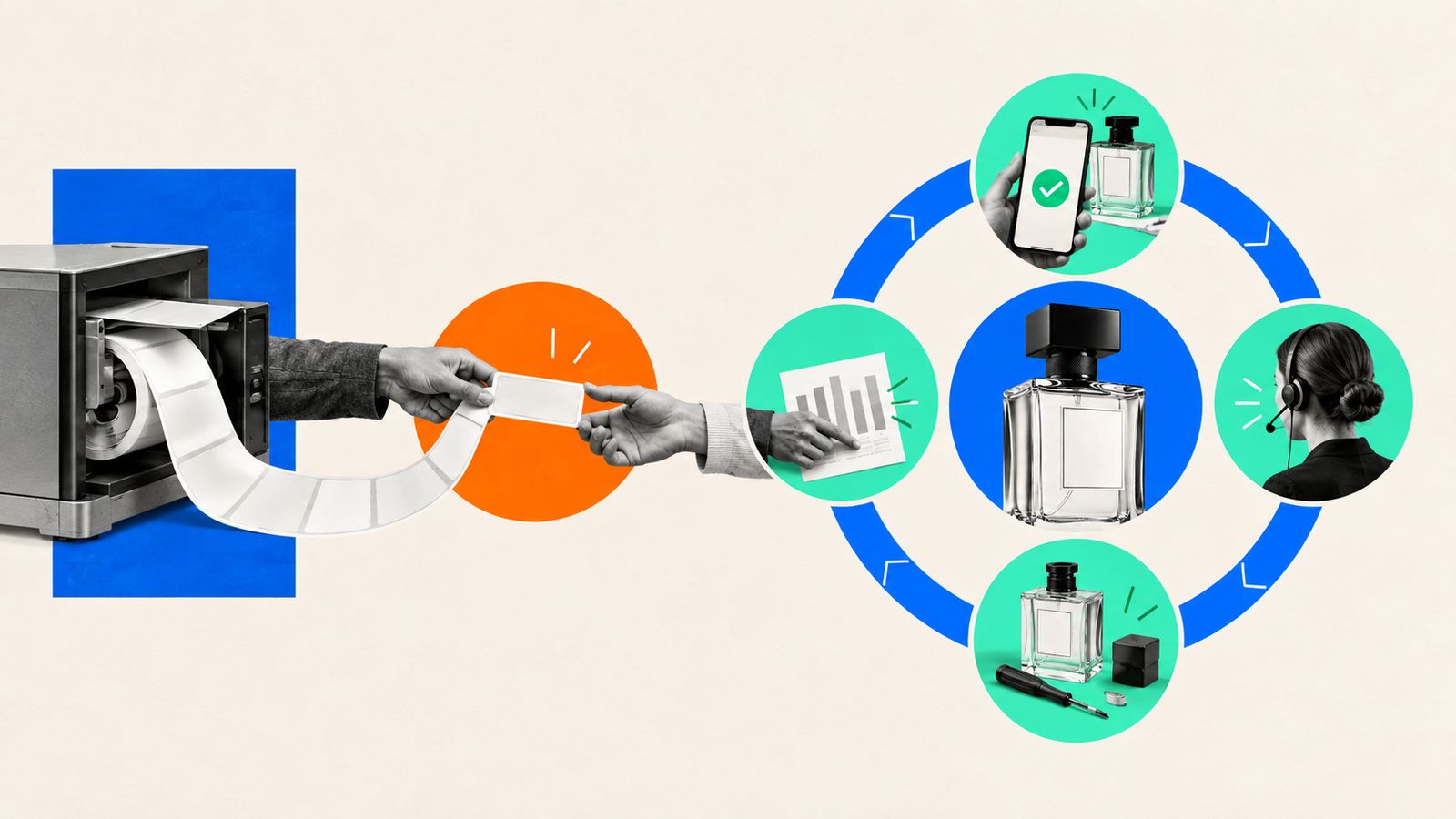
Physical print and packaging manufacturing runs a low single digit net profit margin, roughly 1.8 to 3.9 percent on a global benchmark (Vena Solutions citing NYU Stern, February 2026). Each order earns little, and it earns it once.
That is a structural ceiling rather than a sales problem. A physical good sold once caps what any single customer can be worth to you, no matter how well you sell it.
Servitization is the name for the way out, where a manufacturer turns one-time product sales into an ongoing service relationship at a higher and more predictable margin (Sigma Software, October 2025).
The reference case is older than software. Rolls-Royce trademarked power-by-the-hour in 1962, offering engine replacement on a fixed cost per flying hour so the operator paid only for engines that performed (Rolls-Royce, October 2012). The principle transfers: charge for the outcome the product delivers, over time, rather than for the object once.
What you are actually selling when you sell authentication
Authentication as a service is a cloud platform that gives each unit a unique digital identity and verifies it in real time, sold as a managed subscription rather than a one-time licence.
Price it against the value the buyer keeps, not the cost of a sticker. A brand pays for verification because it protects revenue, warranty exposure and reputation across every unit in the market. That is a different value proposition from a printed feature, and it supports a different price.
Per brand or per scan?
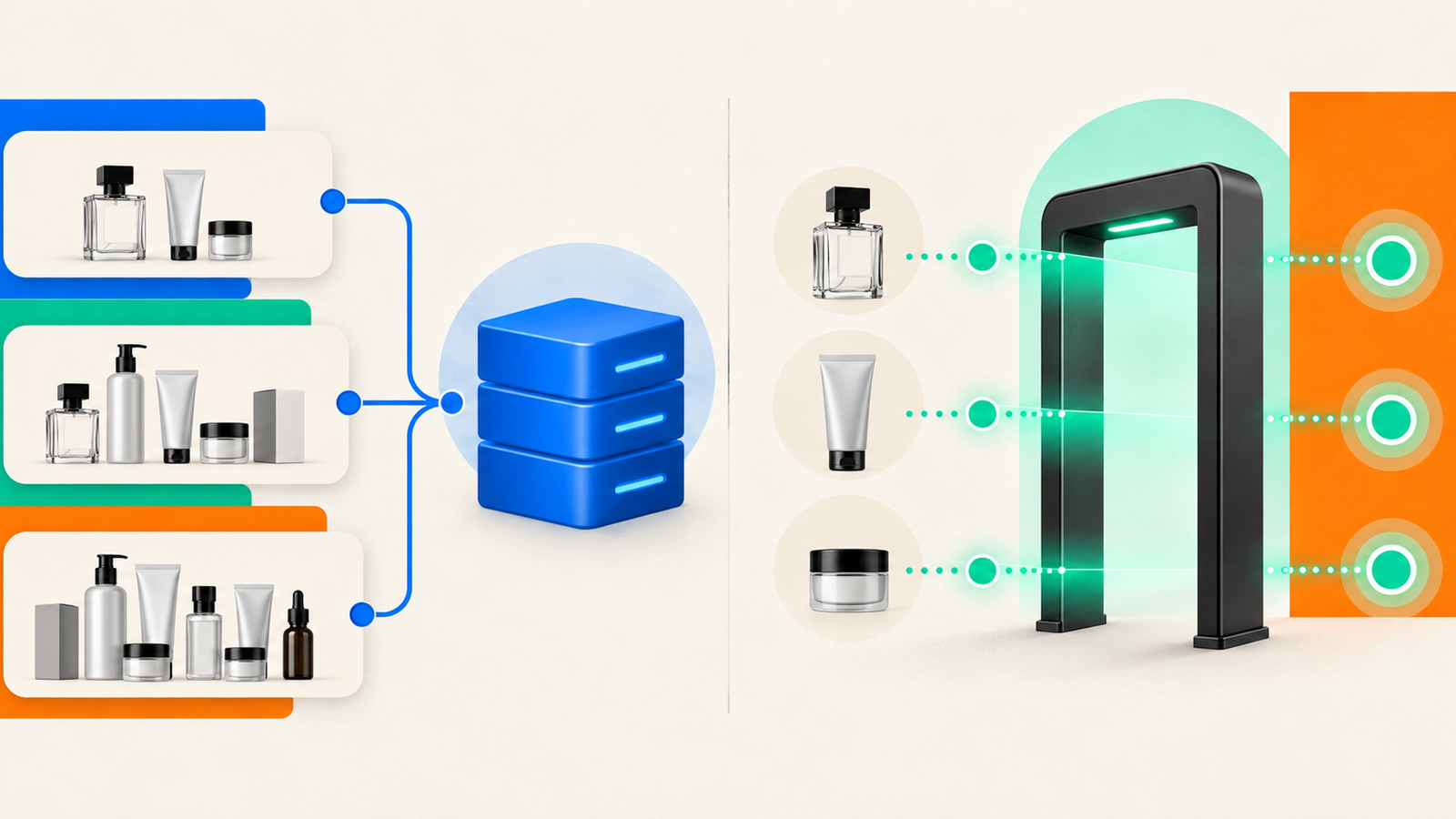
Both models work, and the choice is a margin against alignment trade.
Per-brand tiered pricing scopes the fee to how many customer brands you take on. It protects gross margin and makes revenue predictable, which matters when you are new to selling software.
Per-scan pricing ties the fee to verification volume. It aligns price to the value each brand receives and lowers the entry cost, which helps expansion and retention.
The margin gap is real. Usage-only pricing posts the lowest median gross margin at 62 percent, below the 76 to 84 percent range of subscription variants, because usage revenue carries higher infrastructure cost before scale normalises it (Aleph x Benchmarkit, CY-2025, across 342 B2B software companies). Usage models pay that back on retention, with net revenue retention across private SaaS running about 101 percent at the median (KeyBanc Capital Markets and Sapphire Ventures, October 2024).
| Pricing model | How you charge | Margin behaviour | Where it fits |
|---|---|---|---|
| Per brand (tiered subscription) | A recurring fee scoped to how many customer brands you onboard | Protects margin; subscription variants run 76 to 84% | Manufacturers wanting predictable revenue and simple billing |
| Per scan (usage-based) | A fee tied to verification volume | Lower margin, a usage-only median of 62%, but leads on expansion | Brands where scan volume tracks the value delivered |
| Hybrid (base plus usage) | A base subscription plus a usage component above a threshold | Predictable base margin with usage upside | Partners scaling across many brands with variable volume |
The catch with per-scan is operational rather than commercial. It needs real-time metering and heavier invoicing, which is why a manufacturer new to software usually starts on per-brand tiers and adds usage once the billing can carry it.
Add recurring authentication to every label programme
Package verification, support, and usage data as a branded service for customers.
How margin behaves as you add brands
Software gross margin widens with scale as delivery gets more efficient, moving from 72 percent below USD 5M ARR to 86 percent at the USD 50M to USD 100M band (Aleph x Benchmarkit, CY-2025). Each brand you add joins a base that becomes more profitable per unit of delivery.
Be precise about the comparison when you pitch this internally. The software figure is a gross margin and the print figure is a net profit margin, so they are not like for like. The honest contrast is the shape of the business: a printed label is a physical good sold once at a thin net margin, and a verification subscription recurs every year at a high gross margin.
What the recurring line costs you to run
Recurring revenue is not free money. A software line brings support, hosting cost pass-through and churn risk that a label order never carried.
Servitization is a genuine operating change rather than a switch you flip, and it needs new billing and support capability plus customer buy-in (Sigma Software, October 2025).
Price for that. Keep an entry tier that covers your cost to serve, build the margin cushion into the higher tiers, and expect some accounts to churn before the model compounds.
Building the platform or reselling one

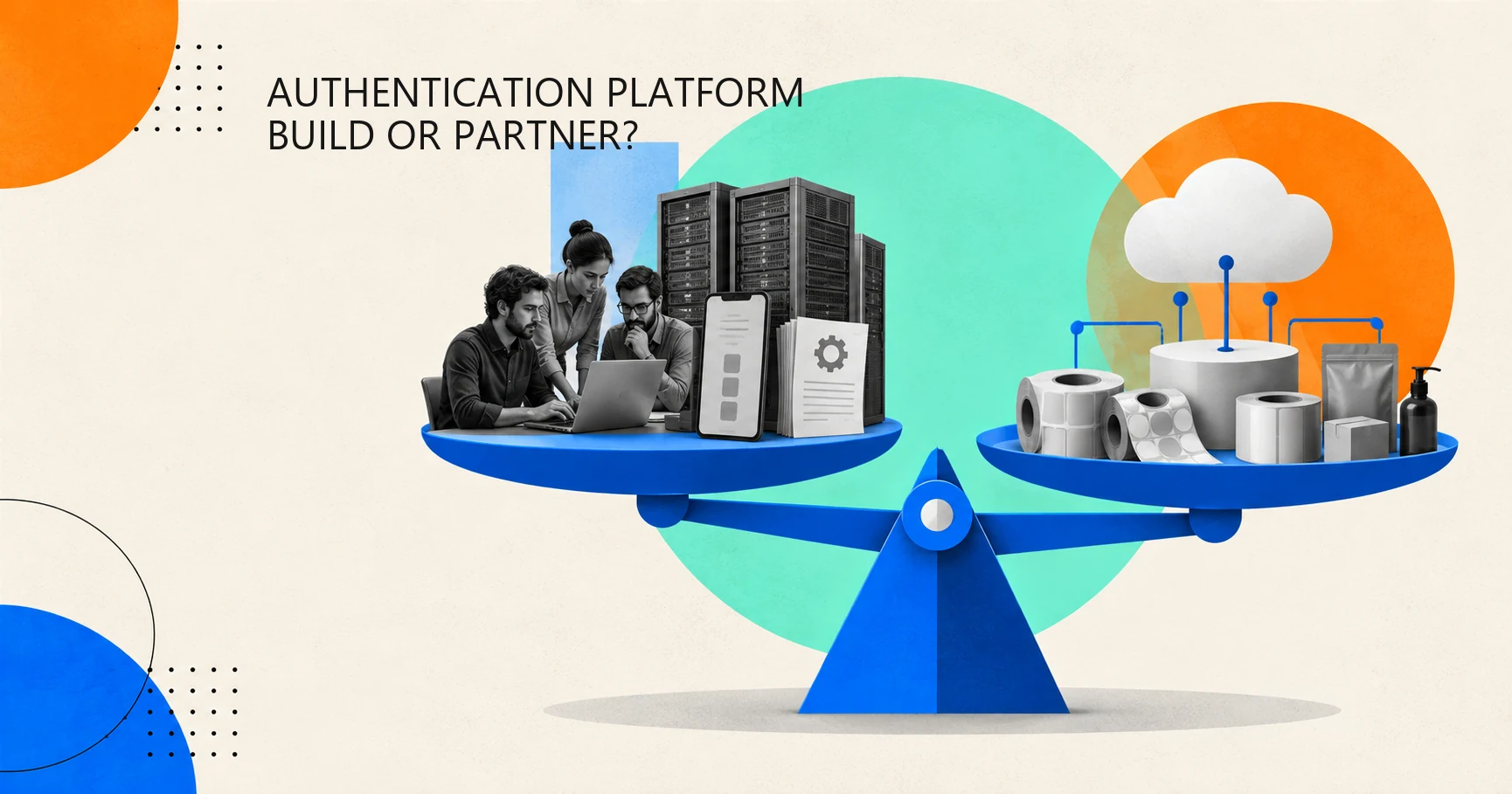
Building your own billing, hosting and verification stack takes multiple quarters and ongoing engineering you carry alone. Reselling a white-label platform removes that, so you launch a branded verification app and dashboard and start charging brands within weeks.
We price the Acviss white-label authentication platform on the per-brand model described above, across Starter, Growth and Enterprise tiers set by how many brands a partner onboards. There is no public price on those tiers, so treat the structure rather than any figure as the thing to copy: charge more as a partner onboards more brands and needs deeper capability such as track-and-trace or ERP integration.
FAQ
How do you price the first deal when you have nothing to compare it to?
Work from your cost to serve upward and the customer’s exposure downward, then pick a number inside that band. Cost to serve is your platform fee plus the hours your team spends onboarding and supporting the account. Exposure is what the brand loses to counterfeits, warranty fraud or diversion in a year, which they can usually estimate even if they will not share it. Price the first deal to be easy to say yes to and short in term, because the first renewal teaches you more about pricing than the first quote does.
What do you do when a customer asks you to fold the software into the label price?
Expect this, because it is how they have always bought from you. The problem is that a bundled price hides the software, so the value disappears at the next tender and you end up defending a slightly higher label rate. Quote both lines separately even when you offer a combined discount. If they insist, put the software on its own renewal date so it does not get re-tendered every time the label contract does.
What happens when a customer scans far more than you expected?
On per-brand pricing, nothing, which is the point, until the volume starts costing you real infrastructure. Set a fair-use threshold in the contract with a defined overage rate above it, and review it annually rather than mid-term. The failure mode is discovering a single account is eating your margin and having no contractual route to reprice it.
Should you charge a setup fee to your own brand customers?
Usually yes, for two reasons that have little to do with the revenue. It covers the onboarding work, which is real and front-loaded, and it filters out buyers who are not committed enough to finish the integration. Keep it modest relative to the annual fee so it does not become the reason a deal stalls.
What contract length should you sell?
Annual terms suit both sides at the start. Monthly makes the revenue too easy to walk away from before the customer has seen a full cycle of scan data, and multi-year locks in a price you set before you understood your own cost to serve. Once you have a year of real usage across several accounts, longer terms with a built-in escalation clause become a reasonable ask.
Launch authentication without building the full stack
Use Acviss white-label infrastructure to add a recurring software line beside physical labels.
Related reading

Who Owns the Scan Data in a White-Label Authentication Partnership?
Read related Acviss guidance.
What It Actually Costs a Label Manufacturer to Add Authentication Software
Read related Acviss guidance.