
- Why a shopper cannot tell a genuine product from a fake at the shelf
- What WhatsApp product authentication actually means
- Why no app needed is the difference for a shopper in India
- What makes the verified mark trustworthy: a non-cloneable, unit-level identity
- Beyond a genuine or suspect check: intelligence and engagement from every scan
- FAQ
WhatsApp Product Authentication: How a Shopper Verifies a Genuine Product With No App
 Arun KrishnanAug 24, 202610 min read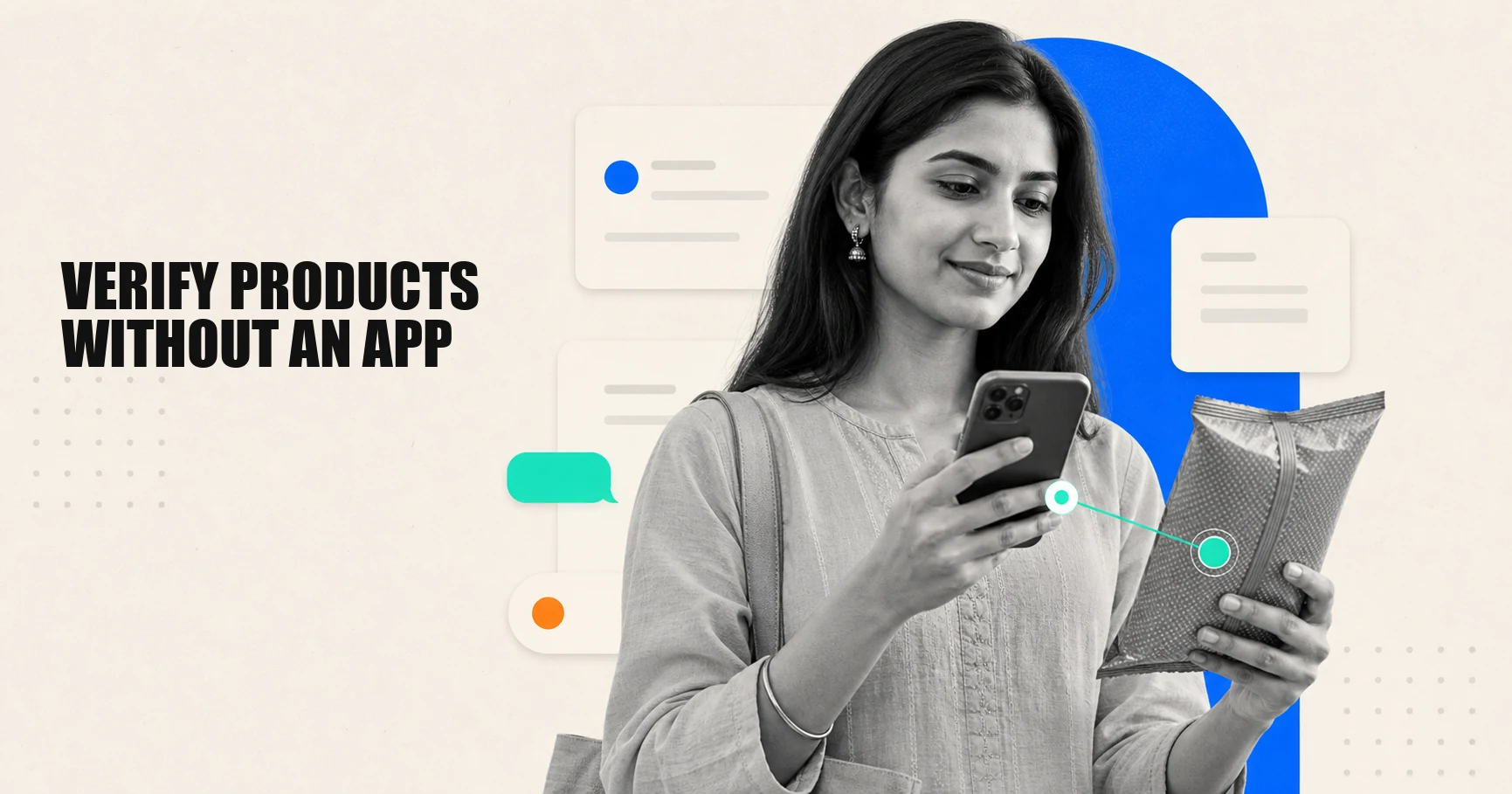
- Shoppers verify a physical product inside WhatsApp without installing a separate brand app.
- Trust comes from a non-cloneable identity issued to each unit, not from a copyable printed code alone.
- No-download verification reduces shelf-level friction, especially across mobile-first Indian markets.
- Every verification can also create duplicate-scan, location, and consumer-engagement intelligence.
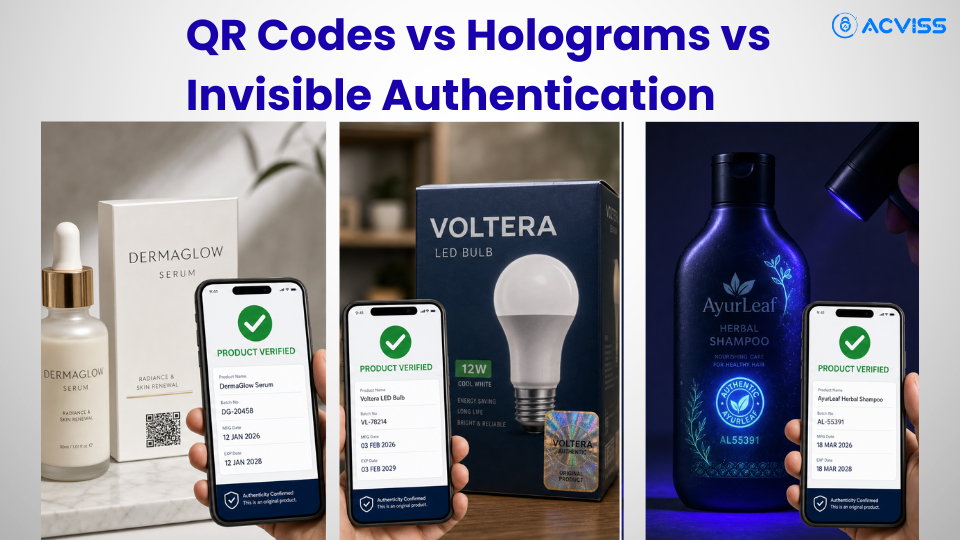
WhatsApp product authentication lets a shopper confirm that a physical product is genuine directly inside WhatsApp, using the messaging app already on their phone rather than a separate brand app. It answers a problem every buyer faces at the shelf: a package can look authentic, carry a familiar logo, and still hold a counterfeit, and a printed code on the pack proves nothing on its own because anyone can copy it. That printed-code weakness is one of several supply chain gaps covered in our piece on five ways anti-counterfeit technology protects your supply chain.
The mechanism from Acviss closes that gap. With Certify, each individual unit carries a non-cloneable secure identity; the shopper verifies that identity through WhatsApp, a web link, or the Acviss app, and reads a genuine or suspect result in seconds. Because verification runs inside WhatsApp, the app used by 80.8% of Indian internet users (GWI survey data published in the We Are Social and Meltwater Digital 2025: India report, Simon Kemp, 25 February 2025), a first-time buyer checks in an app already on the phone rather than downloading a brand app at the shelf.
Why a shopper cannot tell a genuine product from a fake at the shelf
Standing in a shop, a shopper has no reliable way to separate a genuine product from a convincing fake by sight. A counterfeiter can reproduce packaging, holograms, and logos, and the market that exploits this gap is large and growing. Acviss built Certify to close this shelf-level gap, giving each unit an identity a shopper can check in seconds rather than a look a counterfeiter can copy.
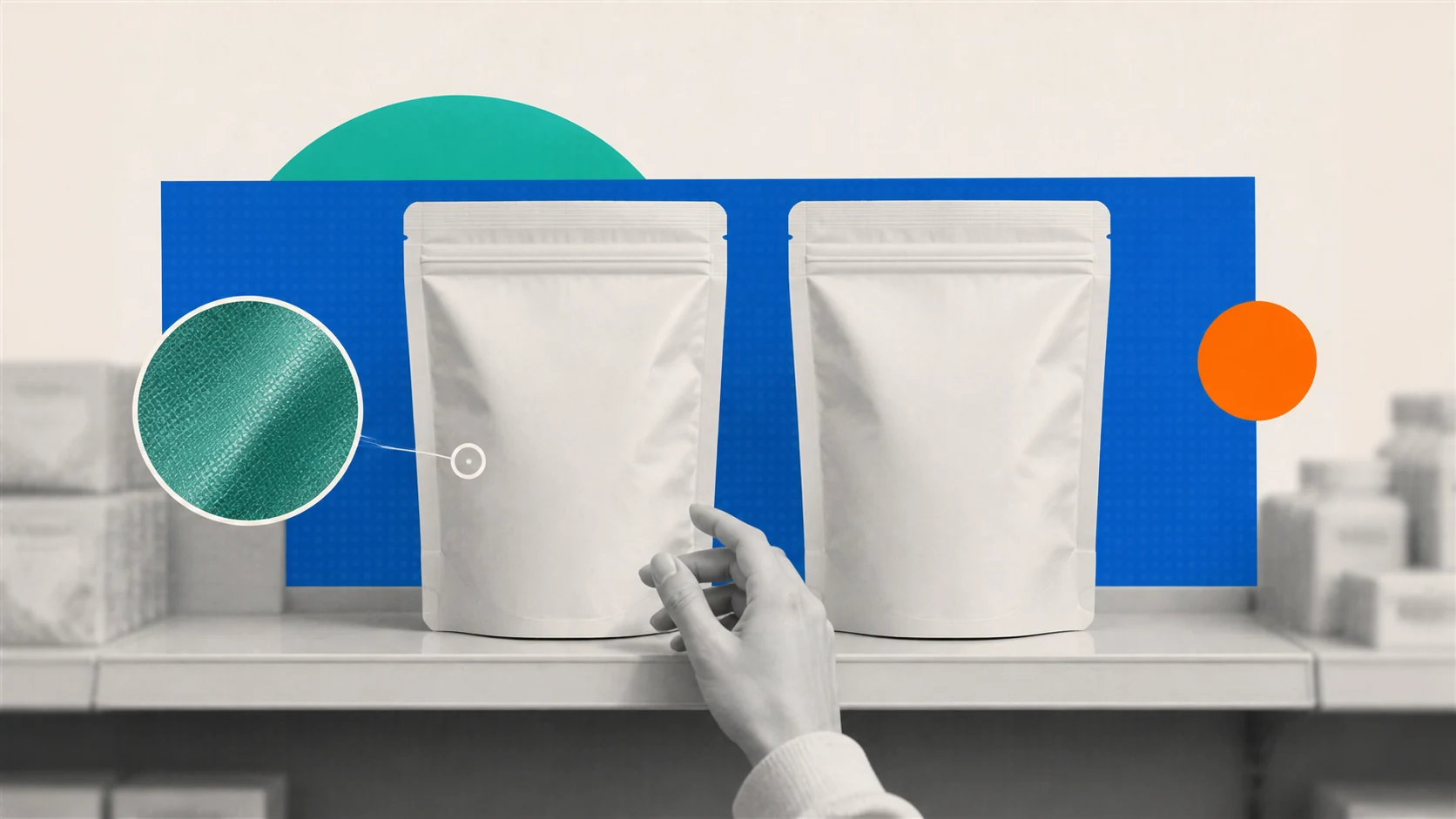
Global trade in counterfeit goods reached USD 467 billion in 2021, according to the OECD and EUIPO report Mapping Global Trade in Fakes 2025 (May 2025). That figure is global, not India specific, but it sets the scale of the problem a shelf-level check has to answer.
The cost is not purely financial. The same OECD and EUIPO analysis records a rise in hazardous fakes across automotive parts, medicines, cosmetics, toys, and food, so a counterfeit can reach a patient, a farmer, or a driver as a genuine looking unit. For a manufacturer that means lost revenue and broken trust; for the customer, an unsafe product in the home or the field.
Brands have tried to answer this with a scannable code on the pack, but a plain code carries no proof of authenticity on its own. A counterfeiter can photograph a genuine code, reprint it, and paste it over a fake. As Dustin Brewer of the security firm BlueVoyant told CNBC in July 2025, "Attackers can simply print their own QR code and paste it physically or digitally over a genuine one, making it nearly impossible for the average user to detect the deception." That remark describes payment scams in the United States, a different threat, yet the underlying point about a copyable code holds for product packs too.
What WhatsApp product authentication actually means
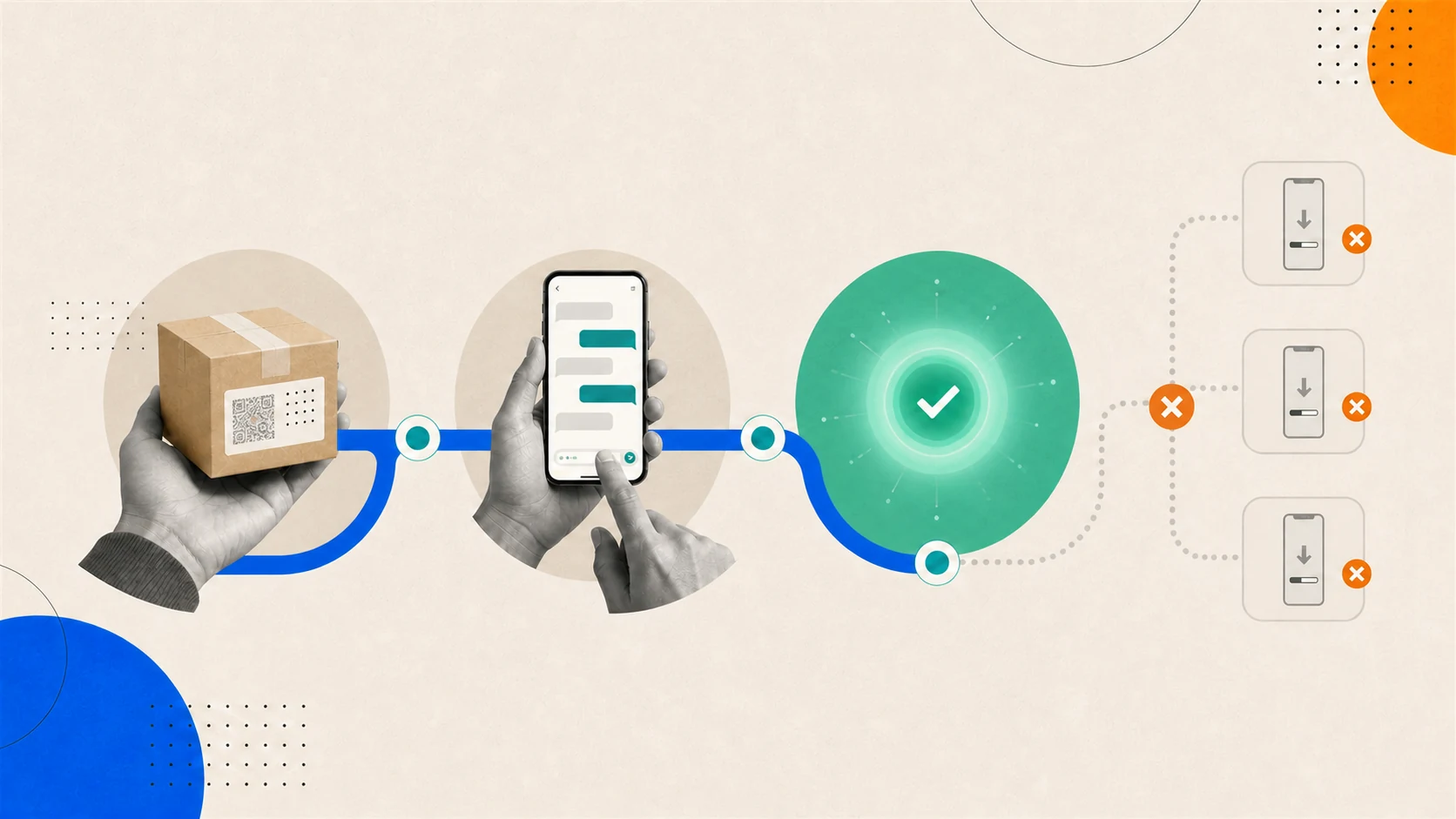
WhatsApp product authentication is the practice of verifying a product's genuineness through a WhatsApp conversation instead of a downloaded app. The shopper opens WhatsApp, scans or submits the identity printed on the unit, and learns at once whether it is authentic.
Make product verification effortless
See how Certify connects non-cloneable product identities with no-download consumer verification.
Explore CertifyAcviss builds this into Certify, which gives every individual unit a non-cloneable secure identity verifiable through WhatsApp, a web interface, or the Acviss app, with no app download required. The shopper does not create an account or learn a new tool; the check happens in an app they already open every day.
Why no app needed is the difference for a shopper in India
The value of skipping the app is concrete in India, where the verification channel already sits on nearly every connected phone. India counted 806 million internet users at the start of 2025, per DataReportal, Digital 2025: India (February 2025). The market is overwhelmingly mobile: about 95.7% of India's internet subscribers connect over wireless, mostly mobile, access rather than a fixed line, per the TRAI Telecom Services Performance Indicator Report for the quarter ending 31 March 2026 (released via PIB, June 2026). WhatsApp ranks as the most-used platform of all, per the We Are Social and Meltwater Digital 2025: India report (March 2025).
Asking a new buyer to find and trust a brand's app at the point of sale is the friction that kills consumer verification. WhatsApp product authentication removes that step, so a shopper in a Tier 2 or Tier 3 town verifies in the moment before paying.
Acviss extends that reach in two ways that matter outside metro India:
Regional languages. Acviss supports verification in multiple Indian languages, including Hindi, Telugu, Marathi, and Punjabi, so the check is not locked to English readers. A shopper confirms a product in the language they think in, which widens who actually uses verification.
Low and no connectivity. Acviss verification runs where a mobile signal is weak or absent, which suits rural retail, farm supply points, and warehouses far from strong coverage. It stays usable exactly where counterfeit goods reach buyers with the fewest ways to check.
What makes the verified mark trustworthy: a non-cloneable, unit-level identity
The result is trustworthy because of what sits under it: a non-cloneable identity issued for each unit, not a single design copied across a whole production run. Acviss pairs a physical mark with a cryptographic identity, and verification checks both against the records held for that unit.
This does not make counterfeiting itself impossible, and no honest authentication claims that. What it does is make replication of the label economically and physically impractical, so a counterfeiter cannot cheaply reproduce a unit's identity and pass it off as authentic.
The incentive to replicate is large in India. Illicit goods, counterfeit and smuggled or tax-evaded alike, made up 25.4% of the country's packaged-food market, worth Rs 2.23 lakh crore, in 2022-23, according to the FICCI CASCADE study reported by The Economic Times (released September 2024). Raising the cost of replication at the unit is what blunts that incentive.
That unit-level design is the line between a copyable code and a verifiable identity. The table below sets the two approaches side by side.
| Property | A plain scannable code | An Acviss non-cloneable identity |
|---|---|---|
| Can be photographed and reprinted | Yes, anyone can copy and reuse it | No, Acviss makes replication of the label economically and physically impractical |
| Proves the unit is authentic | No, a scan alone shows only that a code exists | Yes, Acviss checks a unit-level identity against the record held for that unit |
| Needs a dedicated app | Often yes | No, verify through WhatsApp, a web link, or the Acviss app |
| Works in Indian regional languages | Rarely | Yes, Acviss supports Hindi, Telugu, Marathi, and Punjabi |
| Gives a brand usable intelligence | No | Yes, every Acviss scan feeds location, device, and duplicate-scan signals |
Beyond a genuine or suspect check: intelligence and engagement from every scan
WhatsApp product authentication is not a one-way check. Every verification through Acviss Certify captures scan location, device, and pattern data, which drives duplicate scan detection and geographic anomaly analysis when one identity appears in two places at once. A single consumer scan becomes real-time counterfeit intelligence a brand can act on, showing where suspected fakes surface while a response still matters.
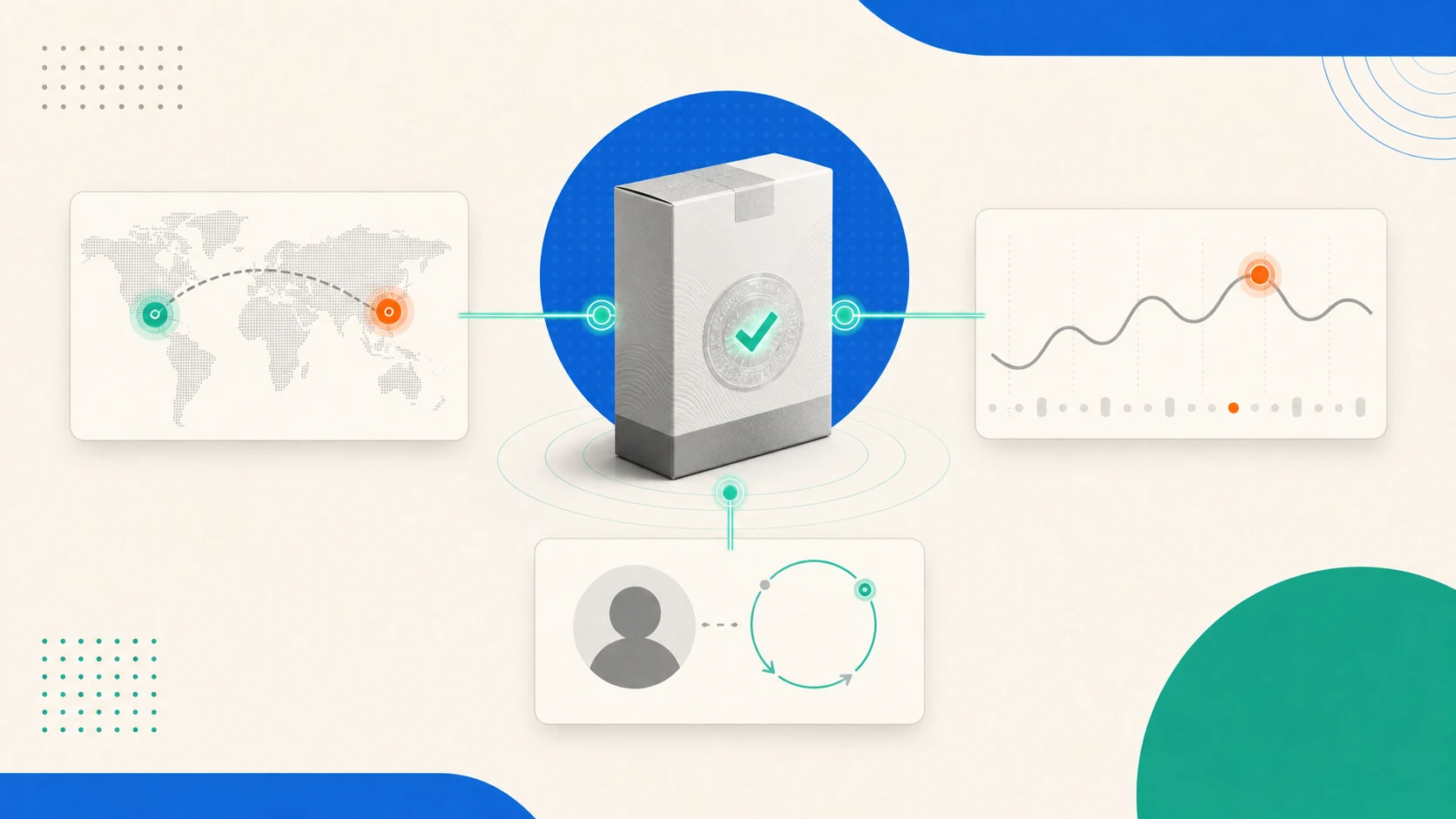
The same scan can open a relationship rather than end an interaction. Through Acviss Bonus, a verified scan connects to loyalty and first-party data, so a security check turns into a moment of engagement with a real buyer. This is the end-to-end scope that separates a standalone label from a protection system: Acviss is an omnichannel brand protection platform that helps manufacturers protect products through non-cloneable authentication, supply chain traceability, AI-powered online brand protection, warranty management, and consumer engagement.
One limit is worth stating plainly. WhatsApp and web verification depend on the consumer choosing to check, so a shopper who never scans gains no protection, and authentication does not sweep counterfeits off the market by itself. What Acviss verification does is make a fake harder to pass off and easier to catch early, on a channel the shopper already trusts, which is a narrower and more honest claim than eliminating counterfeiting.
FAQ
What is WhatsApp product authentication?
WhatsApp product authentication is a method for confirming that a physical product is genuine through WhatsApp, without installing a separate brand app. With Acviss Certify, each product unit carries a non-cloneable secure identity that a shopper verifies inside WhatsApp, on a web link, or in the Acviss app, and a copied code returns a suspect result rather than a false confirmation. WhatsApp already sits on most phones, so a new buyer does not have to download an unfamiliar application at the shelf.
Do I need to download an app to verify a product?
No. Acviss verification runs through WhatsApp or a web link as well as the dedicated Acviss app, so a shopper needs no app download to confirm a product. This matters most at the point of purchase, where asking a shopper to install an unfamiliar app is the step that stops many people from verifying at all. For brands selling into markets where storage space and mobile data are tight, the no-app route reaches buyers who would never install a single-purpose application, while the dedicated Acviss app stays available for those who verify products often.
How do I check if a product is original?
To check if a product is original, verify the unit's secure identity through WhatsApp, a web link, or the Acviss app, and read the result. A genuine unit protected by Acviss Certify returns an authentic result because its non-cloneable identity matches the record created for that specific unit. A counterfeit carrying a copied or reused code does not match, so a shopper sees a suspect result before paying, and the check takes seconds with no hardware beyond the phone in hand. Because the identity belongs to the individual unit rather than a shared batch, a fake cannot borrow a genuine unit's identity and pass.
Is WhatsApp product authentication just a QR code?
No. A plain QR code is a copyable pointer: a counterfeiter can photograph it, reprint it, and paste it onto a fake, and a scan alone proves that a code exists, not that the item is genuine. In the United States, 73% of people scan codes without verifying where they lead (NordVPN, cited by CNBC, July 2025), which shows how little a bare scan confirms. Acviss uses a non-cloneable, cryptographically verified identity issued for each unit and checked against the record held for it, rather than a single copyable code repeated across a run. The consumer experience is still a simple scan or message inside WhatsApp, while the identity behind it is unique to that one unit.
Does WhatsApp product authentication work in Indian regional languages or without internet?
Yes, Acviss offers verification in several Indian languages, Hindi, Telugu, Marathi, and Punjabi among them, so a shopper does not have to switch to English to confirm a product. It also runs where connectivity stays limited or absent, which suits rural retail, farm supply points, and warehouses far from a strong mobile signal. By meeting shoppers in their own language and working offline, Acviss keeps verification usable for the Tier 2 and Tier 3 buyers most exposed to counterfeit goods, checking the same unit-level identity in every case so neither the language nor the connection weakens the result.
What does a brand learn when a consumer verifies a product?
Every verification gives a brand real-time intelligence, not just a single answer for the shopper. Acviss Certify captures the scan location, the device, and the pattern of scans, then applies duplicate scan detection and geographic anomaly analysis when one identity appears in two places at once, a strong sign of a cloned label in circulation. That lets a brand respond while it still matters, rather than learning about a problem months later. Verified scans can also connect to loyalty and first-party data through Acviss Bonus, turning a security check into a direct relationship with a real buyer.
Which industries benefit most from WhatsApp product authentication?
WhatsApp product authentication helps most in categories where a fake harms the person who buys it, not just a brand's revenue. In pharmaceuticals a counterfeit reaches a patient, in agrochemicals it reaches a farmer's crop, and in automotive components it reaches a driver, so a shelf-level authenticity check carries real safety value. The OECD and EUIPO report a rise in hazardous fakes across medicines, automotive parts, cosmetics, and food (Mapping Global Trade in Fakes 2025, May 2025), which is why point-of-purchase verification matters in these sectors. Acviss serves agrochemicals, pharmaceuticals, FMCG, automotive, and other manufacturing categories with the same no-app verification.
Let shoppers verify genuine products without another app
Connect every product to a non-cloneable identity and a familiar verification channel.
Talk to an Expert