
What It Actually Costs a Label Manufacturer to Add Authentication Software
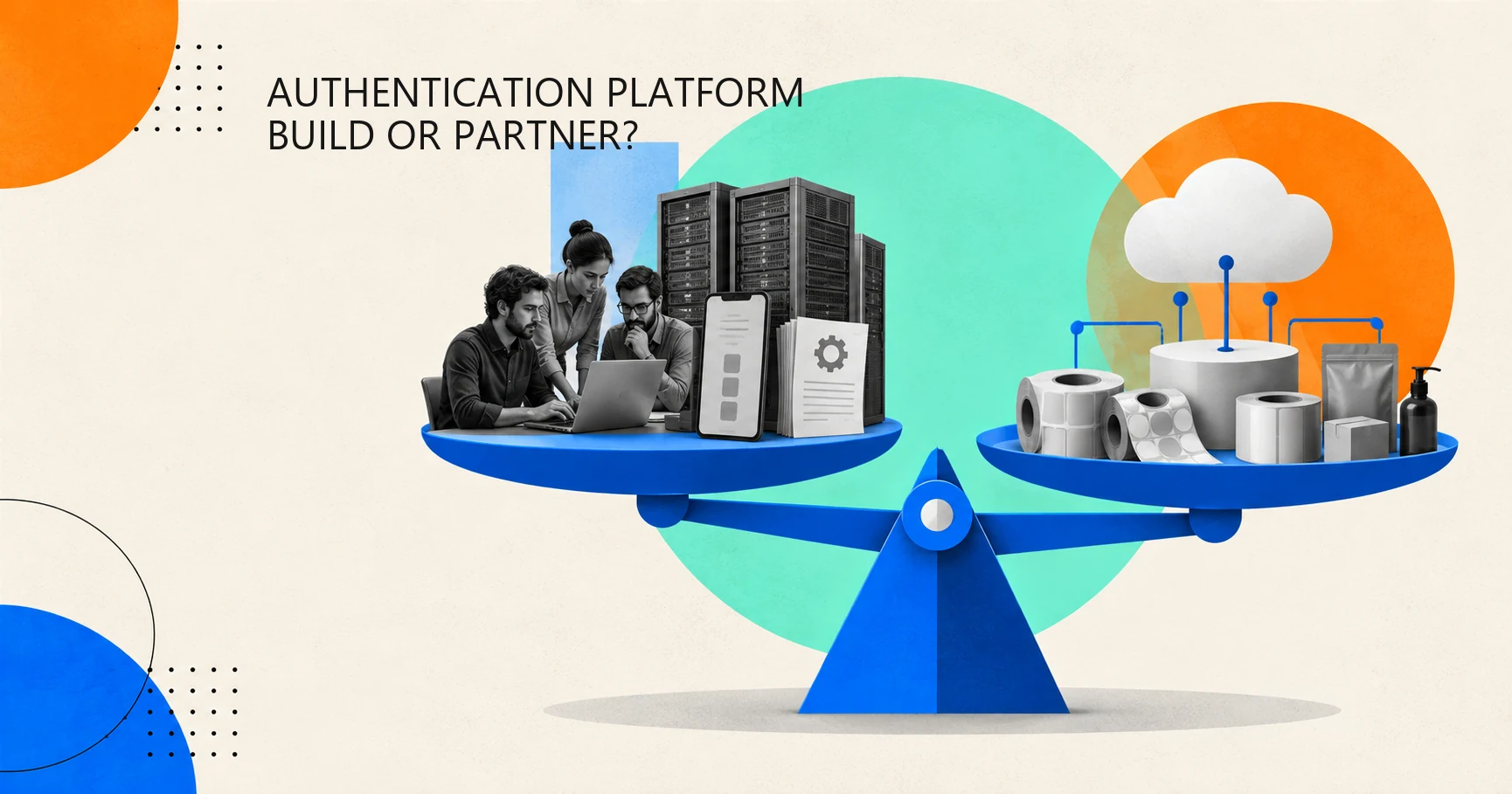
- Building enterprise authentication software can require USD 500,000 to USD 2 million upfront.
- Certification, engineering payroll, app accounts, and annual maintenance continue after launch.
- A white-label platform replaces capital development with setup and subscriptions that scale by brand.
- Best route depends on existing engineers, available capital, certification needs, timeline, and brand volume.
Your brand's customers have stopped asking for just a label. They want a way for their buyers to verify a product, a dashboard showing where scans happen, and some signal of where fakes are surfacing. Article after article tells a label maker it needs authentication software. Almost none of them price it. Pharma brands face the same pricing opacity when evaluating counterfeit-detection technology, covered in battling counterfeit medicines with emerging technology.
Building an enterprise-grade application of this kind costs roughly USD 500,000 to USD 2 million, then 15 to 20 per cent of that figure every year to keep it running, according to Couchbase’s 2026 app development cost guide. This piece prices the decision from your side: what building it yourself costs, and what changes if you partner for it instead. Vaccine cold-chain programs faced a similar build-vs-partner decision during COVID, covered in the fake COVID vaccine problem.
What does it cost to build a product authentication platform?
A product authentication platform is the software that gives each item a verifiable identity a customer or field inspector can check, backed by a cloud service, a database and reporting.
Couchbase puts an enterprise-grade application that needs advanced security, regulatory compliance and enterprise-system integration at USD 500,000 or more, reaching past USD 2 million at the top end. An authentication platform sits in that band because it needs all three at once. Couchbase sells database infrastructure rather than app builds, so it has no stake in inflating the number.
It costs more than an ordinary app because the mobile front end is the smallest part. Behind it sit a verification service, a database and integrations into your customers’ systems. Business of Apps puts even a complex app at USD 120,000 to USD 300,000 in its 2026 research, and that figure describes one app rather than a platform serving brand after brand, each with its own SKUs to enrol.
Indian engineering rates lower the bill without making it small. A certified platform verifying every SKU across every brand you onboard still lands in six figures.
What else does building it cost?
Three line items arrive the moment you ship, and two of them never stop.
App store accounts. Publishing a branded iOS app carries an Apple Developer Program fee of USD 99 a year, and Google Play charges a one-time USD 25 registration. This is the cheapest part of the whole exercise.
Security certification. ISO 27001 is the credential enterprise buyers ask for before they trust a verification vendor. It costs a small or mid-sized firm roughly USD 10,000 to USD 50,000 up front, per Rhymetec’s 2025 breakdown, then recurs through annual surveillance audits. Rhymetec sells compliance services, so treat its range as indicative rather than a quote.
Engineering headcount. A software engineer in India averages about INR 8.9 lakh a year, and about INR 10.4 lakh in Bengaluru, per Indeed India’s 2026 data drawn from 14,800 salaries. A platform needs a mobile developer, a backend developer and a security-capable lead at minimum, so a small team runs into tens of lakhs a year.
Software is never finished
Building in-house buys a down payment, not a finished price. Maintenance runs 15 to 20 percent of the build cost every year, so a USD 500,000 platform carries roughly USD 75,000 to USD 100,000 of annual upkeep before anyone adds a feature.
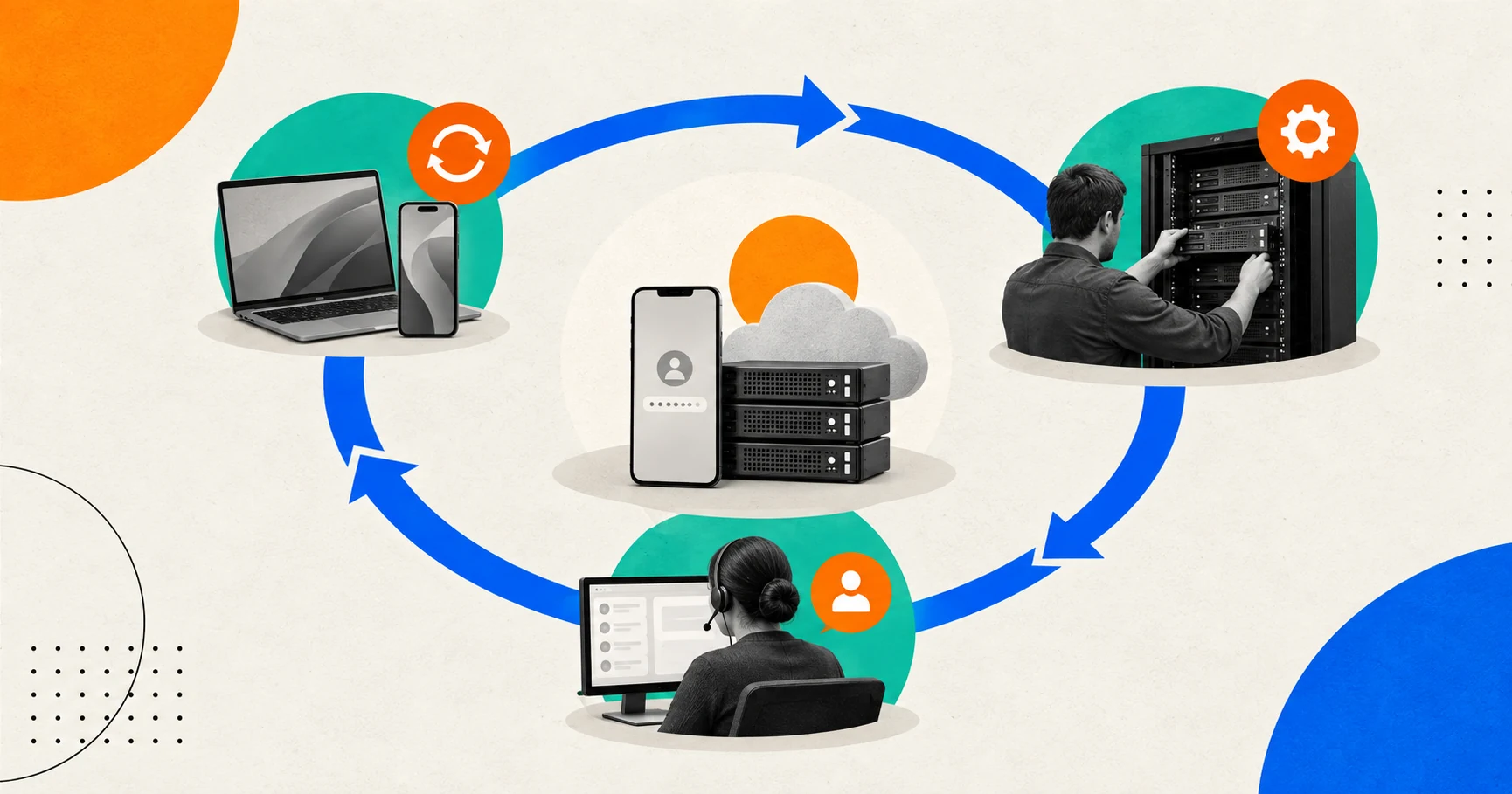
That money goes somewhere specific. Operating systems change, the app stores shift their rules, security patches land, and someone answers support tickets. The team stays on payroll for as long as the software runs, which is the part a build estimate rarely makes visible.
Should you build or buy?
The decision turns on four questions: do you have the engineers, do you have the capital and the time, which certifications do your buyers demand, and how many brands and SKUs do you cover?
Building genuinely wins in some cases. A manufacturer with an existing software team, deep capital and a need for features no external product offers keeps full control of the roadmap and owns the asset outright. That control comes with the enterprise-grade build cost, the recurring team and the annual audits, and it puts you in the software business alongside the label business.
Buying keeps you in the label business alone. You give up roadmap control and you depend on a provider’s uptime, which is a real trade and worth naming before you sign anything.
| Cost dimension | Building in-house | Partnering on a white-label platform |
|---|---|---|
| Platform development | USD 500,000 to USD 2M+ (Couchbase, 2026) | Fixed setup fee, quoted per partner |
| App store accounts | USD 99/year Apple, USD 25 once Google | Carried by the provider |
| Security certification | USD 10,000 to USD 50,000 plus annual audits (Rhymetec, 2025) | Carried by the provider |
| Engineering headcount | Standing team, tens of lakhs a year (Indeed, 2026) | No in-house software team needed |
| Ongoing maintenance | 15 to 20% of build cost a year (Couchbase, 2026) | Covered by the subscription |
| Cost shape | Capital expenditure plus payroll | Subscription that scales with brands onboarded |
| Time to go live | 9 to 12+ months for a complex build (Business of Apps, 2026) | Weeks, subject to the provider |
| Roadmap control | Yours entirely | Set by the provider |

Add authentication software without building it from scratch
Offer verification, analytics, and multi-brand management under your own name through a managed platform.
Explore White-Label AuthenticationWhat does the partner route cost?
A white-label authentication platform is verification software one provider builds, certifies and hosts for another company to sell under its own brand. It is priced as a per-brand subscription plus a fixed setup fee, so the cost tracks the brands you onboard rather than your payroll. There is no public sticker price in this category, which is a function of how varied partner requirements are rather than anything unusual about the vendors.
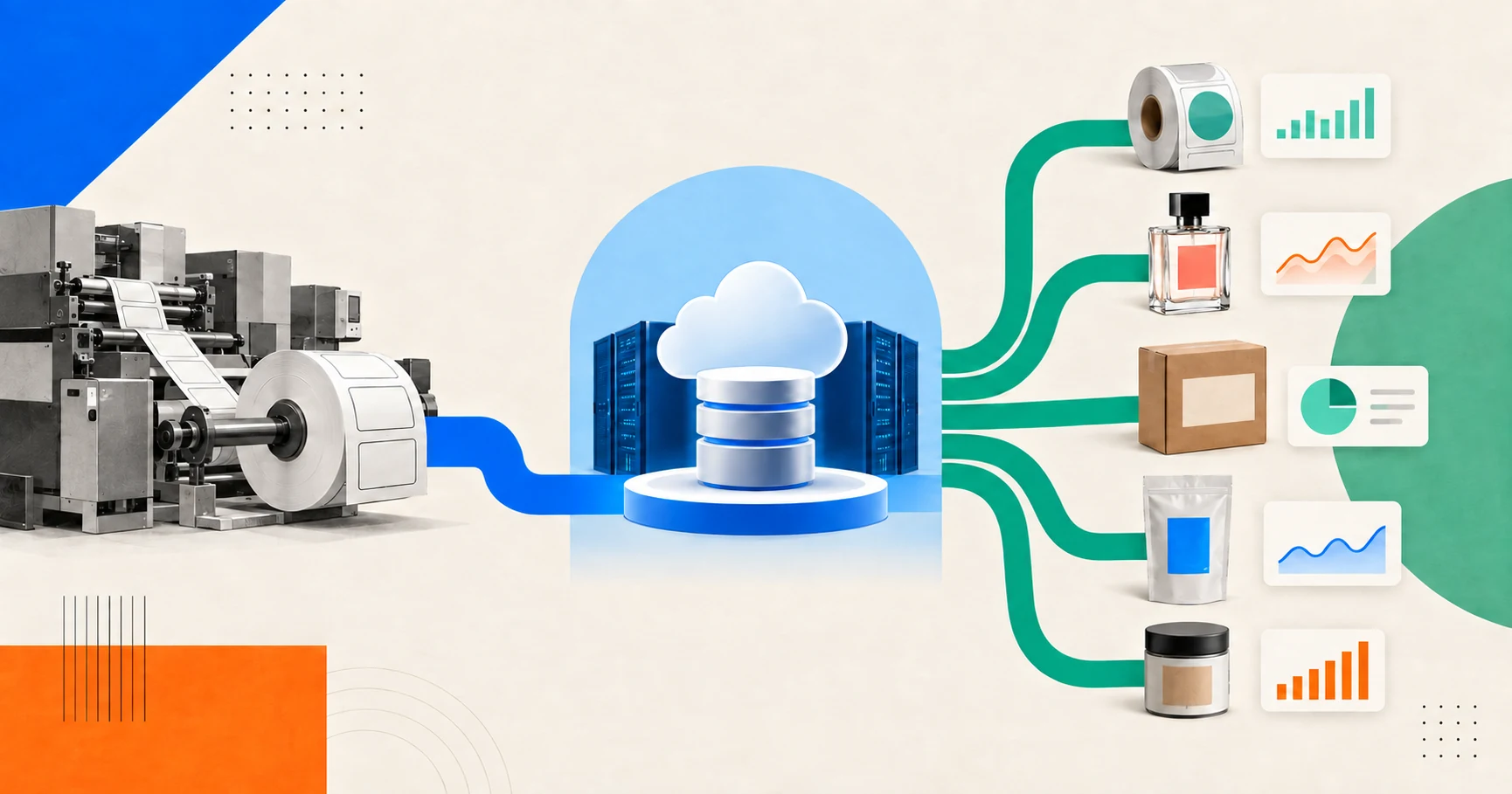
At Acviss we structure our white-label authentication platform this way, across Starter, Growth and Enterprise tiers set by brand count. Starter covers a single brand with an end-user verification app, an analytics dashboard and your branding on managed hosting — see how a hologram manufacturer rolled this out in a hologram manufacturer’s branded verification app rollout. Growth adds multi-brand management, separate dashboards per brand and priority support up to ten brands. Enterprise adds track-and-trace, ERP integration support and technical customisation beyond that.
What the subscription buys is the verification itself: each unit gets a non-cloneable, unit-level identity that a customer checks by app, web or WhatsApp with no download. Acviss states it holds ISO 27001 certification, which means the audit burden sits with the provider rather than with you. Ask any provider you shortlist for the certificate itself rather than the claim.
FAQ
Do you still need your own ISO 27001 certificate if your platform partner has one?
Usually not for the platform itself, but the answer depends on what your buyer is asking about. A partner’s certificate covers the systems the partner operates, so if the verification data lives entirely on their infrastructure, that is the certificate in scope. If your own systems touch the data, through an ERP integration or a local database, your buyer may ask about those separately. Get the partner’s scope statement, not just the certificate number, and check that it covers the service you are reselling.
What team do you need internally to run a white-label platform?
No developers, but not nobody. You need someone who owns onboarding, meaning the person who configures each new brand and their SKUs, and someone who handles first-line support when a brand customer calls. Most label manufacturers absorb both into an existing account management or technical sales role rather than hiring. Escalations go to the provider.
Can you start on a partner platform and build your own later?
Yes, though the migration cost is real and worth planning for at the start rather than the end. The things that make the switch hard are the scan history and the app store listings, since your customers have downloaded an app under your name that points at someone else’s backend. Ask for a data export clause and a defined export format in the contract before you sign, not after you decide to leave.
How long does an in-house build take before it earns anything?
Business of Apps puts a complex build at 9 to 12 months or more, and that is development time rather than time to first revenue. Certification, app store review and your first brand onboarding all sit after it. Budget for a year of cost before the first subscription invoice, and check whether your brand customers are willing to wait that long.
Is a low-code or off-the-shelf app builder a cheaper third option?
For a basic scan-and-respond app, sometimes. For authentication, generally not, because the hard part is not the app. It is the identity layer that makes a genuine mark difficult to reproduce, plus the security posture an enterprise buyer will audit. An app builder gives you the front end and leaves the two expensive problems with you.

Add authentication software without becoming a software company
Give brand customers verification, analytics, and scalable onboarding through an Acviss white-label platform.
Talk to Acviss