
- What supply chain risk management usually covers
- The risk category most SCRM platforms don’t cover
- How this risk actually shows up
- Where this fits in a supply chain risk framework
- Detecting it before it reaches a customer
- Where this sits next to standard SCRM tools
- What to check before assuming this gap doesn’t apply
Supply Chain Risk Management: The Category Software Missed
 Mithileshkumar R NaikSep 10, 20268 min read
- Standard SCRM software tracks supplier financial, ESG, and cyber risk, but has no visibility into whether the product itself stays genuine after it leaves the factory.
- Counterfeit infiltration and grey-market diversion are real supply chain risks that don’t show up on any supplier scorecard.
- Closing the gap needs batch-level traceability (Origin) plus point-of-check product authentication (Certify), not another supplier-side tool.
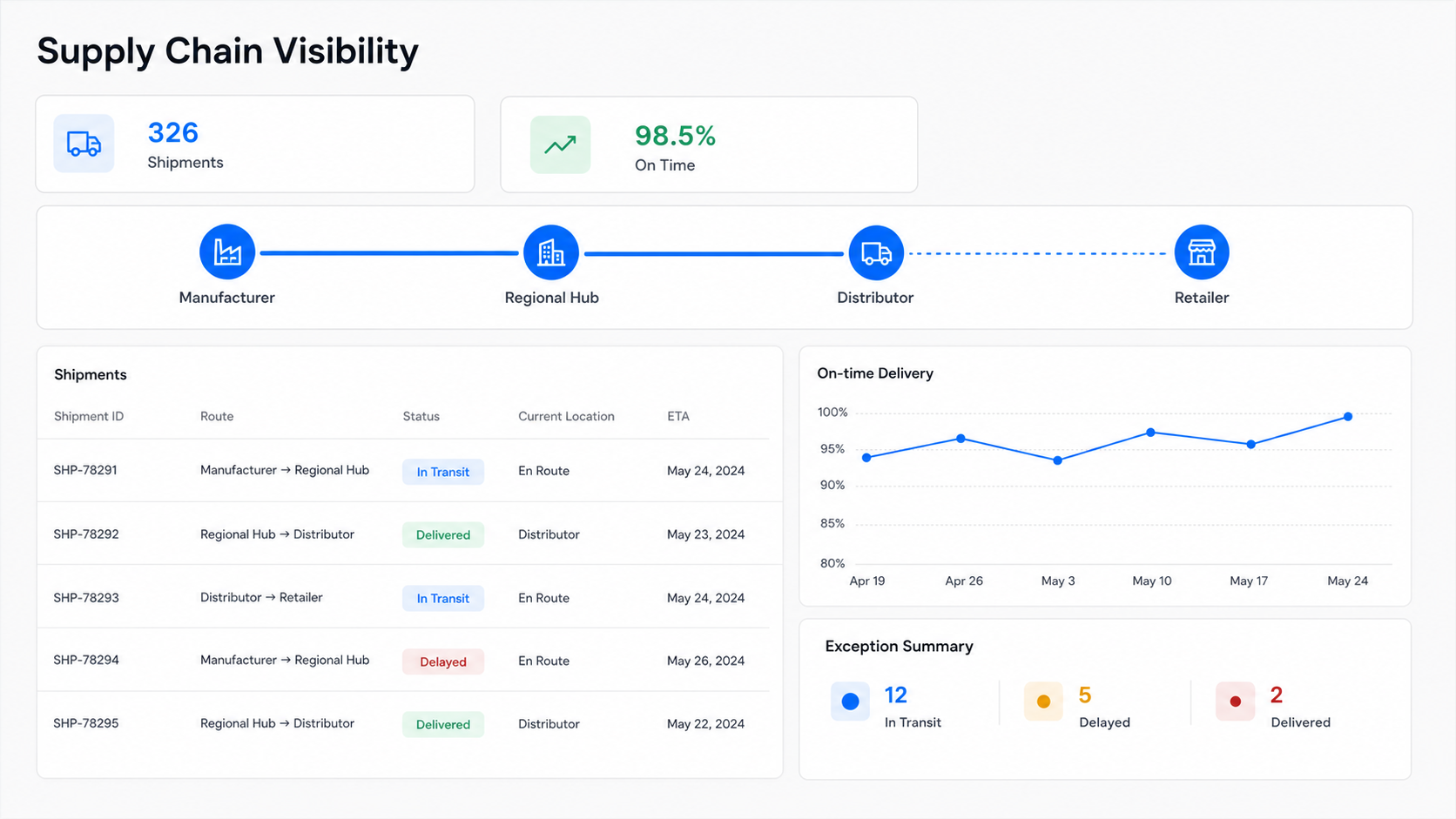
Search “supply chain risk management software” and every result ranks the same handful of categories: supplier financial health, ESG scoring, cyber risk, geopolitical exposure, logistics disruption. Vendors like Resilinc, Sphera, and Interos get compared side by side on how well they monitor these risks. None of the leading comparison guides ask a more basic question: is the product that leaves the factory still the real, genuine product by the time it reaches the customer?
That question sits outside every standard supply chain management framework, and it’s costing manufacturers more than most realize. A product can be diverted into a channel it was never meant to reach. A counterfeit can enter the supply chain at a weak link, mixed in with genuine stock, and travel through the same logistics network as the real thing. A customer files a warranty claim on a unit that was never genuine to begin with, and nobody can say when or where it was swapped. None of the categories a “Top 10 SCRM software” list ranks are built to catch any of this.
What supply chain risk management usually covers
Supply chain integrity, in the way most software vendors define it, is about knowing your suppliers are financially stable, environmentally compliant, cyber-secure, and operationally reliable. A typical SCRM platform maps a supplier network, runs a risk assessment against these categories on each node, and alerts a buyer when a risk crosses a threshold. That’s a real and useful function. A supplier going bankrupt, failing an audit, or getting hit by a cyberattack can shut down a production line just as effectively as a natural disaster.
Every major platform in this space, from Resilinc’s multi-tier mapping to Sphera’s ESG-focused risk assessments, is built around this definition. It’s the right tool for supplier-side risk. It was never designed to answer whether the product itself, once it exists and starts moving through the supply chain, stays the genuine article all the way to the end customer.
The risk category most SCRM platforms don’t cover
Counterfeit infiltration and grey-market diversion are supply chain risks in every practical sense. They disrupt revenue, damage customer trust, and create liability exposure, exactly like the risks a standard SCRM platform tracks. But they don’t show up in a supplier scorecard, because the supplier isn’t necessarily the one at fault. The risk happens after the product exists: in transit, at a distribution point, inside a channel the brand never authorized.
A supplier can pass every financial, ESG, and cyber check a platform runs and still ship into a supply chain where their genuine product gets diverted three steps downstream, or where a counterfeit copy enters the flow using a partial or forged paper trail. Standard SCRM tools have no visibility into either scenario, because they’re built to monitor relationships and compliance, not the physical identity of the product moving through the chain. The scale of this problem is not niche: a 2025 joint analysis of global customs seizure data by the OECD and EUIPO found global trade in fake goods reached USD 467 billion, entering supply chains through exactly these blind spots.

See Origin in action
See how Origin gives brands batch-level visibility into where a genuine unit actually ends up.
Explore OriginHow this risk actually shows up
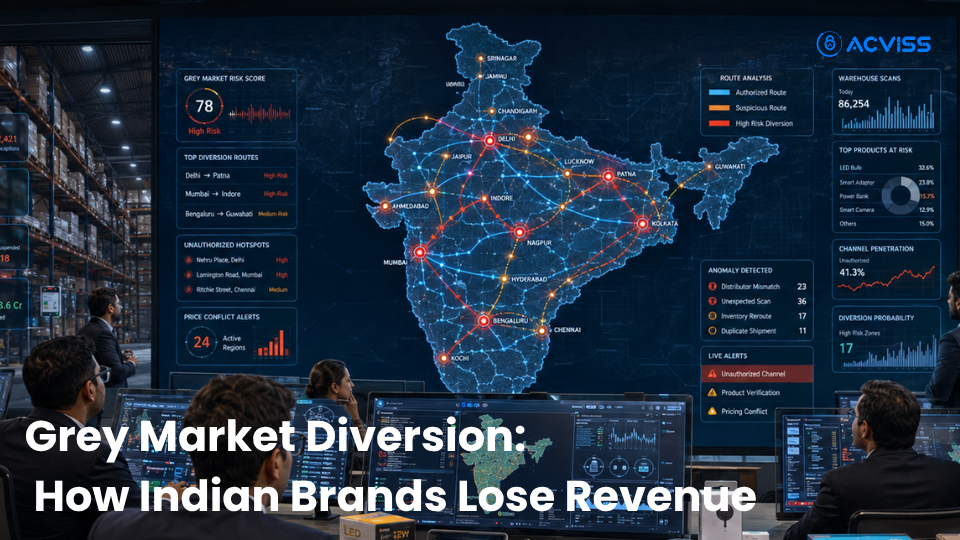
The pattern is consistent across industries. A batch of genuine product is manufactured correctly, packaged correctly, and leaves the factory with a clean paper trail. Somewhere between the factory and the end customer, one of two things happens. Either the genuine stock gets rerouted into a market or price tier it was never meant to reach, undercutting authorized distributors and triggering warranty disputes when customers discover the product wasn’t sold where it should have been. Or a counterfeit batch enters the same distribution network, riding along with genuine shipments, indistinguishable to anyone downstream who isn’t checking at the unit level. For a closer look at how the first pattern specifically drains revenue, see how grey market diversion steals Indian brand revenue.
Either way, the first sign a brand usually gets is a complaint: a customer whose warranty claim gets rejected, a distributor reporting a price collapse in their territory, a support ticket about a product that doesn’t match what was ordered. By the time any of these reach the brand, the affected units have already been sold.
This is common enough that entire product categories, from pharmaceuticals to electronics to FMCG goods, treat it as a known operational risk rather than a rare edge case. A manufacturing facility can run a spotless quality process and still have no way of knowing that a batch was intercepted three steps downstream, repackaged, and sold through a channel with no relationship to the brand at all. The manufacturing side of the supply chain and the distribution side of the supply chain are often monitored by entirely separate teams using entirely separate tools, which is part of why this risk slips through: nobody owns the handoff between “the product was made correctly” and “the product reached the right customer.” FMCG brands specifically can check their own exposure against 5 signs your FMCG distributor network has a diversion leak.
This gap is easy to miss precisely because the standard risk indicators still look fine. A supplier scorecard stays green. An ESG audit passes. A cyber-risk score doesn’t move. None of those metrics were ever tracking product identity in the first place, so a diversion or counterfeit-infiltration problem can run for months without tripping a single alert in a conventional SCRM platform, because it was never designed to look for this.
Where this fits in a supply chain risk framework
This isn’t a replacement for supplier risk management. It’s a distinct category that sits alongside it, and closing the gap starts with batch-level traceability. Every unit that leaves a production line needs to carry a verifiable record of where it came from and where it’s supposed to go, so that a diversion or a substitution can be detected against that record rather than discovered after the fact through a customer complaint.
Acviss’s Origin platform does exactly this: it extends visibility past the factory gate, tracking product at the batch level through the supply chain so a brand can see where a genuine unit actually ends up, not just where it was shipped to on paper. That’s the piece a standard SCRM platform, focused on supplier compliance rather than product movement, doesn’t provide.
Detecting it before it reaches a customer
Traceability tells a brand where a product went. Catching a counterfeit or a diverted unit before it reaches a customer requires something more: a way to verify, at any point in the chain, that the specific unit in hand is the genuine one and not a copy riding along with it.
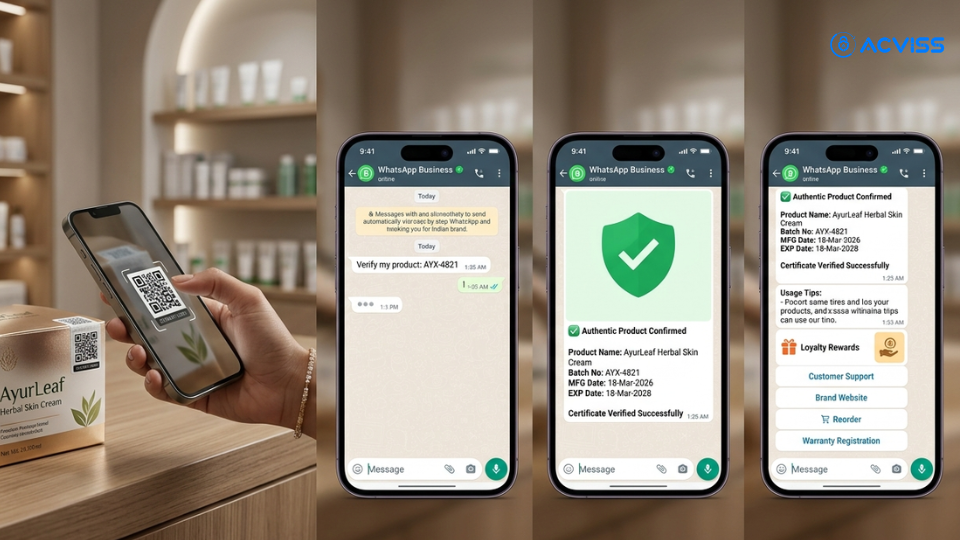
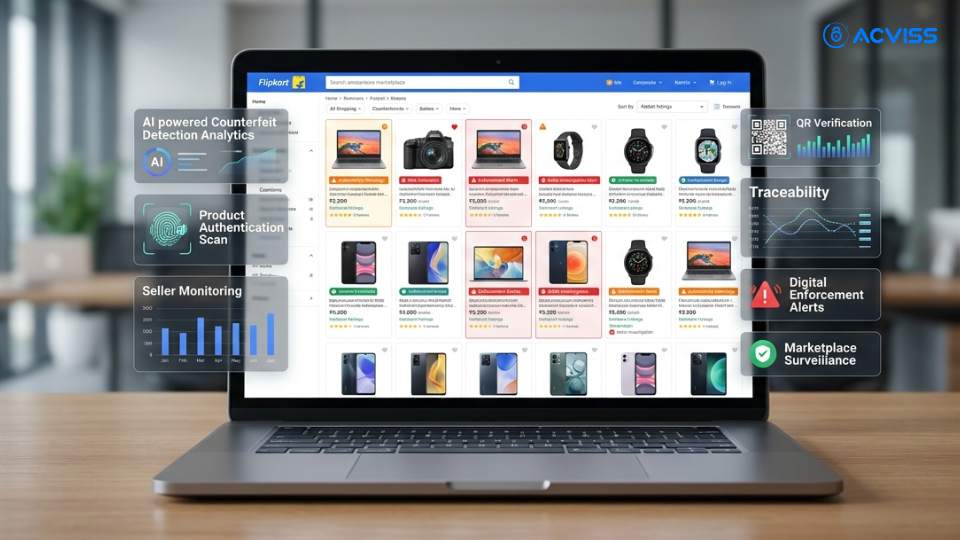
This is where product-level authentication comes in. Acviss’s Certify platform gives every unit a unique, non-cloneable identity that can be checked at the point of sale, at a distribution checkpoint, or by the end customer directly. Combined with batch-level traceability from Origin, this closes the loop: a business can see where a product is supposed to be and confirm the unit that’s actually there is the real one, catching diversion or counterfeit entry at the point it happens instead of after a complaint arrives.
Where this sits next to standard SCRM tools
A standard SCRM platform and a product-integrity layer like Origin and Certify aren’t competing for the same job. One tells a buyer whether their suppliers are financially and operationally sound. The other tells a brand whether the product moving through that supply chain, once it exists, is still the genuine article the whole way to the customer. Most buying teams researching supply chain risk management software only encounter the first category, because that’s what every comparison list on the first page of search results covers. The second category doesn’t disappear just because it’s absent from the rankings.
A brand running a mature supplier risk program can still lose revenue to grey-market diversion or counterfeit infiltration, because neither risk originates with a supplier failing a check. Closing that gap means adding a layer built specifically to track and verify the product itself, not another tool scored against the same supplier-side criteria the existing platform already covers.
For a brand that has already invested in supplier risk management and still can’t explain where counterfeit or diverted units are entering its supply chain, that’s usually the sign this category is missing, not that the existing program is failing at its job. It’s answering a different question entirely.
What to check before assuming this gap doesn’t apply
A few questions tend to surface whether product-integrity risk is already a live problem, even before any incident has been reported. Can the business trace a specific unit back to its exact production batch after it has left the factory, or only to a shipment-level record that covers hundreds or thousands of units at once? Are warranty claims ever rejected because a product turns out to have been sold outside its intended market, and if so, has anyone traced how it got there? Do distributor complaints about price undercutting ever get investigated as a possible diversion issue, or are they treated purely as a pricing or competition problem?
A “no” to the first question, or an unclear answer to either of the other two, usually means the gap exists and simply hasn’t produced a loud enough incident yet to get noticed. Grey-market diversion in particular tends to look like a pricing or channel-conflict issue on the surface, which is why it often goes undiagnosed as a supply chain risk for years even at brands with an otherwise mature risk management program.

Is your SCRM software missing product-integrity risk?
Book a free demo and see how Origin closes the gap standard SCRM platforms don’t cover.
Book a Free Demo
Related reading
Best Sproxil Alternatives for Product Authentication (2026)
Compare the best Sproxil alternatives for product authentication in 2026, including Acviss, Ennoventure, Scantrust, Certilogo and Checko.
Best Scantrust Alternatives for Secure QR Authentication (2026)
In this article Why brands search for Scantrust alternatives What Scantrust does, and where secure QR codes leave a gap