
- Meesho: How Counterfeits Enter and How to Report Them
- IndiaMart: The B2B Counterfeit Problem
- Myntra: Brand Registry and IP Complaint Process
- The Pattern All Three Platforms Share
- Why You Need Monitoring, Not Just Reactive Reporting
- How Truviss Covers These Platforms and 5,000 More
- Frequently Asked Questions
How to Remove Counterfeits on Meesho, IndiaMart and Myntra
 Shiva SundaramMay 22, 202612 min read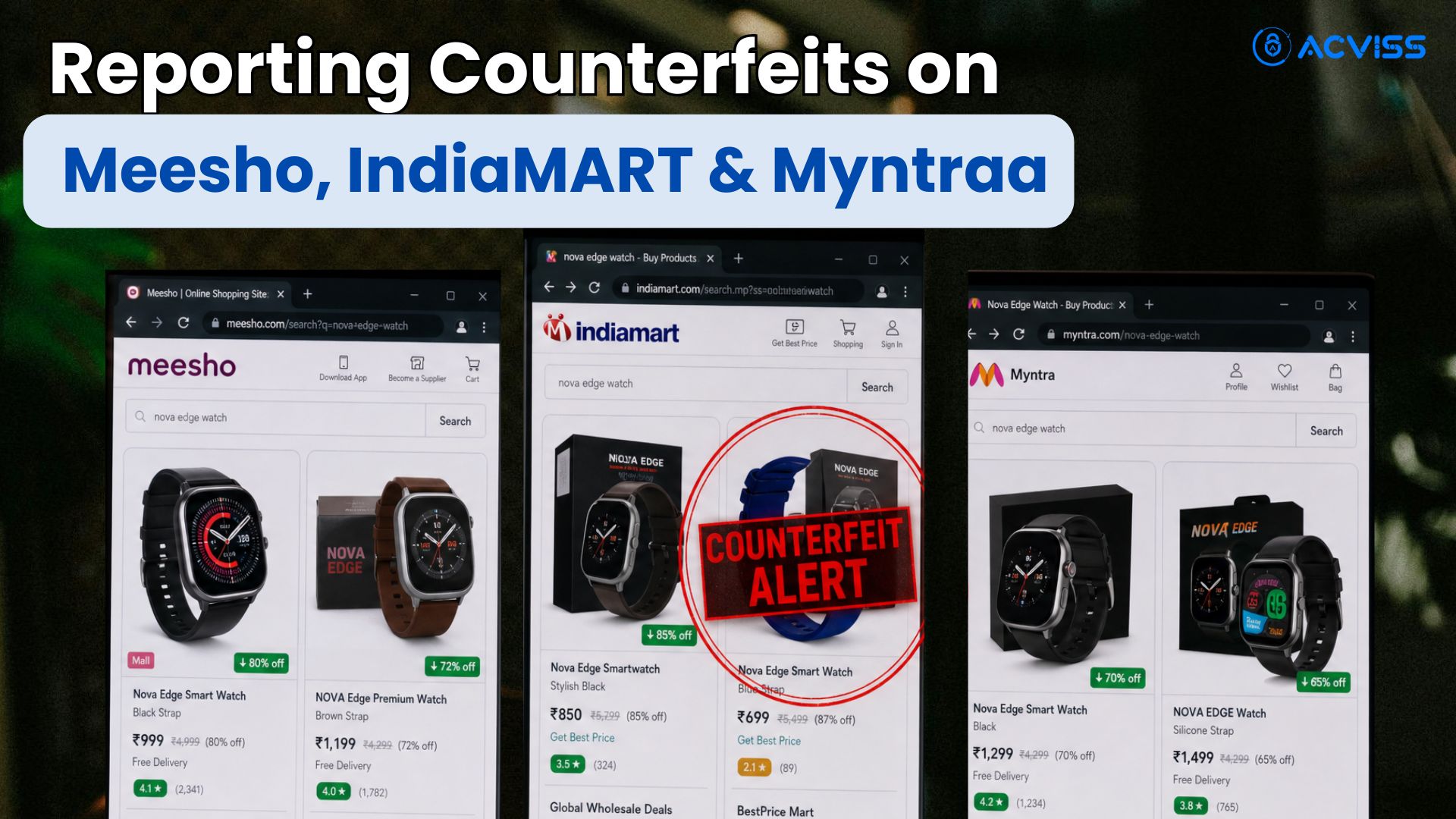
- Most brand protection conversations focus on Flipkart and Amazon, but Meesho, IndiaMart, and Myntra carry real counterfeit exposure too.
- Each platform has its own reporting process and evidence requirements, making manual takedowns slow across multiple marketplaces at once.
- Counterfeit sellers often operate across several platforms simultaneously, so single-platform monitoring misses the bigger pattern.
- Automated, multi-platform monitoring catches fake listings on B2B and social-commerce channels that brands often overlook.
Filing a takedown is easier once you understand what a marketplace takedown actually requires from a brand owner, and where it fits into a wider anti-counterfeiting strategy.
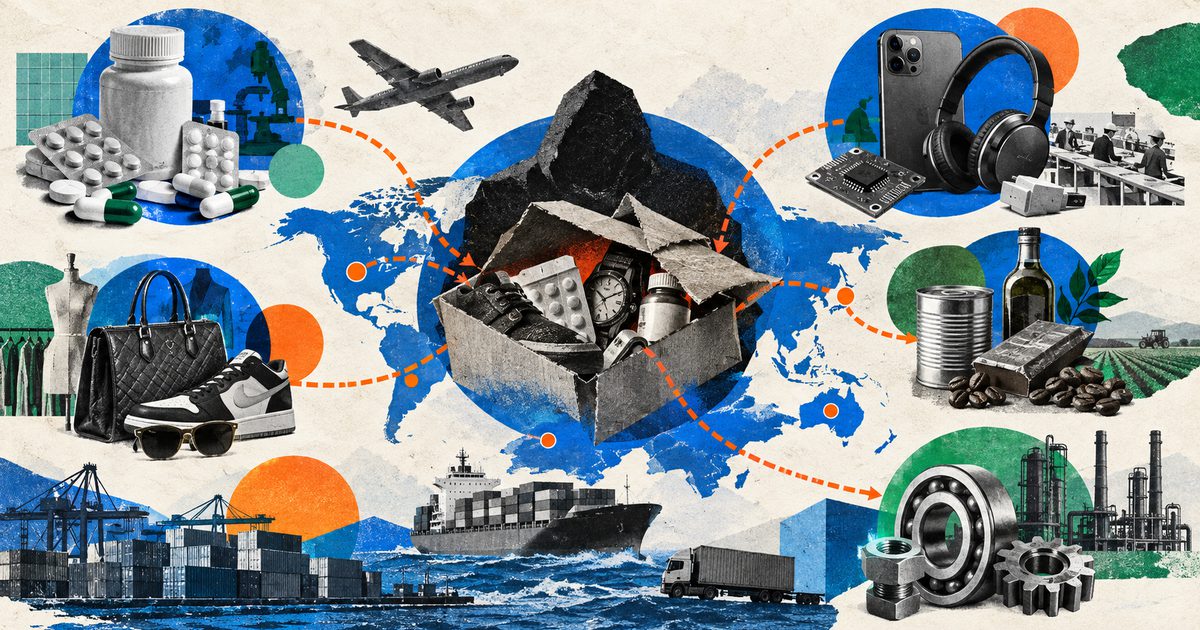
 The OECD/EUIPO tracks the scale of online marketplace trade in counterfeit and pirated goods.
Most brand protection conversations in India focus on Flipkart and Amazon. Those platforms deserve attention, but the more dangerous and often overlooked threat is coming from a second tier of platforms that many brand managers have not yet taken seriously: Meesho, IndiaMart, and Myntra.
Each of these platforms has a distinct problem profile. Meesho has removed the barriers to reseller entry so thoroughly that almost anyone can start selling any product with minimal verification. IndiaMart operates at the wholesale level, meaning a single counterfeiter can place bulk orders with hundreds of downstream resellers before you even become aware of the listing. Myntra’s fashion focus makes it a natural target for fake apparel, accessories, and personal care brands looking for credibility through association with a trusted platform.
If your products are present in India’s retail market, they are almost certainly present on these platforms too. And if counterfeits of your products exist, they are on these platforms as well. The question is whether you know about it and whether you have a process to act on it.
Meesho: How Counterfeits Enter and How to Report Them

Meesho built its business on social commerce, enabling resellers to list products from suppliers and sell them through WhatsApp, Instagram, and other social channels. The platform’s seller onboarding has always prioritised volume and ease of access over deep verification. This is by design: Meesho serves a large population of small sellers and micro-entrepreneurs who need low barriers to participate.
The result for brand owners is a platform where the entry cost for a counterfeit seller is extremely low. A supplier offering fake versions of your products can list them on Meesho with minimal documentation. Resellers who purchase those listings often have no way to verify authenticity and pass the products directly to end consumers.
Counterfeits enter Meesho’s ecosystem through three main routes:
- Supplier listings: A counterfeit manufacturer or distributor lists fake products on Meesho’s supplier catalogue, which resellers then promote and sell.
- Reseller sourcing: Independent resellers source fake products from local wholesale markets or online B2B platforms and list them on Meesho using your brand name and images.
- Price undercutting: Fake products listed at significantly lower prices than your authentic product attract price-sensitive buyers and resellers who prioritize margin over authenticity.
To report a counterfeit listing on Meesho:
- Document the listing thoroughly. Capture the full product page URL, product images, seller/supplier name, and price. Note the listing date if visible. If you can do a test purchase, the physical product and packaging comparison with your authentic item is your strongest evidence.
- Contact Meesho Seller Support directly. Meesho’s support can be reached through their website’s help center. Submit a formal IP complaint specifying that your trademark is being used without authorization. Provide your trademark registration number and supporting documentation.
- Email Meesho’s legal or compliance team. For serious cases, follow up with a formal legal notice sent to Meesho Internet Private Limited’s registered address. Cite the Trade Marks Act, 1999, and the Information Technology Act, 2000, and request removal of specific listings within a defined timeframe.
- Engage Meesho’s escalation channels. Persistent follow-up via email with documented complaint references increases the likelihood of resolution. If a relationship exists with any account management contact at Meesho, involve them.
What to include in your complaint:
- Your trademark registration certificate (or filing acknowledgment if registration is pending)
- Screenshots of the infringing listing with timestamps
- A side-by-side comparison of the fake and authentic product if you have done a test purchase
- A clear statement of the specific trademark right being infringed
Meesho’s IP enforcement process is less mature than those of Flipkart or Amazon, which means timelines can be unpredictable. Persistence and formal documentation carry more weight than informal requests.
IndiaMart: The B2B Counterfeit Problem
IndiaMart is India’s largest B2B marketplace, connecting manufacturers, suppliers, and wholesale buyers. The platform serves a different buyer profile than consumer-facing platforms: your buyers here are typically retailers, distributors, and small business owners purchasing in bulk to resell.
This creates a unique and often underappreciated counterfeiting risk. When a single counterfeit listing on IndiaMart leads to a bulk purchase, the harm is multiplied. One transaction can seed dozens or hundreds of retail outlets with fake versions of your product. By the time your brand receives the first customer complaint, the distribution has already happened at scale.
The B2B nature of IndiaMart also creates a verification gap. Wholesale buyers often do not have the same product knowledge that an end consumer might develop through repeated use. They are buying based on price, brand name, and product specification descriptions. A counterfeit listed with your brand name and product specifications looks legitimate to a buyer who has never seen the authentic product directly.
Common IndiaMart counterfeit patterns include:
- Suppliers listing products under your brand name without authorization, typically at prices significantly below your official wholesale rates
- Listings that use your product images and descriptions but offer “generic” alternatives that are in practice counterfeit versions of your branded product
- Sellers offering to provide custom packaging in your brand name, essentially an open offer for counterfeiting
To report and remove counterfeit listings on IndiaMart:
- Search systematically. Search IndiaMart for your brand name, your product names, and common alternative spellings or transliterations. Look at price ranges. If you find a supplier listing your branded product at a fraction of your authentic wholesale price, that is a strong signal of counterfeiting.
- Document with care. B2B listings often contain supplier contact information, GST details, and business names that are useful for both the complaint and any downstream legal action. Capture everything before reporting, as some sellers remove or modify listings when they suspect they are being reported.
- Use IndiaMart’s Trust and Safety reporting: IndiaMart has a trust and safety mechanism accessible through its help center. Submit a formal IP complaint with your trademark documentation, specific listing URLs, and a description of the infringement.
- Send a formal legal notice to IndiaMart: As with other platforms, a formal notice under the IT Act to IndiaMart (Indiamart Intermesh Limited) creates a compliance obligation for the platform as an intermediary. For large-scale or repeat infringers, this is often the faster path to action.
- Target the supplier directly when possible: Because IndiaMart listings often include supplier contact details, your legal counsel can send a notice directly to the offending supplier in addition to the platform. This dual approach creates pressure from two directions simultaneously.
IndiaMart infringement is particularly worth prioritizing even though the platform is often overlooked. The wholesale multiplication effect means that a single infringement unchecked on IndiaMart can translate into far more end-consumer harm than an individual listing on a consumer platform.

See Truviss in action
See how Truviss finds and removes counterfeit listings across Meesho, IndiaMart, and Myntra.
Explore TruvissMyntra: Brand Registry and IP Complaint Process
Myntra positions itself as India’s premium fashion and lifestyle destination. It operates a curated model relative to Meesho, with more stringent seller onboarding requirements. However, the platform’s scale and the high demand for fashion and personal care brands still create counterfeiting opportunities.
Myntra is particularly relevant for brands in apparel, footwear, accessories, and personal care. These categories have high counterfeit activity globally, and India is no exception. A fake version of a well-known sneaker or a counterfeit perfume listed on Myntra can attract buyers who associate the platform’s reputation with product authenticity.
Myntra’s enforcement process:
- Myntra Brand Protection Program: Myntra operates a brand registration and protection mechanism for trademark holders. Contact Myntra’s brand partnership or legal team to enroll your brand. Enrollment gives you access to listing management tools and the ability to flag infringing listings more efficiently.
- IP Complaint Submission: Myntra accepts IP infringement complaints through its designated channel. You will need your trademark registration documentation and specific listing URLs. Submit through Myntra’s seller portal or directly through their legal or compliance team contact.
- Myntra Seller Support escalation: For listings that persist after an initial complaint, escalate through Myntra’s seller support system, referencing your original complaint ticket. For brands with an existing commercial relationship with Myntra as a brand partner (not a third-party seller), escalate through your account manager.
- Formal legal notice: For serious cases or persistent re-listing, a legal notice to Myntra (Myntra Designs Private Limited, a Flipkart subsidiary) under the Trade Marks Act and IT Act is an effective escalation tool.
One additional consideration for Myntra: the platform’s curated nature means that brand presentation matters. If a counterfeit listing on Myntra shows poor-quality product images or inaccurate specifications under your brand name, it directly damages your brand’s perceived quality among Myntra’s user base. The reputational cost is higher per listing than on a volume platform like Meesho.
The Pattern All Three Platforms Share
You will encounter the same pattern across Meesho, IndiaMart, and Myntra that exists on every major Indian marketplace: removal is not permanent.
When you successfully get a counterfeit listing removed, the seller’s response is typically to:
- Re-list under a new seller account name
- Modify the product title or images slightly to avoid triggering the same detection
- Move to a different platform if enforcement on one platform becomes too persistent
- Continue operating across multiple platforms simultaneously, meaning the listing removal on one channel has no effect on the others
This resilience is structural. The cost for a counterfeit seller to re-list is negligible. The cost for a brand manager to detect and re-report is significant. The only way to change this dynamic is to reduce the cost of detection and enforcement on your side, which means moving from reactive to proactive monitoring.
The brands that achieve lasting protection on these platforms are the ones that maintain continuous monitoring, not the ones that respond to complaints when they happen to surface.
Why You Need Monitoring, Not Just Reactive Reporting
There is a hidden cost in reactive enforcement that most brand managers do not fully account for, which is why monitoring is one of the five steps in our guide to protecting your brand. Every day a counterfeit listing is live, it is:
- Generating sales that should be going to you or your authorized channel partners
- Potentially reaching customers who will associate a bad product experience with your brand
- Building a seller’s track record and reviews on the platform, making them harder to remove over time
- Training counterfeit networks about which of your SKUs and which price points attract the most buyer attention
By the time your team discovers the listing, files a complaint, and achieves removal, the damage is already done. The customer who bought the fake product has already formed an opinion. The reseller who sourced in bulk has already distributed to retail outlets.
Proactive monitoring changes the timeline. Instead of discovering infringements weeks or months after they go live, you detect them within hours or days of the listing appearing. The complaint is filed faster. The removal happens earlier in the listing’s lifecycle. Less damage occurs per infringement event.
For a brand managing multiple SKUs across multiple platforms, proactive monitoring is not a luxury. It is the difference between a manageable enforcement process and one that your team will never be able to keep up with.
How Truviss Covers These Platforms and 5,000 More
Truviss, Acviss’s online brand protection platform, monitors Meesho, IndiaMart, Myntra, and more than 5,000 other marketplaces globally. Rather than requiring your team to manually search each platform for infringing listings, Truviss runs continuous surveillance using your brand identifiers, product names, and images. This kind of platform-wide monitoring is one piece of a broader strategy, covered in our piece on protecting e-commerce platforms from counterfeits.
When a potential infringement appears, it is flagged in your dashboard with the relevant details. Takedown requests are initiated, and the outcome is tracked. Your team sees the status of active violations and completed removals across all platforms in one place, rather than managing separate complaint threads on each platform independently.
For brand managers dealing with simultaneous counterfeiting activity on Meesho, IndiaMart, Myntra, and other platforms, this kind of consolidated visibility makes the difference between a program that is theoretically in place and one that actually works. If you want to see what coverage and enforcement look like for your specific brand, book a demo with the Acviss team.
Frequently Asked Questions
Is IndiaMart’s B2B counterfeiting problem really that serious for consumer brands?
Yes, and it is often underestimated. A bulk counterfeit order placed through IndiaMart can seed dozens of retail locations before you are aware of it. The downstream consumer reach of a single B2B counterfeit transaction is far greater than a single consumer listing. Brands in FMCG, personal care, apparel, and electronics should treat IndiaMart as a high-priority monitoring target, not a secondary concern.
Does Meesho have a formal trademark protection program similar to Amazon Brand Registry?
As of 2026, Meesho does not offer a formal brand registry program equivalent to Amazon’s in terms of features and proactive protection tools. Brand protection on Meesho currently relies on direct complaint submission and legal escalation. This makes monitoring especially important on the platform, since you do not have the same proactive detection tools that Amazon Brand Registry provides.
My products are being sold on multiple platforms simultaneously. Do I need to file separate complaints on each one?
Yes. Each platform has its own complaint process, and a takedown on one platform has no effect on listings on others. This is one of the core challenges of multi-platform counterfeiting. Your enforcement process needs to cover each platform independently, which is why brands with broad marketplace presence typically require some form of monitoring automation rather than relying on manual complaints per platform.
What happens if the counterfeit seller is also misusing my brand on social media linked from their marketplace listings?
Social media misuse is a separate enforcement track. Instagram, Facebook, and WhatsApp each have IP reporting mechanisms. If a Meesho or IndiaMart seller is directing buyers to social media channels where they are also using your brand imagery and trademarks without authorization, those channels need to be reported independently. Document the connection between the marketplace listing and the social media presence, as it strengthens your overall case and is useful if you pursue legal action against the seller directly.
Counterfeits on Meesho, IndiaMart, and Myntra need the same attention you give Flipkart and Amazon.
Truviss monitors all of them continuously, alongside 5,000+ other marketplaces, so your team is not manually searching for listings that should not exist. Talk to an Acviss expert about building a brand protection program that actually keeps pace with how fast counterfeiters operate.
Book a Free Consultation with Acviss

Fake listings aren’t just an Amazon problem
Book a free demo and see how Truviss covers Meesho, IndiaMart, Myntra, and beyond.
Book a Free DemoRelated reading

How to Reserve and Register a Trademark for Your Brand
A brand name isn’t protected just because you’re using it. Until it’s registered as a trademark, anyone else can file for
How to Calculate ROI of Anti-Counterfeiting Investment
In this article What Revenue Is at Risk Without Anti-Counterfeiting Protection The 5 Categories of Measurable ROI from Anti-Counterfeiting H