
Why Semaglutide Became 2026’s Counterfeit Case Study
 Mithileshkumar R NaikAug 12, 20264 min read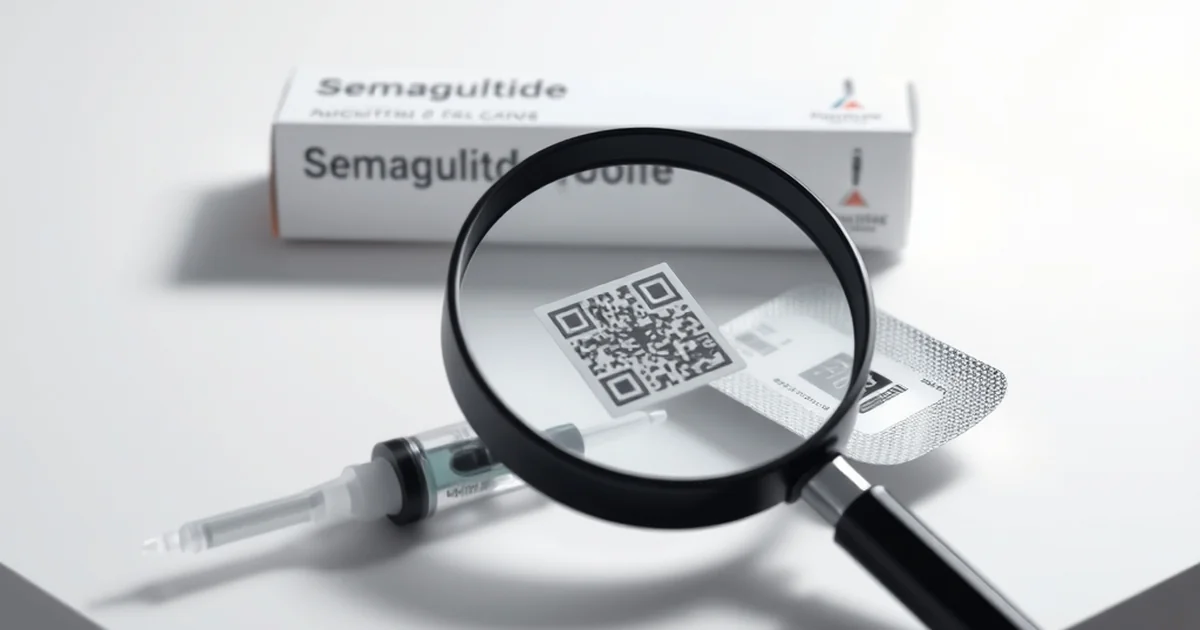
- In early 2026, Interpol flagged a counterfeit semaglutide network that the CBI traced back to a manufacturer in Austria, prompting CDSCO to tighten oversight.
- The concerning detail isn’t the seizure itself, but that investigators found a repeatable, cross-border sourcing and packaging structure behind it.
- High demand, chronic short supply, and weak verification points are what made semaglutide 2026’s target, the same pattern behind counterfeit insulin and oncology drugs.
- Compliance teams should be able to answer three things now: can you verify a unit at dispensing, trace a batch to a distributor within hours, and give patients a way to check authenticity themselves?
In early 2026, Indian investigators linked a circulating batch of counterfeit semaglutide to a manufacturer based in Austria. Interpol flagged the network first. The CBI relayed the intelligence to Indian drug regulators, and the Central Drugs Standard Control Organisation (CDSCO) moved to tighten oversight on the fastest-growing drug class in the country. It is the clearest counterfeit case study pharma compliance teams have had in years, and it did not involve a back-alley operation. It involved a real manufacturing footprint, real distribution infrastructure, and a real paper trail that took cross-border law enforcement to unravel.
That last part is the one worth sitting with. If it took Interpol and the CBI working together to trace one counterfeit batch back to its source, no single brand’s internal QA process was going to catch it first.
Why semaglutide became the target
Semaglutide drugs sell at a premium, move in high volume, and are in chronic short supply relative to demand, which is exactly the combination that attracts counterfeiters. When legitimate stock runs low, patients and even pharmacies go looking for alternative sources. That gap is where counterfeit product enters the market, usually packaged well enough to pass a visual check.
None of this is unique to semaglutide. It is the same pattern behind counterfeit insulin, oncology drugs, and other high-value, high-demand pharmaceuticals. Semaglutide is simply 2026’s version of it, and the scale of the response shows regulators now treat it as a systemic risk rather than an isolated seizure.
What the investigation actually revealed
The traceable link to a European manufacturer is the detail that should concern every pharma compliance head, not the seizure itself. Seizures happen. A traceable link across borders means the counterfeit supply chain had structure: consistent sourcing, consistent packaging, and a distribution path stable enough for investigators to follow back to origin.
That structure is what makes a counterfeit operation dangerous. A one-off batch is a containable incident. A repeatable sourcing and packaging process is a business, and it will resurface under a different batch number the moment this one gets shut down.

See Certify in action
See how Certify lets a pharmacist or patient verify a specific unit in seconds, not just check that the packaging looks right.
Explore CertifyWhat this means for compliance teams right now
CDSCO tightening oversight after this case is not a one-time regulatory reaction. It is a signal of where enforcement is heading: closer scrutiny on packaging integrity, tighter expectations around batch-level traceability, and less tolerance for brands that can only prove where a product went after a complaint comes in.
This is the same shift already covered in what Indian pharma must know about CDSCO’s traceability requirements for 2026: the requirements are getting more specific, and “we passed our last audit” is not going to be a sufficient answer for much longer.
Three questions worth asking internally before the next case, not after:
- Can you prove a specific unit is genuine at the point of dispensing, not just at the point of manufacture?
- If a counterfeit batch surfaced in your distribution network tomorrow, could you trace it back to a specific distributor or C&F agent within hours, not weeks?
- Does your packaging carry authentication that a pharmacist or patient can actually verify, or does it rely entirely on the packaging looking correct?
If the honest answer to any of these is no, the gap is not a future compliance project. It is the exact gap this case exploited.
Building traceability that survives an actual investigation
This is precisely the pattern Certify and Origin are built around: authentication that a pharmacist or patient can check in seconds, and unit-level traceability that holds up when regulators or investigators come asking where a specific product actually travelled. A batch number on a box is not the same as being able to answer, with evidence, “where has this exact unit been.”
The EU’s own Falsified Medicines Directive exists because European regulators reached the same conclusion years ago: pharma packaging needs authentication that survives scrutiny, not authentication that just looks right on a shelf. India’s pharma sector is now visibly moving in the same direction, and the semaglutide case is the reason why.
The takeaway
This case did not happen because a counterfeiter got lucky. It happened because a high-demand drug, real manufacturing capacity, and a distribution network with weak verification points lined up. That combination is not rare, and it is not going away in 2026. The pharma brands that come out of this cycle unaffected will be the ones that can already answer where a specific unit has been and prove a product is genuine before a regulator has to ask.
Book a free demo to see how Acviss helps pharma teams build that kind of traceability before the next investigation starts, not after.

Could you trace a counterfeit batch back to a distributor within hours?
Book a free demo and see how Acviss’s Certify and Origin build traceability that holds up under an actual investigation.
Book a Free DemoRelated reading
What Indian Pharma Must Know About CDSCO Traceability Requirements 2026
India is the world’s third-largest pharmaceutical producer by volume and the largest supplier of generic medicines
Traceability Software: What to Look for Before You Buy
Search “traceability software” and you’ll get a wall of vendors that all claim real-time visibility, blockchain-backed rec