
In this article
Recent Posts

TL;DR
Counterfeit sports goods cost the global economy billions annually, with players unknowingly risking their safety and health. Brands are a testament to quality and superiority. Brands are a story of customer experience and value for money. Owning a valued brand is a matter of pride and a starting point for building customer loyalty. It is an arduous task to build brand value and strategize the momentum of a product. It is a promise that a company makes to its customers and thereby earns the right to command a premium.
But at times, despite best intentions, the promise of excellence is broken. Often, counterfeit goods sold to unsuspecting customers tarnishes the brand value the company has been building for decades. Counterfeit products do not just drill a hole in revenue generation but cause a breakdown in customer loyalty. Fake goods are of substandard quality that can be a waste of money for the buyer and dangerous.
The counterfeit market thrives when the demand is high, and buyers are ready to pay the premium for buying the original brand. Thus, as also essential products, luxury brands become a target in the grey market of counterfeit. Similarly, the case of counterfeit or fake sports goods is not new. So, it is not surprising that sports brands have constantly been facing the menace of counterfeit.
- Fake sporting goods, from protective gear to equipment, cost the global economy billions annually.
- Counterfeit protective equipment often fails under real impact, putting athletes at genuine safety risk.
- The category is attractive to counterfeiters because brand recognition drives a price premium that’s easy to exploit.
- Authentication technology lets retailers and consumers confirm sporting goods are genuine before use.
Why Counterfeit in Sports?
Imitation may be flattery for most, but not for reputed brands like NIKE, Adidas, Reebok, and others. Over the years, these companies have become the most valued and reliable brands in the world. Sports is a vast business that ranges from making apparel to equipment. Manufacturing fake sports goods is a thriving business, especially in developing countries. Developing countries have largescale cheap labor, making manufacturing fake sports goods easy. The substandard quality of the products, cheap labor and the premium selling price make counterfeit in sports a lucrative business.What are the dangers of counterfeit sports goods?
Loss of revenue and jobs for the manufacturers
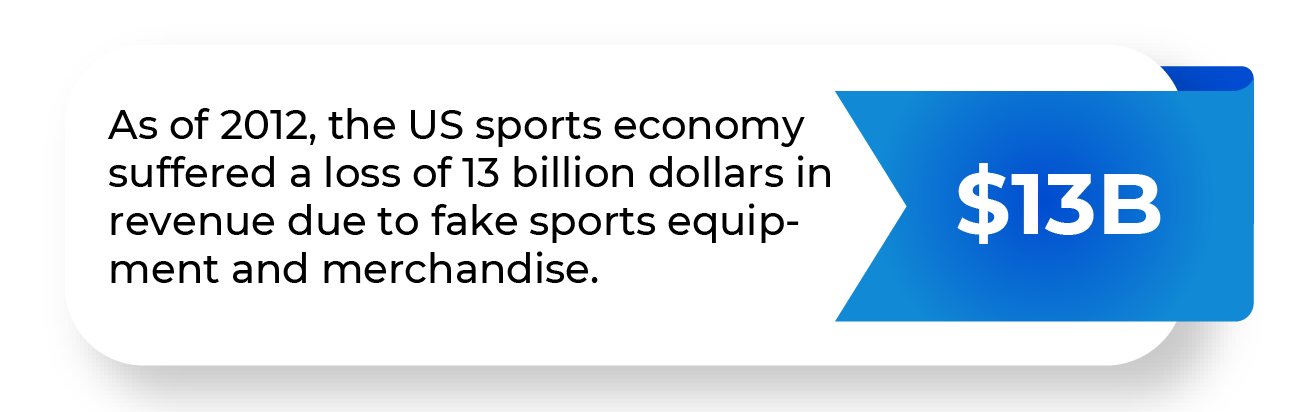
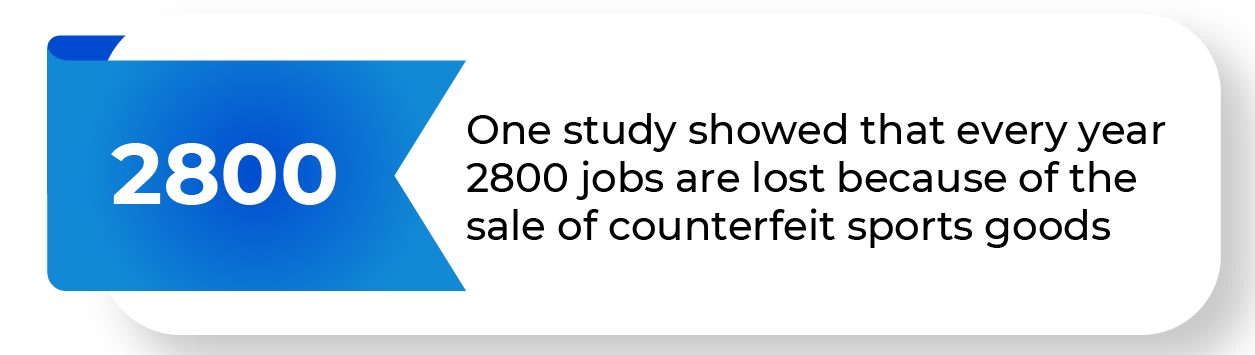
As of 2012, the market value of sports apparel stood at 135 billion dollars. In the same year, the US sports economy suffered a loss of 13 billion dollars in revenue due to fake sports equipment and merchandise. The loss in revenue has a cascading effect as it causes a loss in taxation to the government. Additionally, it is estimated that counterfeit sports goods’ sale has a direct impact on job loss in the sector. One study showed that every year 2800 jobs are lost because of the sale of counterfeit sports goods. Counterfeit sports goods impact revenues, which in turn lead to job loss.
See Certify in action
See how Certify verifies genuine sporting goods before they reach the athlete.
Explore Certify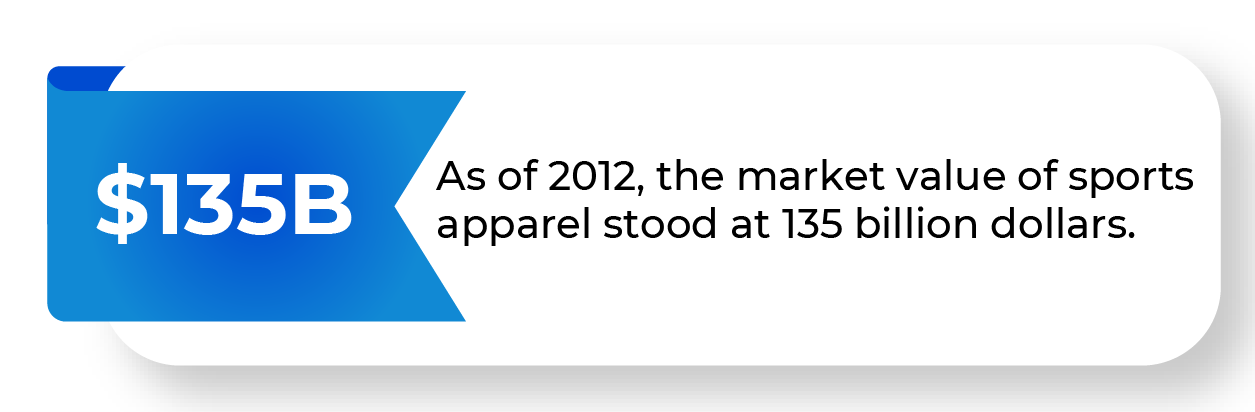
Customer loyalty and brand value take a hit
Sports gears, gym instruments, and merchandise are an investment in health. Right from steppers to comfortable sportswear, fitness enthusiasts rely on good brands to monitor their health. Reliability and wear and tear determine whether people will pay a premium for a brand. Counterfeit products are of poor quality and thus dupe the customers. A brand is a promise by the company to its regular customers. When spurious goods break that promise, companies lose loyal customers forever.Substandard products endanger the lives of sportspersons
Counterfeit goods evade standard quality checks and controls. Protective sports equipment like helmets, knee pads, gloves, and more safeguard players from injuries. Players engage in an aggressive game, putting their faith in protective sports gear. Manufacturers use scientific rigor to design sports goods and protective gear. The products go through extreme climate tests to ensure it withstands wear and tear. Counterfeit products do not care about the user experience or safety standards.Complicates Endorsements
A signature, face, or celebrity endorsement can make sports merchandise a luxury product. Fans are ready to pay hefty prices for products endorsed by celebrities. Endorsements create a multifaceted problem for sports goods. On the one hand, celebrity-endorsed sports goods command a higher price in the market. Thus, it is a thriving ground for the counterfeit market. On the other hand, fake products sold by using a celebrity’s face can dampen the people’s reputation endorsing the product.Using Anti-Counterfeit technology to put an end to counterfeit sports goods:
Sports manufacturers today have a plethora of options, including AI-powered counterfeit detection, to check and report counterfeit products. Anti-counterfeit technology like using barcodes, 2D, 3D codes can track and trace products across the supply chain. Also, technology has enabled easy authenticity verification across the supply chain. Acviss offers a wide range of user-friendly anti-counterfeit technology that can easily integrate with packaging. With the advancement in anti-counterfeit technology, sports manufacturers no longer need to leave their customers’ safety and faith to fate.FAQs
1. What are counterfeit sports goods, and how do they affect consumers?
Counterfeit sports goods are fake replicas of branded sportswear, equipment, or merchandise. They often evade quality checks, posing risks to consumer safety, such as using substandard materials in protective gear. They also fail to deliver the durability and reliability expected from genuine products.2. Why are counterfeit sports goods so prevalent in the market?
Counterfeit sports goods thrive due to high demand, low production costs, and limited consumer awareness. Developing countries with cheap labor and lax enforcement make it easier for counterfeiters to produce and distribute fake products.3. How can I identify fake sports goods?
Consumers can identify fake sports goods by:- Checking for authentication features like QR codes or holograms.
- Inspecting product quality, including stitching, logos, and materials.
- Comparing prices with official brand outlets; overly low prices may signal counterfeits.
4. What are the dangers of using counterfeit sports gear?
- Using counterfeit sports gear can lead to:
- Serious injuries due to poor-quality protective equipment.
- Wastage of money on unreliable, short-lasting products.
- Undermined trust in brands if customers unknowingly purchase fake goods.
5. How are brands combating counterfeit sports goods?
Brands are leveraging anti-counterfeit technologies like blockchain, QR-based product authentication, and tamper-proof packaging. These technologies help track and trace products across the supply chain and allow consumers to verify authenticity easily.
Fake sporting goods put athletes at risk
Book a free demo and see how Certify protects your sporting goods brand and its customers.
Book a Free DemoMore like this on:Counterfeiting
Related reading
Fake Condoms? Here’s What You Need to Know!
The National Family Planning Program of India is trying to increase the acceptance of condoms. Despite awareness
Top Industries Most Affected by Counterfeiting and How to Stop It
Counterfeiting: A Looming Threat to Global Industries The counterfeit industry is projected to reach a global value of $4.2 trillion by