
GS1 Digital Link and the 2027 Sunrise: Moving From 1D to 2D
 Arun KrishnanAug 21, 202611 min read
- GS1 Digital Link makes a GTIN web-addressable, so one 2D barcode can serve checkout and online product information.
- Sunrise 2027 targets global point-of-sale readiness for 2D GTIN barcodes by the end of 2027; it does not switch off linear codes.
- Digital Link improves data capacity and access, but a copied 2D code can still resolve from a counterfeit pack.
- Acviss combines GS1-aligned serialisation with unit-level non-cloneable authentication.
GS1 Digital Link is a standardised way to encode a product's GS1 identifiers, such as the GTIN, so that one 2D barcode both scans at a retail checkout and connects a shopper or supply chain partner to online information. GS1 describes the standard as an important part of the global migration to 2D barcodes, where each product carries a single multipurpose 2D barcode used at the point of sale and to reach digital content. That migration has a target date: GS1's Ambition 2027 sets the goal for retail point-of-sale systems worldwide to read and process 2D barcodes carrying the GTIN, alongside existing linear barcodes, by the end of 2027. For brands, the deadline turns a labelling question into a packaging, data and readiness project.
What is GS1 Digital Link?
GS1 Digital Link is the standard method for encoding GS1 identifiers, such as GTINs, GLNs and SSCCs, together with batch numbers, serial numbers and expiry dates, so those identifiers work both offline and online. GS1's own definition calls it "the standardised method for encoding identifiers like GS1 GTINs, GLNs and SSCCs, along with batch numbers, serial numbers, expiry dates and more" (GS1, 2026). In plain terms, the standard makes a product's GTIN web-addressable, so one scan can deliver the number a checkout needs and also open a link to online content.
That online content can include certifications, instructions for use, product information and traceability data, all reached from the same barcode. GS1 frames the GTIN as "a gateway to information that strengthens brand loyalty, improves supply chain traceability information, and enables business partner APIs, patient safety information and more" (GS1, 2026).
The standard is current and versioned. GS1 published GS1 Digital Link URI syntax 1.6.0 in April 2025, and the GS1-Conformant resolver standard 1.2.0 in January 2026 (GS1, 2026).
What is the 2027 Sunrise (Ambition 2027), and is there a deadline?
Sunrise 2027, which GS1 also calls Ambition 2027, is the industry goal for retail point-of-sale systems to read and process 2D barcodes carrying the GTIN by the end of 2027. GS1 US describes it as "a global transition from 1D UPC barcodes to 2D barcodes, like QR codes, that provide greater transparency, stronger traceability, and richer data across every link in the supply chain" (GS1 US, 2025). The GS1 implementation guideline sets the same target: retail point-of-sale scanning should become "globally capable of reading and processing the GTIN from both existing linear and 2D barcodes by the end of 2027" (GS1, 2024).
The date marks readiness, not removal. Until 90% of point-of-sale scanning solutions can read GS1-compliant 2D barcodes and capture the GTIN, products using a 2D barcode on-pack still carry a linear barcode alongside it (GS1, 2024). Linear UPC and EAN barcodes do not expire in 2027, and phasing them out is not part of the Sunrise initiative.
Why brands are moving from 1D to 2D barcodes
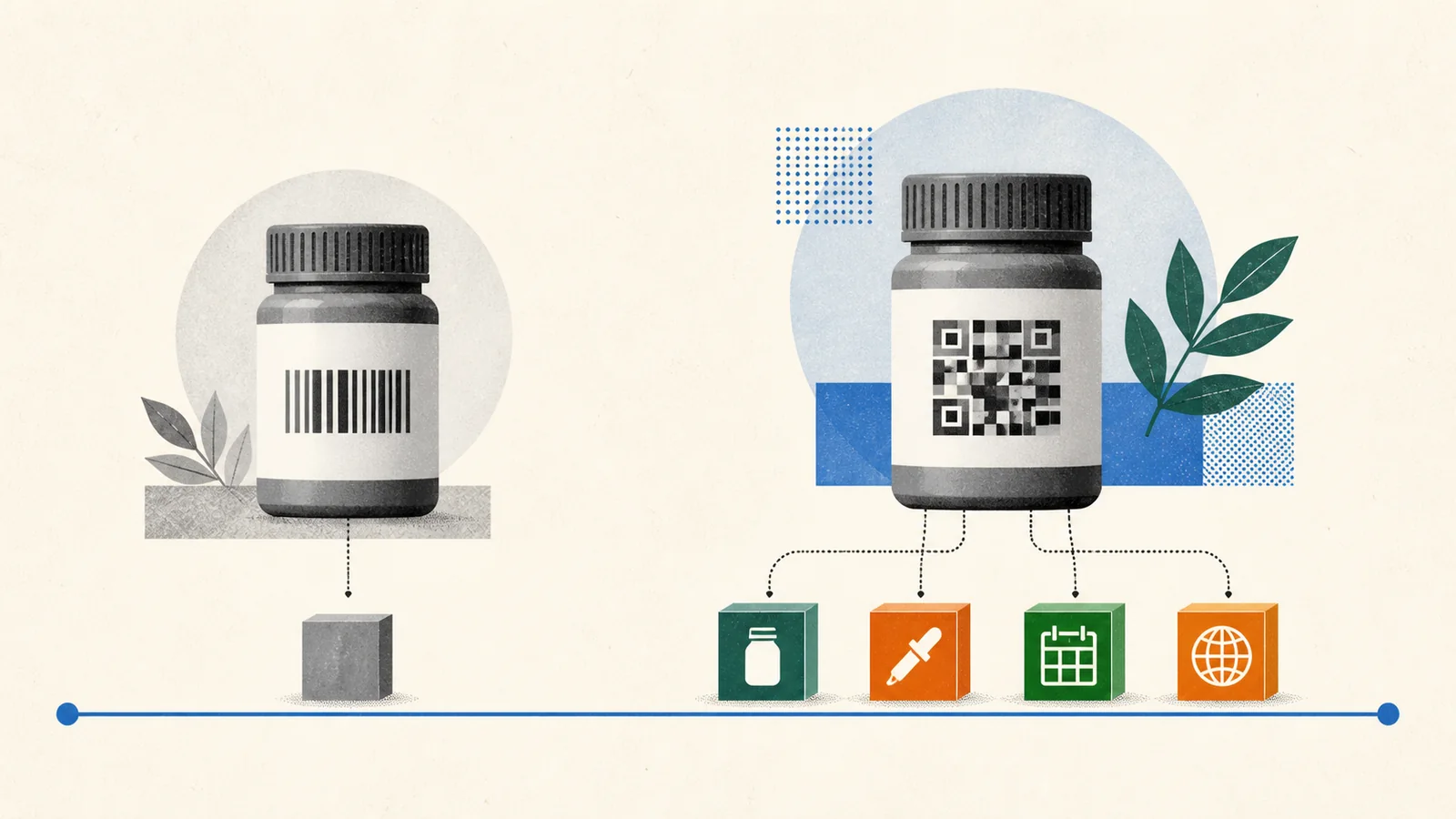
The move from 1D to 2D is a data problem before it is a compliance one. A linear 1D barcode holds a limited set of characters: the UPC-A, the linear barcode used at retail checkouts, encodes 12 digits that identify a product and its manufacturer (GS1 US, 2026). A 2D barcode reads on an x and y axis and holds far more in a single scan, which is why one 2D code can carry the GTIN, a serial number and more. That capacity gap between the two carriers is the reason the migration exists.
| Barcode | Symbol type | Data capacity | Primary role |
|---|---|---|---|
| UPC-A (1D linear) | Linear | 12 numeric digits | Identifies a product at checkout (GS1 US, 2026) |
| QR Code with GS1 Digital Link URI | 2D | 7,089 numeric or 4,296 alphanumeric | Scans at checkout and links to online content (GS1, 2026) |
| GS1 DataMatrix | 2D | 3,116 numeric or 2,335 alphanumeric | Carries the GTIN plus attributes, adopted across healthcare (GS1, 2026) |
Consumer demand pushes in the same direction. A 2025 GS1 US consumer survey found that 79% of US consumers are more likely to buy a product with a scannable QR code that provides additional information, 77% say product information matters to a purchase, and 62% are willing to spend more on a product that offers detailed information (GS1 US, 2025). GS1 US is the body promoting the 2D transition, so a global brand should weigh these figures as US, vendor-interested research rather than independent worldwide demand data.
Jon R. Moeller, Chairman, President and CEO of Procter and Gamble, put the case for the transition as "a single barcode that has the power to provide all the information consumers need and desire, improve traceability through the supply chain, and scans at checkout" (GS1 US, 2025).
How GS1 Digital Link works with one 2D barcode
With GS1 Digital Link, a product carries a single QR Code that holds a GS1 Digital Link URI. That one symbol delivers the GTIN to a checkout offline, and it resolves online to layered content through a GS1-Conformant resolver (GS1, 2026). A brand owner can redirect the same URI to any number of information sources from one barcode, which saves packaging space and avoids a reprint when the destination changes. The GTIN stays the entry point that retailers and third-party apps already use, so existing IT systems keep working through the transition (GS1, 2026).
What GS1 Digital Link does not do, and how to close the authenticity gap
GS1 Digital Link is an identification and data-carrier standard, not an anti-counterfeit mechanism. Nothing in the GS1 material claims the standard prevents copying: web-addressability is its purpose, not copy-resistance. A QR Code or GS1 DataMatrix is a readable, reproducible symbol by design, so someone can photograph the GTIN and GS1 Digital Link URI from a genuine pack and reprint them onto a counterfeit pack, where the code still resolves to the genuine owner's content.
That leaves a gap the 2027 migration does not close on its own: moving to 2D and GS1 Digital Link answers the data and checkout question, not the authenticity question of proving a physical unit is genuine rather than a cloned label. A brand reprinting packs for 2027 has one decision to make, whether the new 2D code is just a data pointer or also a unit-level proof of authenticity.
Make the 2D migration prove the product
See how Acviss combines GS1-aligned serialisation with unit-level, non-cloneable authentication.
Explore Phantom Code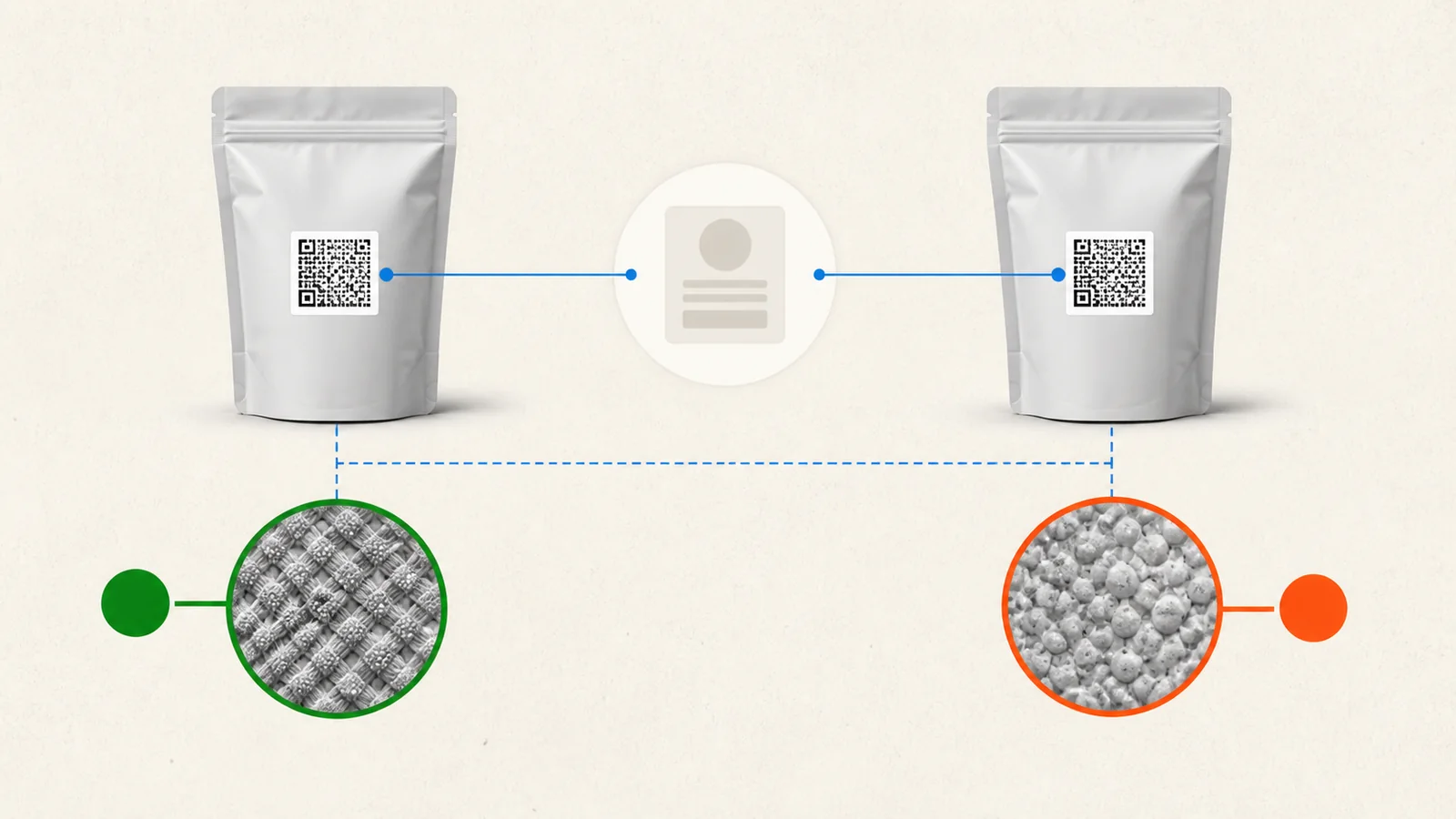
Acviss is an omnichannel brand protection platform that closes that gap during a brand's 2D migration. Acviss pairs the GS1-aligned serialisation the migration already needs with a unit-level non-cloneable identity, so the same scan that reads the GTIN also proves the physical unit is genuine and not just its identifier.
The serialisation is Origin, the Acviss track-and-trace system that gives every unit, case and pallet its own serial identity, carries the GTIN inside a GS1 Digital Link, and aggregates parent to child so a brand traces one item back through the chain and recalls only the affected units. That serialisation is the same work the 2D migration already requires, so a brand does it once. The non-cloneable layer is Phantom Code, an Acviss invisible-authentication mark embedded into a pack's existing artwork at pre-press, so a pharmaceutical or FMCG brand adds unit-level proof with no visible code, no redesign, and a standard smartphone read from anywhere on the pack. This mark makes replication economically and physically impractical at the unit level, so authenticity does not rest on a copyable symbol.
How to prepare before the 2027 deadline
GS1 US lays out the transition as a crawl, walk, run path, and a brand can start now without rebuilding its identification system (GS1 US, 2025).
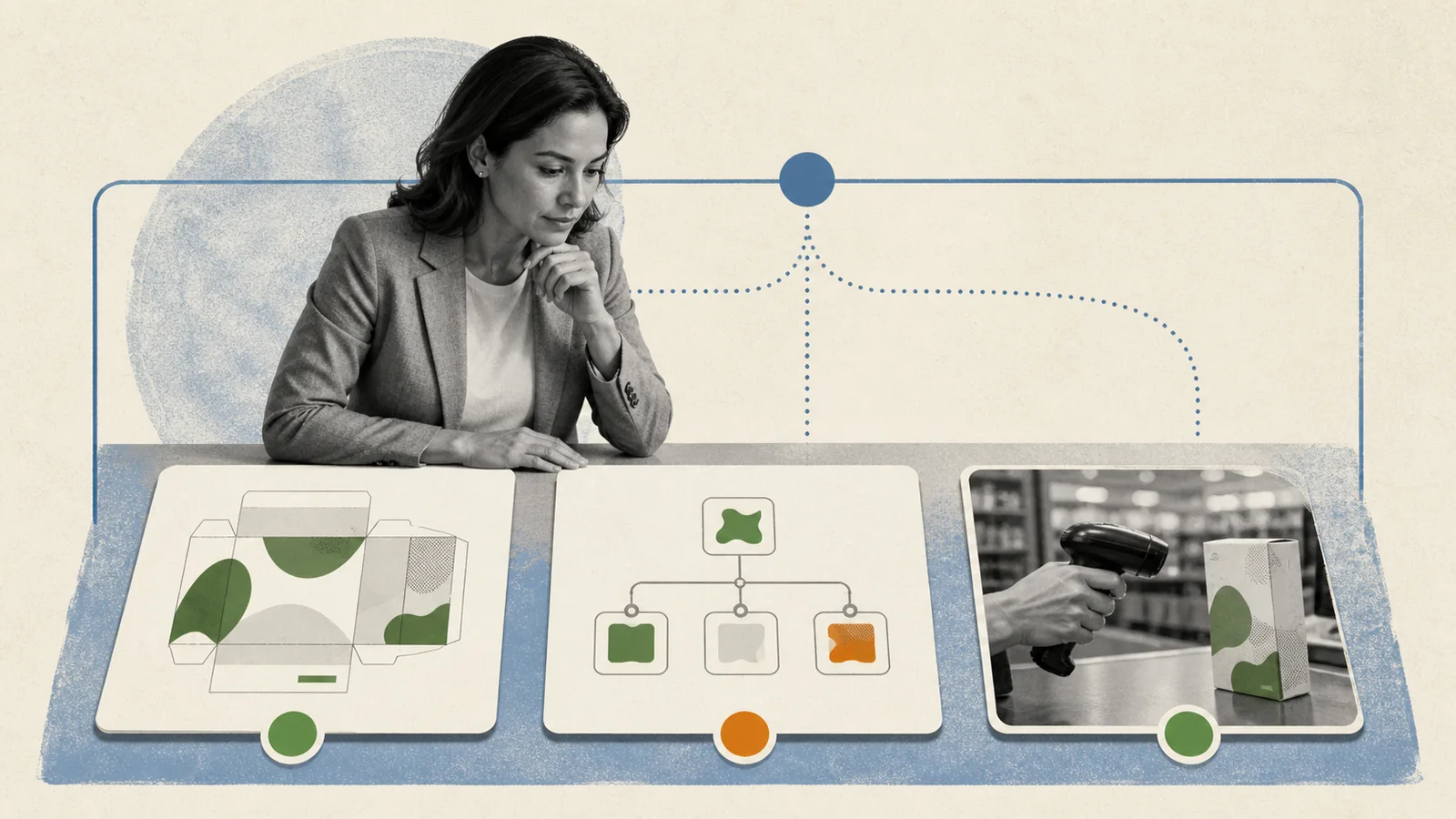
Crawl: add a 2D barcode. Add a 2D barcode to existing packaging, and make sure any existing QR code uses GS1 Digital Link standards and includes the GTIN. This step keeps a pack readable at a Sunrise-capable checkout and sets the code up to carry more than an identifier later.
Walk: enrich the data. Enrich the 2D barcode with data such as product variants and production or expiration dates. This turns the code into a record the supply chain and the shopper can both read, and for regulated categories it supports traceability obligations.
Run: optimise and engage. Use the code to maximise consumer engagement and to optimise safety, traceability and inventory. This is also where a brand settles the authenticity question raised earlier, so the code proves the unit, not just identifies it.
A brand that settles the authenticity question at this stage has less to redo later, because the serial identity a 2027-ready pack already carries is the same identity a non-cloneable mark verifies. The end of 2027 and the standard itself remain GS1's, so the authentication layer a brand adds on top stays a separate decision it controls.
FAQ
What is GS1 Digital Link?
GS1 Digital Link is the GS1 standard for encoding a product's identifiers, such as the GTIN, so that one barcode reads offline at a checkout and connects online to product information. It carries the identifier a checkout needs and, through a resolver, opens layered content such as certifications, instructions for use and traceability data. A brand owner changes what sits behind the link without reprinting the on-pack code, so artwork stays stable across promotions. GS1 lists the standard as current and maintained, with GS1 Digital Link URI syntax at version 1.6.0 in April 2025 and the GS1-Conformant resolver standard at version 1.2.0 in January 2026 (GS1, 2026).
What is the 2027 Sunrise, and is there a deadline?
Sunrise 2027, also called Ambition 2027, is GS1's industry goal for every retail point-of-sale system to read and process 2D barcodes carrying the GTIN by the end of 2027, alongside existing linear barcodes (GS1 US, 2025). It sets a readiness target for checkouts, not a hard cutover, and a brand does not have to implement every 2D capability by that date. The practical move is to begin now and treat the end of 2027 as the point by which checkouts should read a brand's 2D code (GS1, 2024).
Do UPC and 1D barcodes stop working in 2027?
No, UPC and 1D barcodes keep working after 2027, and a brand does not need to remove them. Retiring linear barcodes is not part of the Sunrise 2027 initiative, which is only about point-of-sale systems gaining the ability to read and process 2D codes (GS1 US, 2025). GS1's implementation guideline keeps a linear barcode on-pack alongside the 2D code until 2D-capable scanning reaches its 90% point-of-sale threshold (GS1, 2024). Any claim that UPC or EAN codes vanish overnight at the end of 2027 contradicts GS1's own material.
What is the difference between a 1D barcode and a 2D barcode?
A 1D barcode stores data in one linear sequence and holds few characters, while a 2D barcode stores data on two axes and holds much more per scan. The UPC-A, the linear barcode used at retail checkouts, encodes 12 digits identifying a product and its manufacturer (GS1 US, 2026). A QR Code with a GS1 Digital Link URI holds up to 7,089 numeric or 4,296 alphanumeric characters, and a GS1 DataMatrix holds up to 3,116 numeric or 2,335 alphanumeric characters (GS1, 2026). That capacity lets one 2D code carry the GTIN, a serial number, a batch and an expiry date together.
Does GS1 Digital Link stop counterfeiting?
No, GS1 Digital Link does not stop counterfeiting, and it is not built to. It is an identification and data-carrier standard that encodes the GTIN with batch, serial and expiry data so one symbol works offline and online (GS1, 2026). That design keeps the printed code readable and reproducible, so the standard alone cannot prove a physical unit is genuine rather than a cloned label. Acviss closes that gap by pairing the GS1 Digital Link with a unit-level non-cloneable identity that makes replication economically and physically impractical at the unit level.
How should a brand prepare for the 1D to 2D migration before 2027?
A brand should begin the 1D to 2D migration now and follow the phased crawl, walk, run path GS1 US describes (GS1 US, 2025). The first phase puts a GS1 Digital Link 2D code carrying the GTIN onto current packaging, the second enriches it with data such as variants and expiry dates, and the third uses it to lift engagement and sharpen traceability. Deciding at the first phase whether that code also carries a unit-level non-cloneable identity avoids reprinting packs a second time.
How does Acviss help with the GS1 Digital Link and 2D migration?
Acviss helps brands prepare for the GS1 Digital Link and 1D to 2D migration by combining GS1-aligned serialisation with unit-level authentication on one platform. Origin, the Acviss track-and-trace system, serialises every unit, case and pallet, carries the GTIN inside a GS1 Digital Link, and aggregates parent to child so one scan reads the GTIN and ties the item to its case and pallet (Acviss, 2026). Phantom Code, the Acviss invisible-authentication mark, embeds a covert identity into existing pack artwork at pre-press, so that same scan also verifies the unit against secure records without a redesign. This prepares a brand for the deadline rather than guaranteeing compliance, because the end of 2027 and the standard itself remain GS1's.
Prepare for Sunrise 2027 without leaving authenticity behind
See how Acviss connects GS1-aligned serialisation, traceability and unit-level authentication.
Talk to an Expert