

India’s Fake Pesticide Problem and What Traceability Fixes
 Mithileshkumar R NaikAug 15, 20264 min read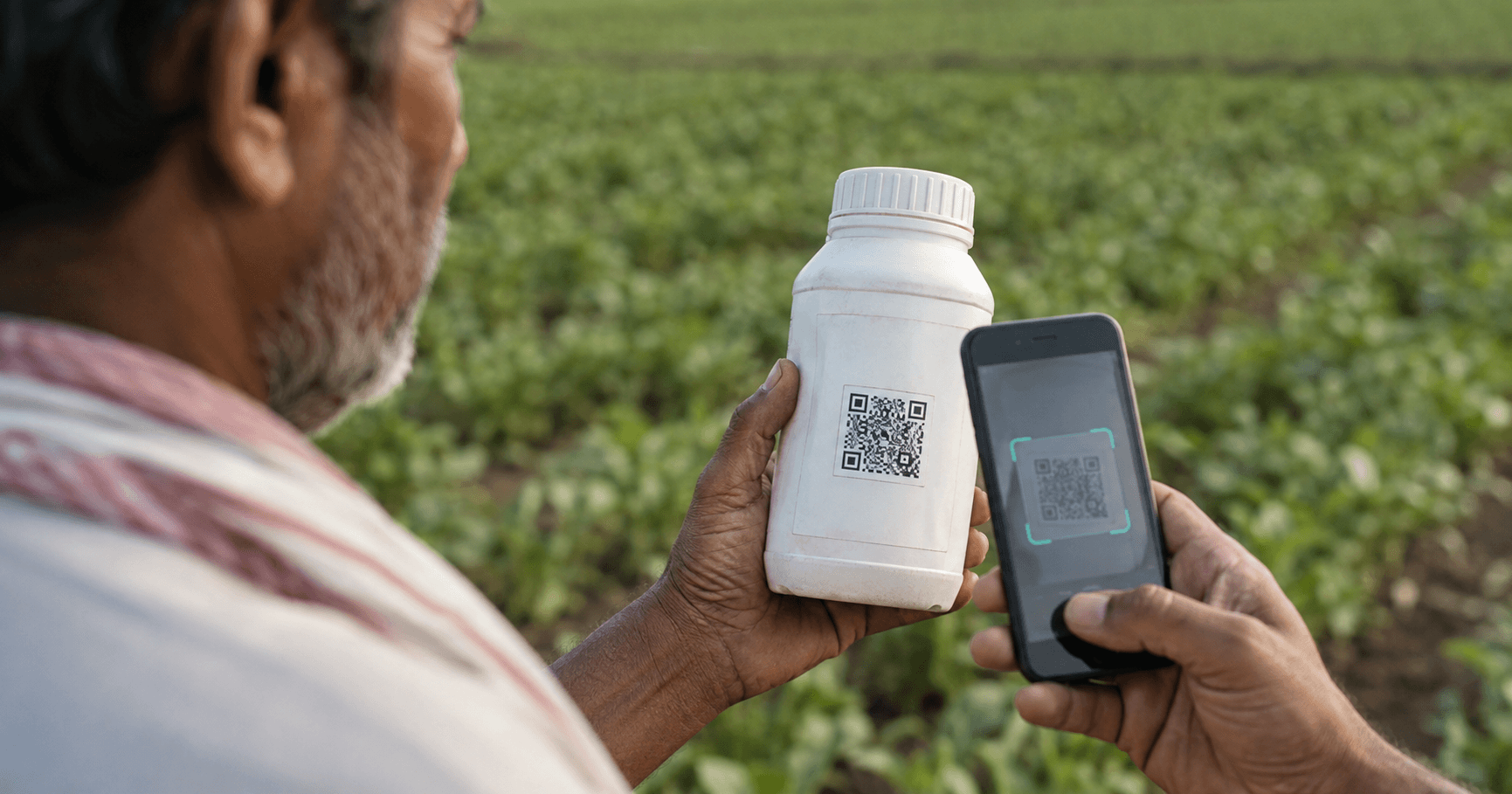
- A Gujarat fake-agrochemical network exposed by enforcement agencies had illegal trade estimated to exceed ₹1,000 crore.
- FICCI and CropLife estimate 25-30% of India’s pesticide market by value/volume is counterfeit, spurious, or sub-standard.
- The Indian Chamber of Commerce estimates 10.6 million tonnes of food are lost annually to ineffective or illegal pesticides.
- Packaging security (holograms, seals) raises the cost of copying but doesn’t answer whether a specific unit is genuine; unit-level traceability does.
Walk into any agri-input shop in a district three hours from the nearest regulator, and you cannot tell a genuine pesticide from a fake one just by looking at the label. That is the entire problem.
Enforcement agencies recently exposed a fake agrochemical manufacturing and distribution network operating across Gujarat, with the illegal trade estimated to exceed ₹1,000 crore. It is not an isolated bust. Industry estimates from FICCI and CropLife International put counterfeit, spurious, or sub-standard products at roughly 25-30% of India’s entire pesticide market by value and volume, in a market already sized at around ₹3,200 crore in fake-product terms and growing at close to 20% a year since.
Why this is bigger than one farmer’s bad batch
The direct cost lands on the farmer first: crops fail, input costs are wasted, a season’s income disappears. But the scale compounds outward. A report from the Indian Chamber of Commerce estimates that ineffective or illegal pesticides cause the loss of 10.6 million tonnes of food every year in India, food that never reaches a market, export or domestic.
For genuine agrochemical manufacturers, the damage is different but just as real. Every fake sachet sold under a recognisable brand name erodes trust in that brand specifically, not just in “pesticides” as a category. A distributor who sold a farmer a counterfeit product with your logo on it will not distinguish, in the next conversation, between “fake” and “your company.” Retailers restock based on what moved, not on who manufactured what, so counterfeit volume can displace genuine stock on the same shelf without anyone flagging it as a supply chain event.

See Origin in action
See how Origin gives agrochemical manufacturers unit-level traceability across the distribution chain.
Explore OriginWhy label design alone doesn’t fix it
Most anti-counterfeit responses in agrochemicals still start and end with the packaging: holograms, tamper-evident seals, harder-to-copy print. These raise the cost of copying, but they do not answer the question a field inspector, a distributor, or a farmer actually needs answered: is this specific unit, in this specific bag, genuinely from this manufacturer’s supply chain, right now.
That is a traceability question, not a packaging question. A counterfeiter can photograph and reproduce a hologram. They cannot fabricate a unique, unit-level code that resolves back to a real batch, a real production date, and a real distribution path when checked. That distinction, checkable per unit rather than per design, is what separates authentication from decoration.
What unit-level traceability actually changes
A traceability layer built into the packaging (QR code, unique serialised code, or invisible marker) gives three groups a way to verify a specific unit rather than trust a design:
- Farmers and retailers can scan or check a code before purchase or resale, rather than relying on visual inspection of a label that a counterfeiter has already copied.
- Distributors get a real audit trail: which batch went where, and when, which is exactly the data needed to spot a diversion or counterfeit-substitution pattern before it becomes a ₹1,000-crore-scale network.
- Manufacturers get a live signal: repeated verification attempts from a region with no real distribution, or a genuine code being scanned an implausible number of times, both point directly at where counterfeit product is entering the market.
This is the same logic behind supply chain traceability for agriculture, moving from “does this look right” to “does this check out,” at the level of the individual unit, not the design of the pack it came in.
The enforcement gap traceability doesn’t wait for
The Gujarat network took organised enforcement action to expose, and cases like it will keep surfacing faster than regulation can close every loophole. A pesticide manufacturer cannot depend on the next raid to protect this year’s distribution. What a manufacturer can control directly is whether every unit leaving its own factory is verifiable at the point someone actually questions it: a retailer, a farmer, or an inspector standing in a field, not an auditor reading a report months later.
That is the practical difference between anti-counterfeiting as a compliance exercise and anti-counterfeiting as something a distributor network actually uses. For a fuller look at how authentication mechanisms work at the unit level, see what anti-counterfeiting actually covers.
Sources:
- Fake Agrochemicals Network Exposed in Gujarat (Rural Voice)
- Ficci report: One-third of Indian pesticides are dangerous fakes (FoodNavigator)
- Tackling India’s Fake Pesticides (CropLife International)

Stop counterfeit product before it reaches the field
Book a free demo and see how Origin makes every unit verifiable, not just every package design.
Book a Free DemoRelated reading

Traceability Software: What to Look for Before You Buy
Search “traceability software” and you’ll get a wall of vendors that all claim real-time visibility, blockchain-backed rec

Instant Supply Chain Tracking: What It Actually Takes
“Instant” and “supply chain tracking” don’t usually belong in the same sentence for most brands. Real-time vis