

In this article
- The Overall Scale: India’s Counterfeit Market
- Pharmaceutical Counterfeiting in India
- The Human Cost Beyond Revenue
- What Brands Are Doing: The Shift from Reactive to Proactive Brand Protection
- How to Use This Data to Build an Internal Business Case
- Protecting Your Brand in India Starts with the Right Technology
Recent Posts
Anti-Counterfeiting Mithileshkumar R NaikMay 19, 202612 min read
The Real Scale of India’s Counterfeit Market in 2026
 Mithileshkumar R NaikMay 19, 202612 min read
TL;DR
- India’s counterfeit market has grown substantially in scale, touching FMCG, pharma, electronics, and automotive parts among other sectors.
- Online marketplaces have accelerated counterfeit reach, making distribution faster and detection harder than in purely offline channels.
- The scale of the problem means brands can no longer treat anti-counterfeiting as a reactive, occasional exercise.
- Data-driven monitoring and authentication give brands a way to measure and respond to counterfeit activity at the same scale it’s happening.
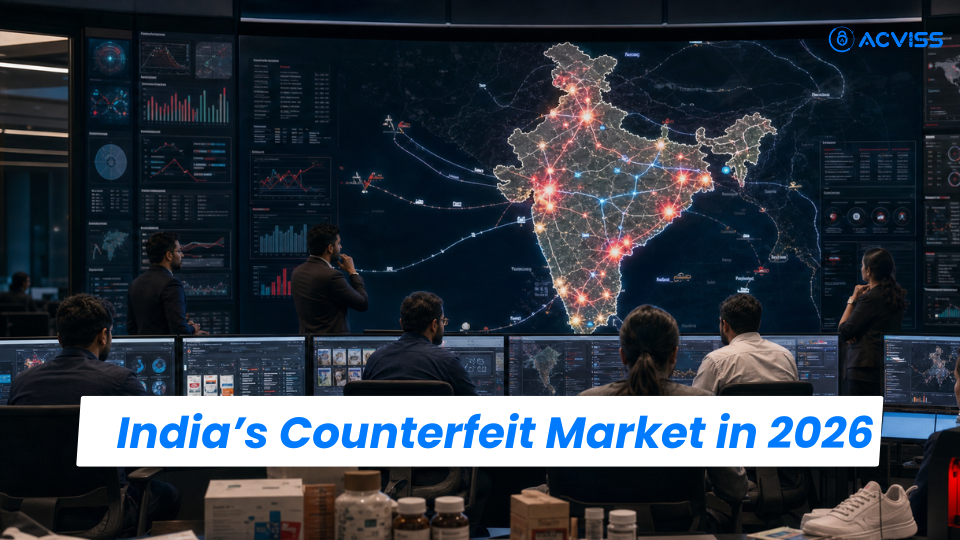 India-Counterfeiting-Statistics-2026-The-Scale-of-Fake-Products-Across-Every-Major-Industry
If you are building a business case for brand protection investment inside your organization, the first thing you will be asked for is numbers. How large is the problem? How much are we losing? What does the data say?
India’s counterfeit market is one of the largest and most diverse in the world, affecting everything from the medicines people take to the pesticides farmers use to protect crops. The data, drawn from FICCI CASCADE, the OECD, the WHO, and India-specific industry research, tells a consistent story: the scale of counterfeiting in India causes billions in annual revenue loss to legitimate brands, and the human consequences extend far beyond financial damage.
This post consolidates the most credible estimates and research findings available, attributes every figure clearly to its source, and gives you a framework for using this data to make the case for brand protection investment inside your organization.
India-Counterfeiting-Statistics-2026-The-Scale-of-Fake-Products-Across-Every-Major-Industry
If you are building a business case for brand protection investment inside your organization, the first thing you will be asked for is numbers. How large is the problem? How much are we losing? What does the data say?
India’s counterfeit market is one of the largest and most diverse in the world, affecting everything from the medicines people take to the pesticides farmers use to protect crops. The data, drawn from FICCI CASCADE, the OECD, the WHO, and India-specific industry research, tells a consistent story: the scale of counterfeiting in India causes billions in annual revenue loss to legitimate brands, and the human consequences extend far beyond financial damage.
This post consolidates the most credible estimates and research findings available, attributes every figure clearly to its source, and gives you a framework for using this data to make the case for brand protection investment inside your organization.
The Overall Scale: India’s Counterfeit Market
India is consistently identified as a major source and destination market for counterfeit goods in global trade intelligence reports. The OECD’s trade in counterfeit goods analysis identifies India among the top origin countries for fake products entering global trade, alongside China, Hong Kong, and the UAE. Domestically, FICCI CASCADE, the Committee Against Smuggling and Counterfeiting Activities Destroying the Economy, has produced research showing that counterfeiting and smuggling collectively cost the Indian economy hundreds of thousands of crores in lost revenue annually, with significant impact on government tax collections and legitimate employment. According to FICCI CASCADE research, the fast-moving consumer goods, alcoholic beverages, tobacco, auto parts, and mobile handsets sectors alone account for a combined annual loss running into tens of thousands of crores for legitimate businesses. The FICCI CASCADE report on illicit markets notes that for every product category studied, the counterfeit penetration rate is substantially higher in India than in comparable economies at similar income levels, driven by large informal trade networks and limited enforcement capacity at the retail level. It is important to note that precise aggregate figures for the full Indian counterfeit market vary across sources and methodologies. Industry estimates from bodies like ASSOCHAM and CII use different sampling methods than academic research, and any single number should be understood as an indicative estimate rather than a precise measurement. What the data consistently shows, across all sources, is that the problem is very large and growing.Pharmaceutical Counterfeiting in India
 Pharmaceutical
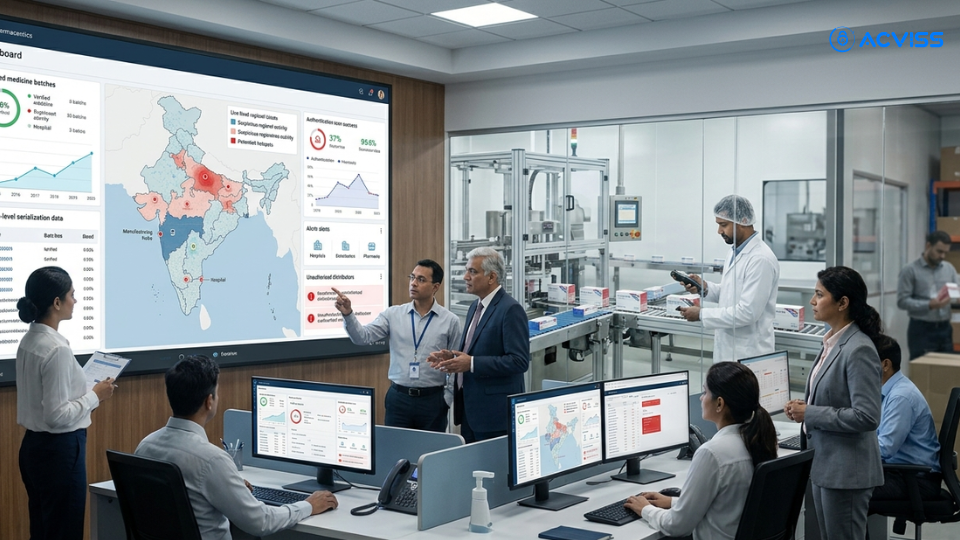
The World Health Organization has identified falsified and substandard medicines as a global public health emergency. According to WHO estimates, approximately 1 in 10 medical products circulating in low- and middle-income countries is either substandard or falsified. India, as both a major producer and consumer of pharmaceuticals, sits at the center of this issue from both directions.
India is one of the world’s largest producers of generic medicines, and the scale of the domestic pharmaceutical market creates both the supply chain complexity and the incentive for counterfeit infiltration. WHO research notes that falsified medicines are most likely to appear in therapeutic categories with high consumer demand, low prescriber oversight, and significant price differentials between authentic and counterfeit versions. These conditions describe a significant portion of the Indian over-the-counter and rural pharmaceutical market.
FICCI CASCADE’s sector research has highlighted the antimalarial, antibiotic, and lifestyle disease medication segments as particularly vulnerable to counterfeit infiltration in India. The convergence of high demand, price sensitivity, and weak point-of-sale verification creates a market that counterfeiters find commercially attractive.
For pharmaceutical brands, the regulatory and reputational risk compounds the revenue risk. A single high-profile adverse event linked to a counterfeit version of your product can permanently damage brand trust in markets that took years to build.
Pharmaceutical
The World Health Organization has identified falsified and substandard medicines as a global public health emergency. According to WHO estimates, approximately 1 in 10 medical products circulating in low- and middle-income countries is either substandard or falsified. India, as both a major producer and consumer of pharmaceuticals, sits at the center of this issue from both directions.
India is one of the world’s largest producers of generic medicines, and the scale of the domestic pharmaceutical market creates both the supply chain complexity and the incentive for counterfeit infiltration. WHO research notes that falsified medicines are most likely to appear in therapeutic categories with high consumer demand, low prescriber oversight, and significant price differentials between authentic and counterfeit versions. These conditions describe a significant portion of the Indian over-the-counter and rural pharmaceutical market.
FICCI CASCADE’s sector research has highlighted the antimalarial, antibiotic, and lifestyle disease medication segments as particularly vulnerable to counterfeit infiltration in India. The convergence of high demand, price sensitivity, and weak point-of-sale verification creates a market that counterfeiters find commercially attractive.
For pharmaceutical brands, the regulatory and reputational risk compounds the revenue risk. A single high-profile adverse event linked to a counterfeit version of your product can permanently damage brand trust in markets that took years to build.
FMCG Counterfeiting in India

FICCI CASCADE’s research on the FMCG sector consistently identifies it as one of the highest-value targets for counterfeiters in India. The organization’s published research on illicit markets in FMCG categories including packaged foods, personal care, home care, and branded beverages shows that counterfeit penetration is significant across both urban organized retail and rural unorganized trade.
According to FICCI CASCADE’s findings, the personal care segment, including hair care, skin care, and hygiene products, faces particularly high counterfeit exposure because the products are visually easy to replicate, the manufacturing inputs are widely available, and consumers often lack the ability to distinguish genuine from fake at point of purchase.
ASSOCHAM research has indicated that counterfeit FMCG products cause revenue losses running into thousands of crores annually for legitimate brands, while simultaneously causing harm to consumers who use substandard personal care or food products. The informal retail channel, which accounts for a substantial share of FMCG sales in India, is where the majority of counterfeit FMCG products are distributed.
For FMCG brand managers, the data point that often has the most impact internally is not aggregate market loss but category-specific penetration: the percentage of products in your specific category that are estimated to be counterfeit in the markets you serve. FICCI CASCADE’s sector reports provide this level of granularity for several FMCG sub-categories.
Agrochemicals and Seeds Counterfeiting in India
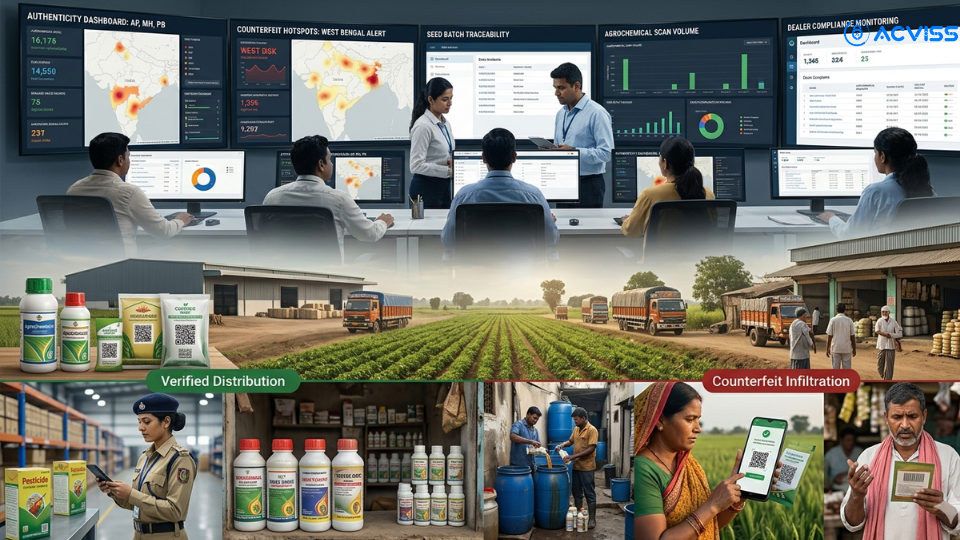
Agrochemical and seed counterfeiting in India causes harm that extends beyond brand revenue to the direct livelihoods of farmers. CII and FICCI research on the agrochemical sector has documented that counterfeit pesticides and herbicides are a significant problem across major agricultural states, with farmers often unable to distinguish genuine from fake products at the time of purchase.
According to CII research on agri-input quality, counterfeit agrochemicals may contain incorrect active ingredient concentrations, substitute ingredients, or no active ingredient at all. Farmers using ineffective products lose crop protection, face yield losses, and may escalate pesticide use trying to compensate for products that are not working, compounding both the economic and environmental damage.
The seed sector has its own counterfeiting dimension. Branded hybrid seeds command significant price premiums because of their yield and disease-resistance properties. Counterfeit seeds sold under established brand names deliver neither the yield guarantee nor the agronomic characteristics that farmers paid for. According to FICCI CASCADE research, the combined impact of counterfeit agri-inputs on Indian agriculture runs into significant annual losses for both farmers and legitimate input companies.
For agro brands like Corteva Agriscience, which operates across India’s agricultural markets, the counterfeit risk is not only a revenue and brand equity issue but a direct threat to farmer relationships that take years to build.
Electronics and Auto Parts Counterfeiting in India
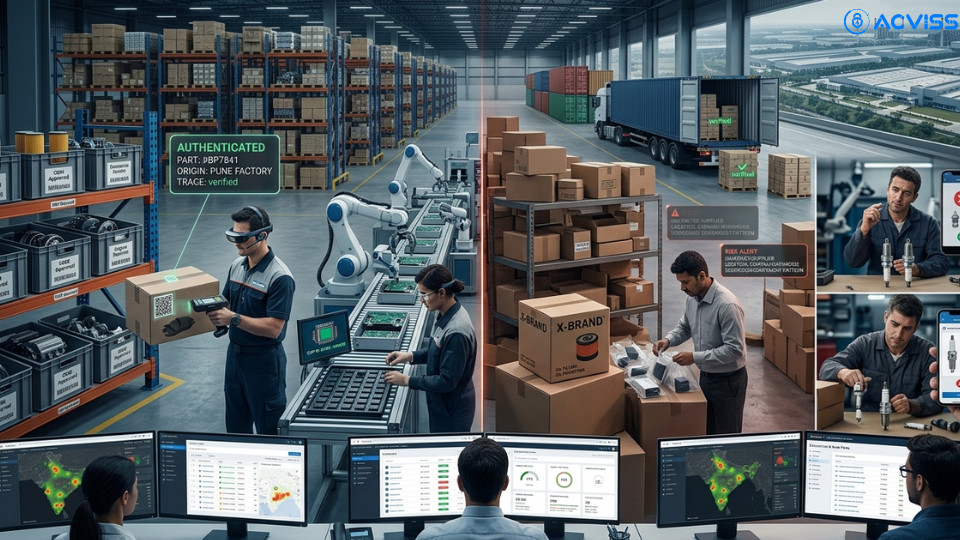
India’s electronics and automotive sectors face counterfeit risk across very different value points, from high-value consumer electronics to low-cost spare parts, but the economic mechanism is similar in both: counterfeit products undercut legitimate pricing while delivering inferior safety and performance.
FICCI CASCADE’s research on the auto components sector has documented counterfeit infiltration across brakes, filters, bearings, and electrical components, which are among the categories with the highest safety implications. The organization’s published research cites significant annual revenue losses to the legitimate auto parts industry from counterfeit products circulating in the aftermarket.
The Automotive Component Manufacturers Association of India, ACMA, has separately highlighted that counterfeit auto parts are a significant and growing problem in India’s vehicle aftermarket, with fake parts reaching consumers through both organized retail and online channels. The safety implications of counterfeit braking systems, steering components, and electrical parts translate directly to road safety risk.
In consumer electronics, FICCI CASCADE and ASSOCHAM research points to mobile phone accessories, chargers, batteries, and earphones as high-volume counterfeit categories. The price points make them accessible to a wide range of consumers, and the product complexity makes verification difficult without specialized testing.
Online Counterfeiting: How E-Commerce Accelerated the Problem
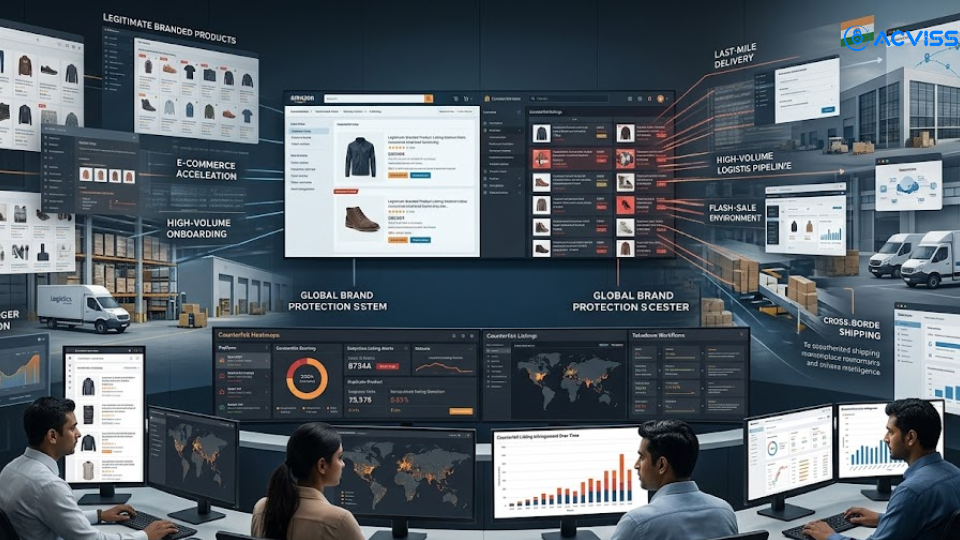
India’s e-commerce market has grown at significant pace over the past decade, and counterfeit products have grown alongside it. The OECD’s research on free trade zones and e-commerce notes that online platforms have dramatically lowered the barriers to entry for counterfeit distribution: a seller can list fake products to millions of consumers from a single location, with minimal overhead and significant anonymity compared to physical retail.
According to industry estimates cited by FICCI CASCADE, a significant share of counterfeit product distribution in India now flows through e-commerce channels, including major domestic marketplaces. Marketplace operators face a structural challenge: they depend on seller volume for revenue, and seller verification at the level required to fully eliminate counterfeits would substantially increase their compliance costs.
For brands, the e-commerce counterfeit problem compounds in two ways. First, the scale of listings makes manual monitoring and takedown difficult without automated technology. Truviss, Acviss’s online brand protection platform, monitors more than 5,000 marketplaces for unauthorized listings and executes automated takedowns, addressing the scale problem that makes manual monitoring impractical. Second, e-commerce counterfeits damage brand perception among consumers who receive and review fake products, generating negative reviews that affect your legitimate listing’s visibility and conversion rate.
The growth of social commerce, direct-to-consumer social media selling, and quick-commerce channels in India has created additional distribution vectors for counterfeit products that post-date most of the existing regulatory frameworks and brand protection technology deployments.

See Certify in action
See how Certify helps Indian brands fight back against a growing counterfeit market. This scale is what makes anti-counterfeit labels and similar verification layers a necessity rather than an option for Indian brands, especially D2C and marketplace-first brands — see our piece on how to protect your ecommerce brand from counterfeit.
Explore CertifyThe Human Cost Beyond Revenue
When building an internal business case for brand protection, revenue figures are usually the primary argument. But the human cost of counterfeiting in India deserves its own section, both because it is real and because it often resonates with leadership in ways that financial projections do not. The WHO’s research on falsified medicines documents deaths attributable to counterfeit pharmaceuticals across low- and middle-income countries, with the impact concentrated in antimalarial, antibiotic, and vaccine categories. In India, where a significant share of medicine purchases occur in informal retail settings without prescription verification, the exposure to falsified medicines is not a theoretical risk. Counterfeit pesticides that fail to deliver the promised crop protection have contributed to crop failures and farmer distress in agricultural states, according to CII and Ministry of Agriculture research. Farmers who have borrowed to purchase inputs and then lose crops to pest damage because their pesticides contained no active ingredient face financial consequences that can be catastrophic at the household level. Counterfeit auto parts, as documented by ACMA and FICCI CASCADE, contribute to vehicle failures and road accidents. Counterfeit electrical components create fire risk. Counterfeit food and beverages cause food safety incidents. These are not hypothetical scenarios. They are documented, recurring events in India’s counterfeit landscape. For brand managers, articulating this dimension of the problem is both honest and strategically valuable. Brand protection investment is not only about protecting revenue; it is about ensuring that consumers who trust your brand with their health, safety, and livelihoods receive the genuine product your brand stands behind.What Brands Are Doing: The Shift from Reactive to Proactive Brand Protection
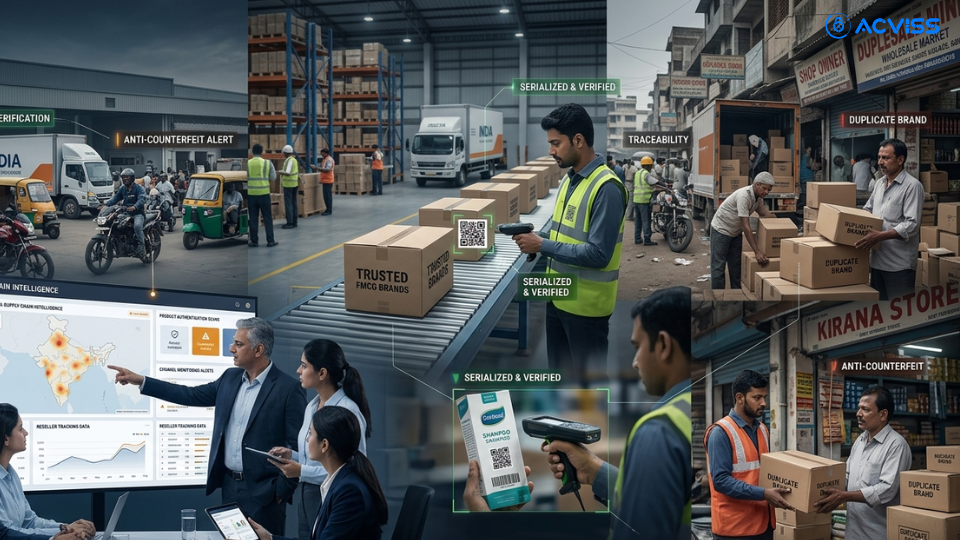
Historically, most Indian brands have taken a reactive approach to counterfeiting: respond to complaints, file FIRs when enforcement agencies are willing, monitor for obvious fakes, and manage legal proceedings against identified counterfeiters. This approach has two fundamental limitations. First, it is slow: by the time a complaint reaches your brand protection team, thousands of fake units may already be in market. Second, it treats symptoms rather than causes: legal action against individual counterfeiters does not prevent new actors from entering the same space. The shift to proactive brand protection means deploying technology that prevents counterfeits from working, detects them early, and generates the geographic and channel intelligence needed to intervene before the problem scales. Serialization at the product level, supply chain traceability, and automated online monitoring are the three pillars of a proactive approach. Brands like ITC, TATA, and Pigeon, which operate across FMCG and consumer goods categories with significant counterfeit exposure, have invested in product authentication and supply chain visibility technology. The return on this investment is measured not only in counterfeit units stopped but in the margin protection, consumer trust, and channel confidence that come from a brand environment where your genuine products are clearly distinguishable from fakes.How to Use This Data to Build an Internal Business Case
If you are presenting a business case for brand protection investment to your CFO, COO, or marketing director, here is how to use the data in this post effectively.Start with category-specific data, not aggregate market estimates
A broad estimate of India’s total counterfeit market is difficult for decision-makers to connect to your specific situation. Start with the FICCI CASCADE or CII data specific to your product category: what is the estimated counterfeit penetration rate in your sector? What is the documented revenue loss to legitimate brands in your category?Quantify your own exposure based on known signals
Combine the industry data with signals from your own business: distributor complaints about pricing pressure, consumer complaints about product quality that do not match your manufacturing records, marketplace listings you did not authorize, warranty claims from geographies you do not distribute to. These internal signals, when combined with category-level data, build a credible and specific estimate of your brand’s exposure.Model the cost of inaction, not just the cost of investment
Brand protection technology has a defined cost. The cost of inaction, continuing erosion of market share in affected geographies, margin compression from counterfeit-driven price pressure, consumer trust damage from product quality complaints, and potential liability from consumer harm, is harder to quantify but usually substantially larger. Frame the investment against the ongoing cost of doing nothing.Use enforcement and regulatory context
India’s regulatory environment around counterfeiting is evolving. The Bureau of Indian Standards, the Food Safety and Standards Authority of India, and sector-specific regulators are increasing pressure on brands to demonstrate supply chain integrity. Brand protection investment that positions your organization ahead of regulatory requirements is both a risk management measure and a compliance investment.Reference what your industry peers are doing
Decision-makers respond to competitive context. If major brands in your category have deployed authentication and traceability technology, the question is no longer whether the technology is proven but whether you can afford to be the brand in your category that has not invested in it.Protecting Your Brand in India Starts with the Right Technology
The data in this post documents a problem that affects every major product category in India and causes harm at every level, from brand revenue to consumer health to farmer livelihoods. The brands that protect themselves most effectively are not the ones that spend the most; they are the ones that deploy the right technology at the right points in their product journey, generating the intelligence needed to detect and stop counterfeits before they scale. Acviss has built a brand protection platform purpose-designed for Indian manufacturers: product authentication that consumers actually use, supply chain traceability that detects grey market diversion in real time, and online monitoring that catches marketplace counterfeits at scale. More than 80 brands and over 2 billion products secured. Protecting your brand in India starts with the right technology. See what Acviss has built for Indian manufacturers. Book a demo.
India’s counterfeit market is growing, is your brand ready?
Book a free demo and see how Certify protects your brand at scale.
Book a Free DemoMore like this on:Research & Data
Related reading

10 Questions to Ask Before Choosing an Anti-Counterfeit Solution
Most brand managers reach the vendor shortlist stage after months of research. They have seen the
7 Best Anti-Counterfeit Software Solutions for Indian Brands 2026
In this article How to Compare Anti-Counterfeiting Solutions: Key Criteria Acviss (Certify + Truviss + Origin) Ennoventure NeuroTags VCQRU R