

Airbag Seizures Are Up 10x: What It Means for Parts
 Mithileshkumar R NaikAug 15, 20263 min read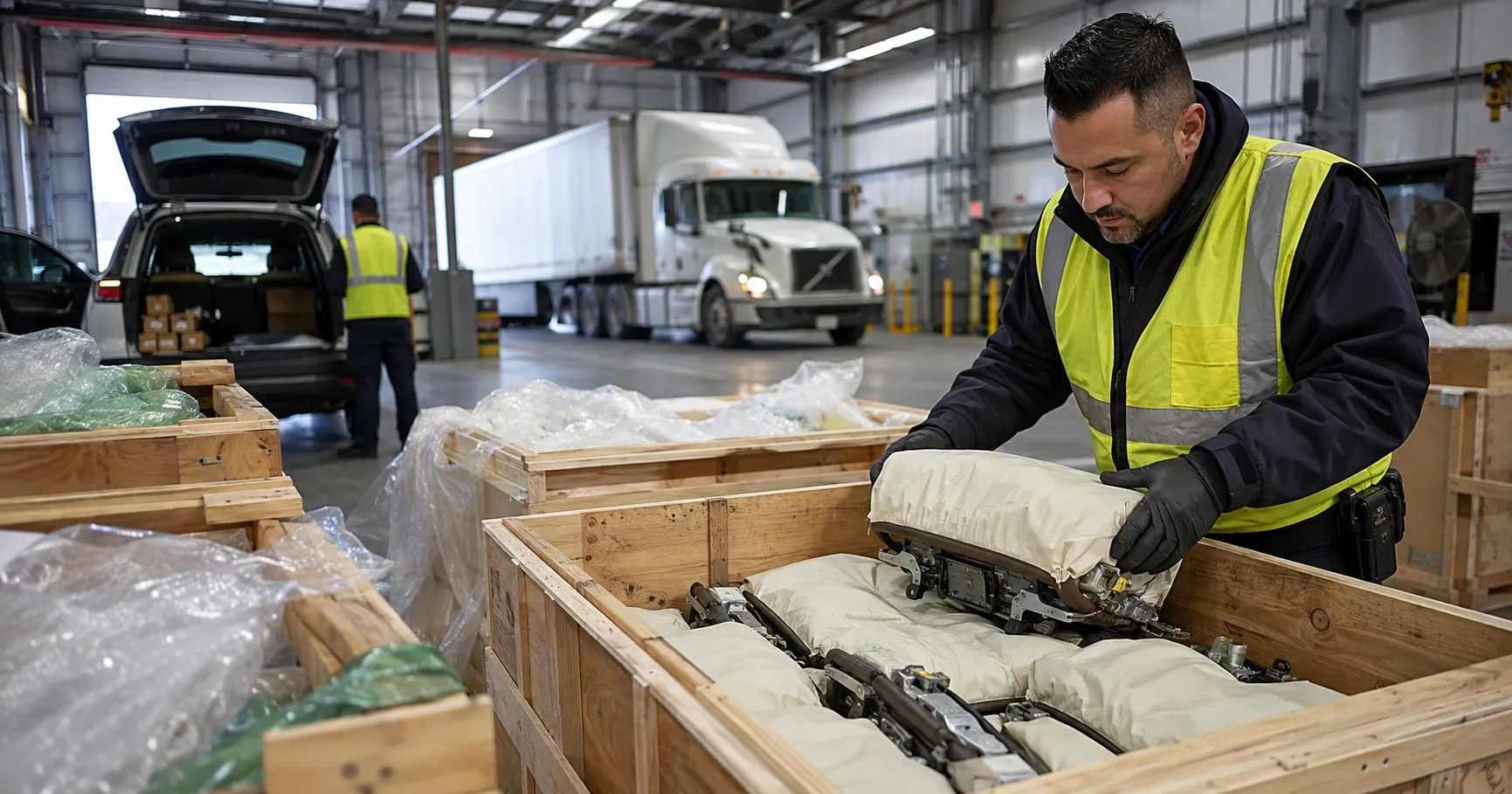
- CBP seized more than 211,000 counterfeit automotive parts in FY2024, almost double FY2023’s total.
- Counterfeit airbags alone jumped to 490+ units seized, more than 10x FY2023’s count.
- Border seizures are a lagging indicator, they say nothing about counterfeit volume already circulating through distributors and resellers.
- A part number or logo isn’t proof of authenticity; unit-level verification is what closes the gap between ‘looks right’ and ‘verified right’.
An airbag looks the same whether it’s genuine or not, right up until the moment it’s supposed to deploy. That single fact is what makes counterfeit airbags one of the most dangerous categories of fake auto parts in circulation, and US Customs and Border Protection’s own numbers show the problem accelerating fast.
CBP seized more than 211,000 counterfeit automotive parts in fiscal year 2024, almost double the number seized the year before. Within that total, counterfeit airbags alone jumped to more than 490 units seized, over 10 times the number caught in FY2023. Homeland Security Investigations currently has roughly 40 open investigations into counterfeit auto parts. This isn’t a slow-burn category of fraud. It’s accelerating on a specific, safety-critical component.
Why airbags specifically, and why now
Airbags sit in a category most counterfeit categories don’t: a fake one isn’t just lower quality, it can fail catastrophically at the exact moment it’s needed, or deploy with enough force to cause injury on its own. That combination of high per-unit value, straightforward visual mimicry, and a buyer who often can’t tell the difference until it’s too late is exactly the profile counterfeiters target. The same incentive structure applies, to a lesser degree, across the wider parts category CBP is reporting on: brakes, sensors, electronics, anything with a recognisable part number and a genuine aftermarket demand.

See Origin in action
See how Origin gives every genuine auto part a verifiable identity distributors can check.
Explore OriginWhat this means for your parts supply chain, not just border enforcement
CBP catching more fakes at the border is a symptom, not the fix. Every seizure means a batch that made it as far as a shipping container before being caught, and the ones that get through don’t show up in any government statistic until they fail in a vehicle. For a manufacturer or distributor of genuine auto parts, three implications follow directly:
Border seizures are a lagging indicator, not your supply chain’s actual exposure. The 211,000-unit figure only counts what CBP physically intercepted. It says nothing about counterfeit volume already circulating through distributors, resellers, or aftermarket channels that never crossed a monitored port.
A part number and a logo are not proof of authenticity, and counterfeiters already know that. If your anti-counterfeiting strategy stops at packaging design or a printed part number, you’re relying on exactly the layer counterfeiters have gotten fastest at copying, which is why seizure volume keeps climbing rather than plateauing.
Distributors and retailers need a way to check a specific unit, not just recognise a brand. The gap CBP’s own data highlights is between “looks right” and “verified right.” Closing that gap for your own parts means giving distributors, retailers, and end customers a way to confirm authenticity at the unit level, not relying on visual similarity to catch what a border inspection sometimes misses.
Building traceability that doesn’t rely on catching it at the border
Unit-level supply chain traceability closes exactly this gap, giving every genuine part a verifiable identity that a distributor or end customer can check directly, rather than depending on a customs seizure to catch the fake before it reaches a vehicle. That’s the practical difference between anti-counterfeit labelling as a packaging feature and a real verification layer a buyer can actually use.
With CBP’s own numbers showing a 10x jump in one of the most safety-critical parts categories, waiting for the next enforcement statistic to improve isn’t a strategy. Building verification into your own supply chain now is.
Sources: Automotive Safety Awareness Campaign Warns Consumers About Counterfeit Airbags (ICE.gov); Philadelphia CBP Seizes Nearly 200K Counterfeit Auto Parts from China (CBP.gov); Counterfeit auto parts: Fraudulent airbags seen at record high rates (ABC11).

Don’t wait for a border seizure to catch the fake
Book a free demo and see how Origin verifies auto parts at the unit level.
Book a Free DemoRelated reading

Traceability Software: What to Look for Before You Buy
Search “traceability software” and you’ll get a wall of vendors that all claim real-time visibility, blockchain-backed rec

Instant Supply Chain Tracking: What It Actually Takes
“Instant” and “supply chain tracking” don’t usually belong in the same sentence for most brands. Real-time vis