
Loyalty Programs in Southeast Asia: Turn Every Scan Into a Repeat Customer
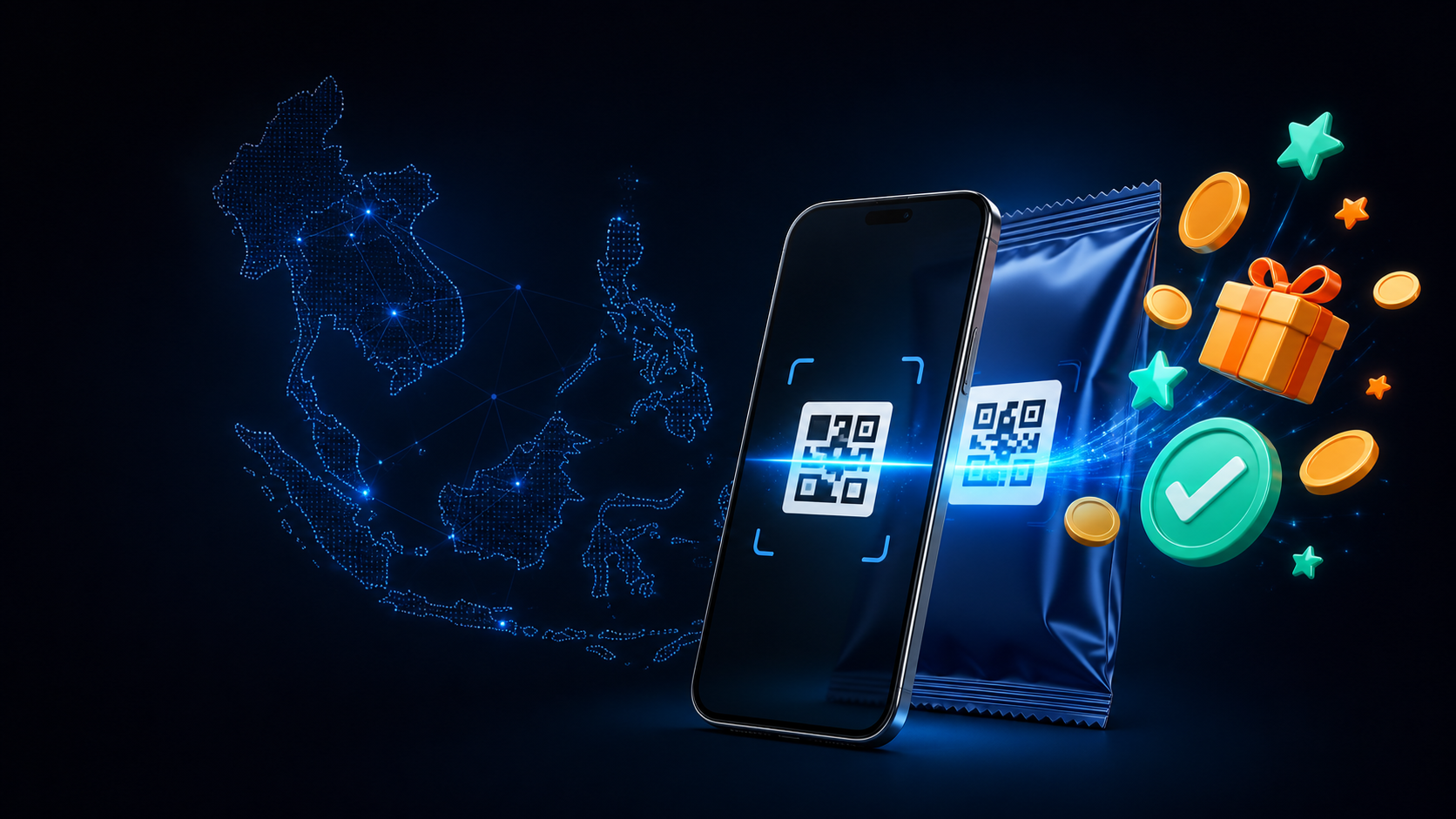
Southeast Asia's e-commerce GMV hit $157.6 billion in 2025, up 22.8% year-on-year, with Shopee, Lazada, and TikTok Shop driving mobile-first shopping across Indonesia, Vietnam, Thailand, the Philippines, and Malaysia. As shoppers move between marketplaces and social commerce, brands need a direct, scan-based loyalty layer that builds repeat purchase behaviour independent of any single platform. Acviss Bonus gives brands that layer.
Built for brands and manufacturers.


Counterfeits Are Hitting Your Brand From Every Direction in Southeast Asia
Southeast Asia's e-commerce GMV hit $157.6 billion in 2025, up 22.8% year-on-year, with Shopee, Lazada, and TikTok Shop driving mobile-first shopping across Indonesia, Vietnam, Thailand, the Philippines, and Malaysia. As shoppers move between marketplaces and social commerce, brands need a direct, scan-based loyalty layer that builds repeat purchase behaviour independent of any single platform. Acviss Bonus gives brands that layer.
Fragmented shoppers, no first-party data. In Indonesia, Vietnam, and Thailand, consumers hop between Shopee, Lazada, and TikTok Shop weekly. Marketplace-owned loyalty schemes lock data in platform silos, leaving brands blind to repeat-purchase patterns and unable to follow customers across channels. Without direct shopper records, you can't build frequency or predict churn.
Algorithm changes kill your promotional ROI. Shopee and Lazada adjust discount caps, commission rules, and storefront ranking on a quarterly basis. A campaign that moved inventory this quarter may be unprofitable next quarter. Scan-based, brand-owned rewards sidestep that volatility by rewarding genuine purchases directly, independent of marketplace politics.
Counterfeits drain loyalty budgets. ASEAN distribution networks are notoriously fragmented, making product diversion and counterfeiting endemic. Issuing loyalty points without verifying product authenticity means your rewards budget leaks to fake stock. Layering rewards on top of a unique-code authentication system ensures only genuine products earn points.
Choosing an Anti-Counterfeiting Approach for Your Southeast Asia Operation
If you sell high-frequency, low-ticket SKUs (FMCG, snacks, personal care). Your customers buy weekly or multiple times per week. Small, immediate rewards (discounts on next purchase, instant cashback) close the loop fast. Brands in this category see highest ROI because the gap between scan and repeat purchase is days, not weeks, so the psychology of rewards is still fresh. Volume of scans is high, making data-driven insights (which products, which regions, which seasons drive repeat purchase) statistically robust after two quarters.
If you sell high-value SKUs (electronics, durables, premium consumer goods). Purchase cycles are longer (quarterly or annual) and loyalty is earned through quality and trust, not just discounts. Rewards tie into warranty registration and extended product-support tiers instead of repeat-purchase discounts. This shifts the game to lifetime customer value and word-of-mouth referral programs, where the scan serves double duty: authentication checkpoint and warranty proof.
If you distribute through multiple tiers (direct B2B, traditional retail, modern trade, online). Your product travels through layers of wholesalers, distributors, and retailers before reaching the consumer. A unified scan-to-earn system creates a single loyalty identity regardless of channel, so you capture first-party data even if the pack was bought through a neighbourhood sari-sari store or a hypermarket. You also gain visibility into which distribution tiers are generating repeat customers versus one-time buys.
If you operate in regulated categories (pharmaceuticals, agrochemicals, seeds). Compliance mandates traceability and authenticity verification at the point of purchase or use. Scan-based rewards become a built-in enforcement mechanism: the consumer experience (earning a reward) aligns with your compliance obligation (proving the product is genuine and accounted for). Farmers and pharmacists already expect QR codes; rewards just add incentive for them to verify every time.
Southeast Asia's Counterfeit Economy, In Numbers
Regional E-Commerce GMV in 2025
Market led by Shopee, Lazada, and TikTok Shop, up 22.8% year-on-year. Source: Momentum Works 2025.
Annual Loyalty Market Growth
Projected to reach $60B by 2029, up from $30.8B in 2024. Source: ResearchAndMarkets 2025.
Share of GMV From Content, Social Commerce
TikTok Shop and social commerce generated 32% of regional GMV in 2025. Source: Momentum Works 2025 regional e-commerce report.
Smartphone Penetration in ASEAN
Over 84% of ASEAN own smartphones, making mobile-based rewards the native interaction channel. Source: DataReportal 2025.
Heard from Brands
This solution is both Unique and 100% Effective. It actually works
 Abhishek JainDirector, K-ONN
Acviss’s Yellow Label and Origin successfully eliminated our counterfeit threats with complete security across the supply chain.
 QA HeadFMC
Our Production & sales are up, i am extremely happy with Acviss
 RajshekharSales Head, Kitply
The comprehensive mobile app solution has been invaluable in combating counterfeits globally.
Acviss is excellent at resolving challenges quickly. The team always provides a prompt response and goes above and beyond to solve any issues at the earliest.
 Pankaj ChughSales manger, Unicol
The solution seamlessly integrates with our systems boosting our visibility.
We have seen a rise in sales after partnering with Acviss and our customers are happy with the new verification solution.
 CEOGainz4Ever
We are consistently impressed by the quality of the services rendered, which have exceeded our expectations. We truly appreciate the efforts of the Acviss in delivering results aligning with our goals and requirements.
 Biocon ElectricSenior Leadership
With a team of well-trained professionals who handle requests directly without passing you around, Acviss delivers prompt responses and unmatched professionalism.
 Ashwini JagadishDirector, LeoTaps
This solution is both Unique and 100% Effective. It actually works
Abhishek JainDirector, K-ONNAcviss’s Yellow Label and Origin successfully eliminated our counterfeit threats with complete security across the supply chain.
QA HeadFMCOur Production & sales are up, i am extremely happy with Acviss
RajshekharSales Head, KitplyThe comprehensive mobile app solution has been invaluable in combating counterfeits globally.
Acviss is excellent at resolving challenges quickly. The team always provides a prompt response and goes above and beyond to solve any issues at the earliest.
Pankaj ChughSales manger, UnicolThe solution seamlessly integrates with our systems boosting our visibility.
We have seen a rise in sales after partnering with Acviss and our customers are happy with the new verification solution.
CEOGainz4EverWe are consistently impressed by the quality of the services rendered, which have exceeded our expectations. We truly appreciate the efforts of the Acviss in delivering results aligning with our goals and requirements.
Biocon ElectricSenior LeadershipWith a team of well-trained professionals who handle requests directly without passing you around, Acviss delivers prompt responses and unmatched professionalism.
Ashwini JagadishDirector, LeoTapsTalk to Our Southeast Asia Team
Tell us where the leakage is, distribution, marketplaces, or both, and we'll show you what stopping it actually looks like.
Scan-to-Earn Rewards
Scan-to-earn rewards over WhatsApp, no app download needed. Brands capture first-party purchase data and build direct consumer relationships that outlast marketplace changes.
Non-Clonable Authentication
Unique non-clonable code per unit ensures only genuine products earn rewards. Protects loyalty budgets from counterfeit and diverted stock threats.
Marketplace Enforcement
Continuous monitoring of Shopee, Lazada, TikTok Shop for counterfeits and unauthorised sellers that damage brand trust and loyalty integrity.
Warranty-Linked Rewards
Warranty registration tied to loyalty scan. Verifies authenticity and extends consumer relationships beyond first purchase for electronics and durables.
Common Questions
Why WhatsApp instead of a branded app?
Smartphone users in Indonesia, Vietnam, and Thailand already have WhatsApp open several times per day. Pushing users to download yet another app fails in ASEAN markets, where app fatigue is high and device storage is limited. WhatsApp-based scanning removes friction: scan, reply with one tap, done. For web, consumers land on a branded reward portal with no login required, matching how they use Shopee and Lazada.
How is consumer data secured across borders?
All scan records and reward transactions are stored in ISO 27001-certified infrastructure. Personal data (name, phone number) is encrypted at rest and in transit. Brands can choose to store data regionally (Indonesia servers for Indonesian shoppers) to comply with local data-residency regulations. We do not share individual consumer data with third parties without explicit shopper consent.
How long does it take to launch?
Proof-of-concept launch typically takes 4-6 weeks: product code integration (1-2 weeks), loyalty programme tuning (1 week), testing across Shopee/Lazada/TikTok Shop and physical retail (1-2 weeks), go-live. Timescale depends on how many SKUs you want to enable upfront and whether you already have the SKUs printed with QR codes or need to reprint stock.
Can we integrate with our existing CRM or warehouse system?
Yes. We provide REST API endpoints for shopper data export, daily reconciliation feeds, and real-time reward redemption against your ERP. If you have a custom warehouse system or an in-house CRM, our integration team maps your data schema and ensures rewards sync daily without manual upload. Most brands integrate within 1-2 weeks once credentials are shared.
What kind of ROI should we expect?
Brands typically see 2-3x lift in repeat-purchase rate among enrolled shoppers within the first two quarters. First-party shopper data also reduces customer acquisition cost because you can retarget enrolled buyers with promotional emails or SMS, cutting paid ad spend. Cost per enrolled shopper is usually 1-3% of order value, offset by repeat-purchase frequency gains and reduced churn.