- The Drugs (Seventh Amendment) Rules, 2026 (G.S.R. 506(E), 22 June 2026) extend Schedule H2 from a list of about 300 brands to whole drug categories.
- Table 2 covers all vaccines, all antimicrobials, all NDPS narcotic and psychotropic substances and all anticancer drugs.
- The rules come into force on 1 July 2027, except antimicrobials, which follow on 1 July 2028.
- A mandated code is a tracking record. A copied QR code still scans cleanly, so compliance alone does not prove a pack is genuine.
- Map your SKUs to the four categories, clean master data, plan artwork early, and choose a per-unit verification layer such as Certify alongside Origin for supply-chain records.
India has widened its drug QR code mandate from a list of 300 brands to entire categories of medicine. If you make or market vaccines, antimicrobials, anticancer drugs or narcotic and psychotropic substances, your labels will need a barcode or QR code by 1 July 2027, or by 1 July 2028 for antimicrobials. The Drugs (Seventh Amendment) Rules, 2026 (G.S.R. 506(E), dated 22 June 2026) made that official.
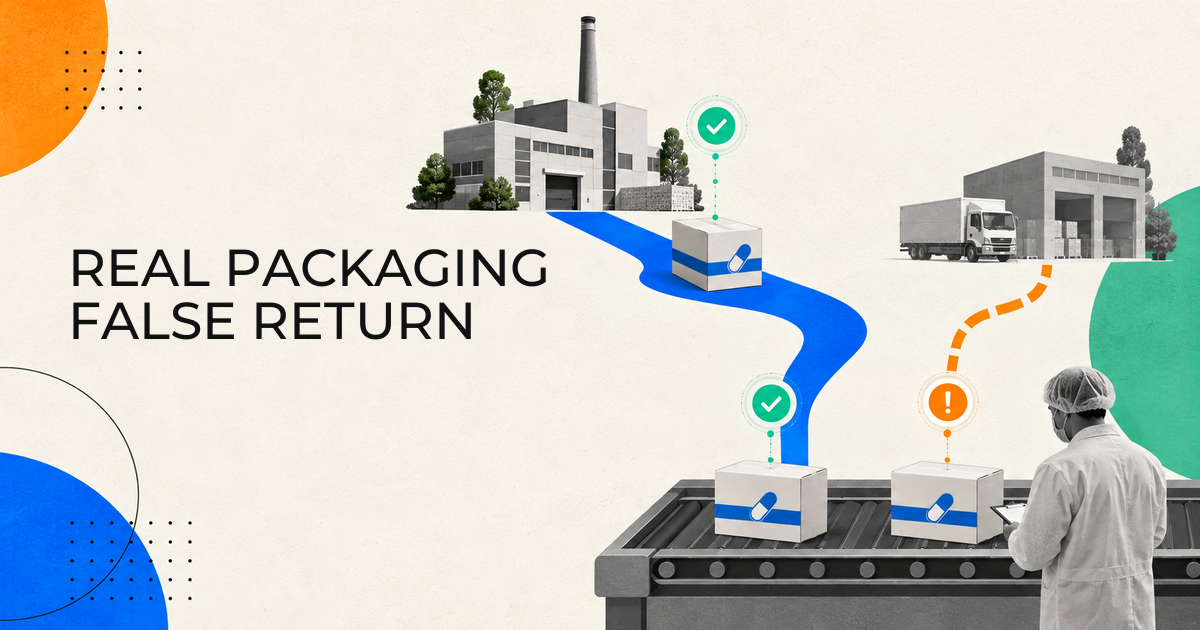
For most pharma teams the first reaction is a packaging question: where does the code go, and who prints it? That is the right first question. It is not the only one. A code that satisfies Schedule H2 proves that a pack carries a record. It does not prove that the pack in a patient’s hand is the one you made.
What changed in Schedule H2
Until now, Schedule H2 applied to a defined list of about 300 pharmaceutical brands. The 2026 amendment keeps that list as Table 1 and adds a new Table 2. Table 2 does not name brands. It names categories:
- All vaccines
- All antimicrobials (antibiotics, antivirals, antifungals and antiparasitics)
- Narcotic drugs and psychotropic substances listed under the NDPS Act, 1985
- All anticancer drugs
That shift matters more than the dates. A brand-list rule can be managed with a spreadsheet. A category rule reaches every SKU in the category, including older products, small-volume lines and products made under contract. If a molecule falls in one of the four groups, it is in scope.
The rule did not arrive without warning. The Health Ministry published the draft as G.S.R. 757(E) on 16 October 2025, considered the objections and suggestions it received, and consulted the Drugs Technical Advisory Board before finalising the notification. Press coverage describes the aim as better tracking and record-keeping of these medicines through the distribution chain.
The dates to plan around
| Category | Effective from |
|---|---|
| Vaccines | 1 July 2027 |
| Anticancer drugs | 1 July 2027 |
| Narcotic and psychotropic substances (NDPS) | 1 July 2027 |
| Antimicrobials | 1 July 2028 |
Antimicrobials get an extra year. That is a long runway on paper, but pack artwork, printing lines and master data rarely change quickly in a regulated setting. Teams that wait until the final quarter before a deadline usually discover that approvals, not printing, are the bottleneck.

See Certify in action
Give every pack a unique, non-clonable identity that patients and pharmacists can verify with a phone scan.
Explore Certify
What the code has to do
The notification itself does one thing: it puts the four categories under Schedule H2, the schedule that already carries the barcode and QR code requirement for the Table 1 brands. Reports on the rule say the code goes on the primary label, or on the secondary label if the primary pack has too little space, and that the data fields stay as they are under the existing Schedule H2 framework. Those fields are reported to include a unique product identification code, the proper and generic names, the brand name, the manufacturer’s name and address, the batch number, the dates of manufacture and expiry, and the manufacturing licence number. Confirm the exact labelling text in Schedule H2 and Rule 96 of the Drugs Rules, 1945 before you finalise artwork.
In practice this means the code is a structured record attached to each pack. It gives a regulator, a distributor or a pharmacist a standard way to read what the pack is claimed to be. That is useful for traceability and recall.
It is also where the gap sits.
The gap the rule does not close
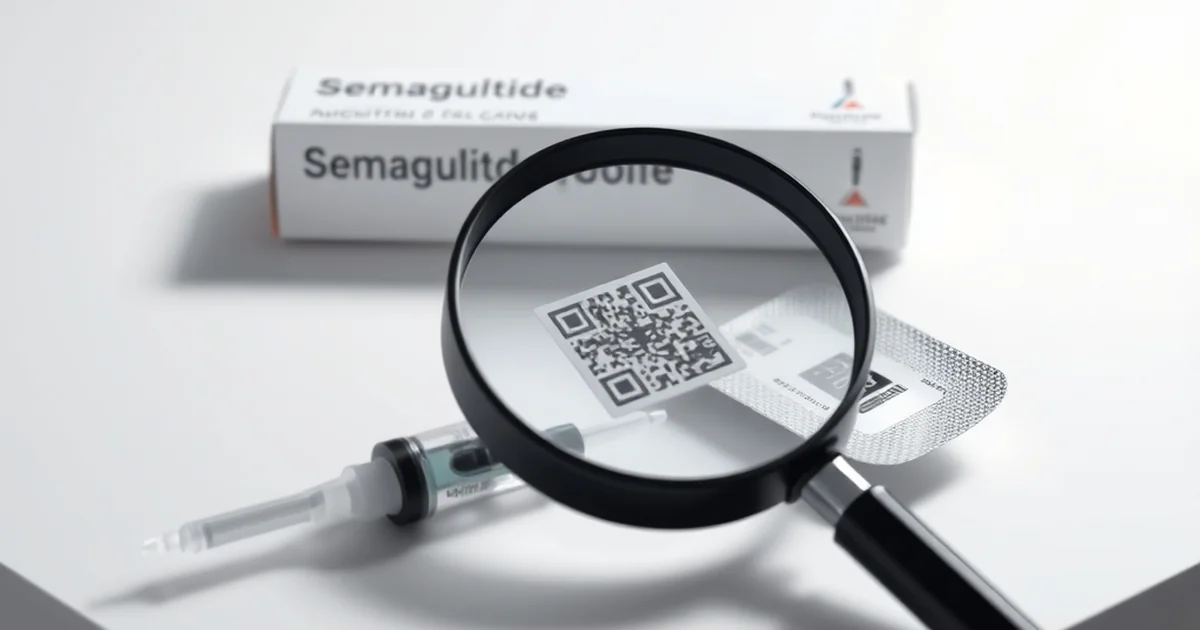
A QR code that carries product data can be printed by anyone. If a counterfeiter photographs a genuine pack, they can reproduce the code on a fake one. The fake then scans cleanly, shows plausible batch and expiry details, and passes any check that only reads what the code says.
This is not a flaw in the regulation. The regulation asks for traceability data. It does not ask the code itself to be unforgeable. But for the four categories now in scope, the cost of a convincing fake is highest. A diluted antibiotic can drive resistance. A counterfeit vaccine can leave a patient unprotected. A fake anticancer drug can cost a patient the treatment window. These are the products counterfeiters would most like to copy and patients can least afford to receive.
So the practical question for a brand owner is two questions:
- Does our label meet the mandate?
- Can anyone prove that this particular pack is genuine, not just that it carries a valid-looking code?
The second question is what separates a compliance exercise from a protection programme. Brands that answer only the first will have a code on every pack and no way to tell a real one from a copy.

A five-step readiness plan
You do not need to solve everything at once. This order works for brand owners, contract manufacturers and licensees.
1. Map your SKUs to the four categories and two dates. List every product, pack size and market. Mark which fall under Table 2 and which date applies. Include contract-manufactured and exported lines, because the same pack often serves both.
2. Clean your master data. The code is only as reliable as the data behind it. Product identification codes, generic names, licence numbers and batch records need to match across your ERP, your packaging artwork and your regulatory files. Mismatches are cheap to fix now and expensive to find after a batch is printed.
3. Plan artwork and print-line changes early. Decide where the code sits on the primary label, what happens when space runs out and the code moves to the secondary label, and how the print line will verify readability. Allow time for label approvals.
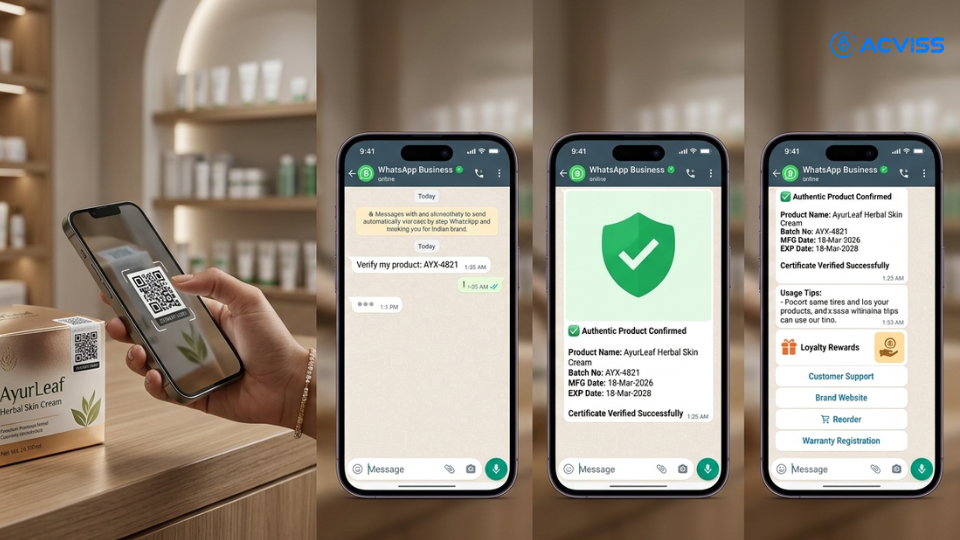
4. Choose a verification layer, not just a code. Decide whether each pack will carry a unique, non-clonable identifier that can be checked at the point of sale or use. This is the step that turns a compliance code into an authentication tool. Acviss Certify does this with a per-unit code that can be verified through a WhatsApp or web scan, with no app to install. If you want to see how serialised authentication works for pharma, our pharma serialised authentication page walks through it.
5. Keep a supply-chain record you can show an auditor. Traceability is only useful if you can reconstruct the journey of a batch. Origin links production, dispatch and distribution events to the same product identity, and Acviss’s pharma track and trace work covers the same ground for regulated products. For a view of what an inspection actually asks for, see our post on CDSCO audits and the traceability record.

What to do this quarter
If your portfolio includes any vaccine, antimicrobial, anticancer or NDPS product, start with step one. A complete SKU map takes days, not months, and it tells you how large the 2027 workload really is. Then decide, before you commission any artwork, whether the code on each pack will be a record only or a record that can also be verified.
The mandate sets the minimum. Whether the pack in a patient’s hand is the one you made is a decision for the brand owner. Brands that build verification in at the same time as compliance avoid printing every label twice.
To talk through how a verifiable code fits your pharma portfolio and print process, book a conversation with the Acviss team.
Sources: Drugs (Seventh Amendment) Rules, 2026, G.S.R. 506(E), Ministry of Health and Family Welfare, 22 June 2026 (Gazette of India, Extraordinary, Part II, Section 3(i), No. 455), published on the CDSCO website. Labelling and data-field details as reported by Medical Dialogues, News On AIR and Lexplosion Solutions.

Meet the mandate and prove the pack is genuine
Book a free demo and see how Certify turns a compliance code into a verifiable one for pharma packs.
Book a Free Demo
Related reading

Fake Toys & Children’s Products: The Manufacturer Compliance Gap
A parent buys a toy. It has the right packaging, the right logo, and a safety mark printed cleanly on the box. Weeks later, the child chokes

BIS/ISI Mark Counterfeiting: Fake Safety Certifications on Electronics
A charger sold on a marketplace in India carries a printed ISI mark and a licence number. The mark looks correct. The number looks plausible