Franchise Network Leakage: When Your Channel Is the Risk

- A franchisee is contractually bound to your brand name and QA standard, unlike an arm’s-length distributor, so leakage inside a franchise network is a brand-trust risk, not just a commercial one.
- The real pattern: franchisees substituting unauthorized or cheaper ingredients, packaging, or supplies to protect margin while still trading as the genuine brand.
- Detection signals are different from distributor diversion: supply-chain audit gaps, unusual local sourcing patterns, and customer complaints inconsistent with corporate QA standards.
- Audit rights in a franchise agreement are unenforceable without an operational way to verify them; supply-chain traceability like Acviss Origin closes that gap.
A franchisee is not a distributor. That distinction sounds like semantics until a customer complaint lands on your desk about a product bought at a location carrying your own name, your own signage, and your own corporate promise of quality, and the product inside doesn’t match any batch your factory ever produced.
Most brand protection conversations focus on the enemy outside the fence: grey-market resellers, counterfeit listings on marketplaces, unauthorized stock diverted between territories. Those are real problems, and worth solving. But they share one feature that makes them easier to reason about: the counterparty isn’t pretending to be you. A grey-market seller is, at worst, selling your genuine product through a channel you didn’t approve. A counterfeiter is selling a fake with your logo on it, but everyone involved knows it isn’t really from you.
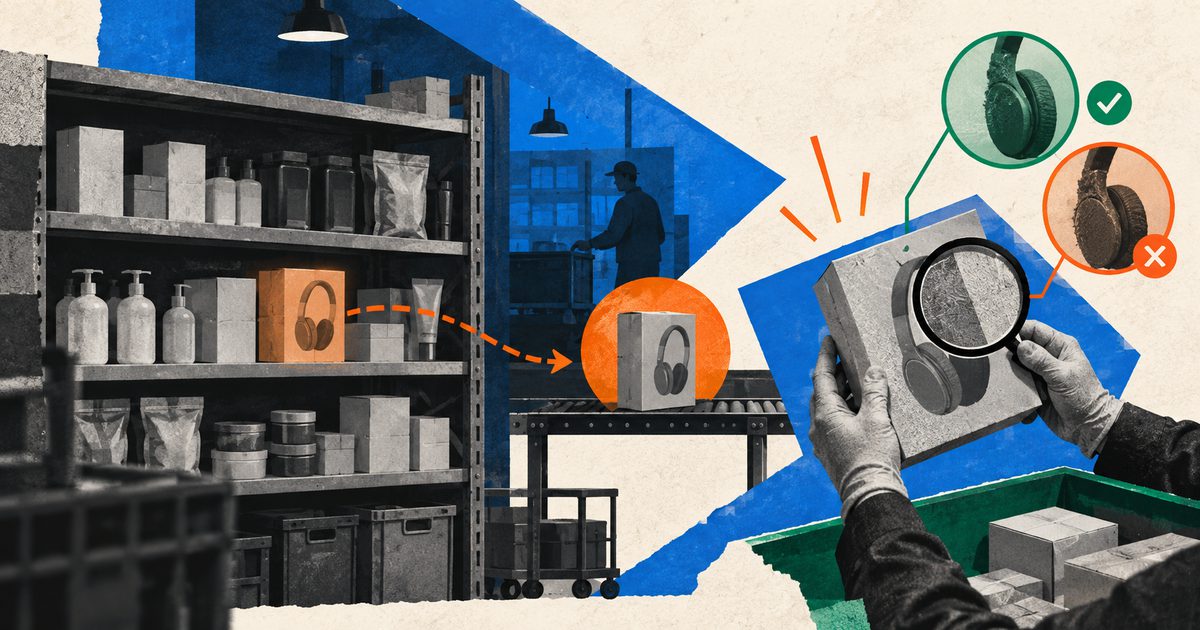
Franchise network leakage is a different animal. The franchisee is contractually bound to you, operates under your brand name, and is supposed to follow your corporate quality standard to the letter. When that same franchisee quietly substitutes unauthorized or lower-cost ingredients, packaging, or supplies to protect their margin, the product that reaches the customer is neither a grey-market genuine product nor an obvious counterfeit. It’s something worse: a compromised product sold as the real thing, by someone you licensed to sell the real thing.
Why this isn’t the same problem as distributor diversion
Acviss has covered distributor-side leakage before. 5 Signs Your FMCG Distributor Network Has a Diversion Leak and How Grey Market Diversion Steals Indian Brand Revenue both deal with genuine product ending up in unauthorized channels, and Where Counterfeit Risk Enters Your Procure-to-Pay Cycle deals with counterfeit inputs entering through your own supplier onboarding. Read together, they cover most of the ways product integrity breaks down between your factory and a channel you don’t fully control.
Franchise leakage sits somewhere those three don’t reach, because the trust relationship is inverted. A distributor is an arm’s-length reseller: you sell to them, they sell onward, and if they divert stock or undercut pricing, the commercial and legal exposure is largely theirs to explain to their own customers, not yours. A franchisee is the opposite. They don’t have their own brand to protect; they’re trading entirely on yours. Every ingredient swap, every unapproved packaging reprint, every off-spec supply item they use still gets handed to a customer under your signage, your trademark, and your quality promise.
That means the liability doesn’t stay with the franchisee the way it would with a distributor. It comes straight back to corporate. A customer who gets a bad product from an unauthorized reseller might blame the reseller. A customer who gets a bad product from a location wearing your name blames you, files the complaint against your brand, and has every reason to.
What franchisee substitution actually looks like
The pattern is consistent across franchise models, whether the unit sells food, retail goods, or a service with physical consumables: local unit economics get squeezed, and the temptation to cut input cost is highest exactly where oversight is thinnest: the smallest, least-visited locations furthest from head office.
In practice this shows up as:
- Substituted ingredients or raw materials. A food or beverage franchisee sources a cheaper unapproved supplier for a core ingredient, keeping the finished product visually and behaviourally close enough to pass casual inspection, while quietly moving off the corporate spec.
- Unauthorized packaging. Instead of ordering corporate-supplied packaging through the approved vendor, a franchisee has packaging locally reprinted or refills approved containers with product that didn’t go through the approved production process.
- Off-spec supplies and components. Retail and service franchises with physical consumables (parts, materials, finishing supplies) source locally instead of through the approved vendor list, because local sourcing is cheaper and, critically, harder for head office to see.
None of this requires the franchisee to be malicious in the way a counterfeiter is. Often it’s a margin decision that starts small, at one location, and never gets flagged because nothing in the standard franchise relationship is built to catch it.

See Origin in action
See how Origin gives serialized, real-time visibility into which unit or location received which batch of approved supply.
Explore Origin
The detection signals franchise networks actually need
Distributor diversion has fairly well-known tells: sell-in and sell-out mismatches, batch codes turning up in the wrong territory, unexplained margin compression. Franchise leakage needs a different set of signals, because the failure is happening inside a channel you’re supposed to control, not outside one you never controlled in the first place.
Supply-chain audit gaps. Most franchise agreements include audit rights: the right to inspect a location’s sourcing and supply records. Few brands exercise that right on any real cadence. The gap between “we have the contractual right to check” and “we actually checked in the last twelve months” is where substitution survives.
Unusual local sourcing patterns. A franchisee buying from a vendor outside the approved list is visible if anyone looks for it: a mismatch between approved-vendor invoice volumes and the unit’s actual output volume, or a location that’s somehow sourcing a consumable cheaper than every other unit in the network without a documented reason.
Customer complaints inconsistent with corporate QA standards. This is usually the first signal to surface, and the one most often dismissed. Complaints clustering at a single franchise location that don’t match the brand’s documented specification (texture, taste, fit, finish, anything the corporate standard defines precisely) reads as “one bad location having an off day” far more often than they get investigated as substitution. By the time a pattern is undeniable, the substitution has usually been running for a while.
The common thread across all three: none of them are visible from a distance. They only surface if a brand is actually looking at unit-level sourcing and unit-level complaint data side by side, which most franchise operations teams aren’t set up to do.
Why the contract alone doesn’t close this
Every reasonable franchise agreement already says “source only from approved vendors, follow the corporate specification, submit to audit.” That language solves nothing on its own, because a contractual obligation without an operational way to verify compliance is just a sentence a franchisee can quietly ignore. This isn’t a legal gap; the legal language is almost always already there. It’s an audit-tooling gap: the brand has no practical, ongoing way to check whether the actual product moving through a given franchise location matches what the contract requires, short of an expensive, infrequent physical audit that a franchisee has plenty of warning to prepare for.

Closing the gap with supply-chain traceability
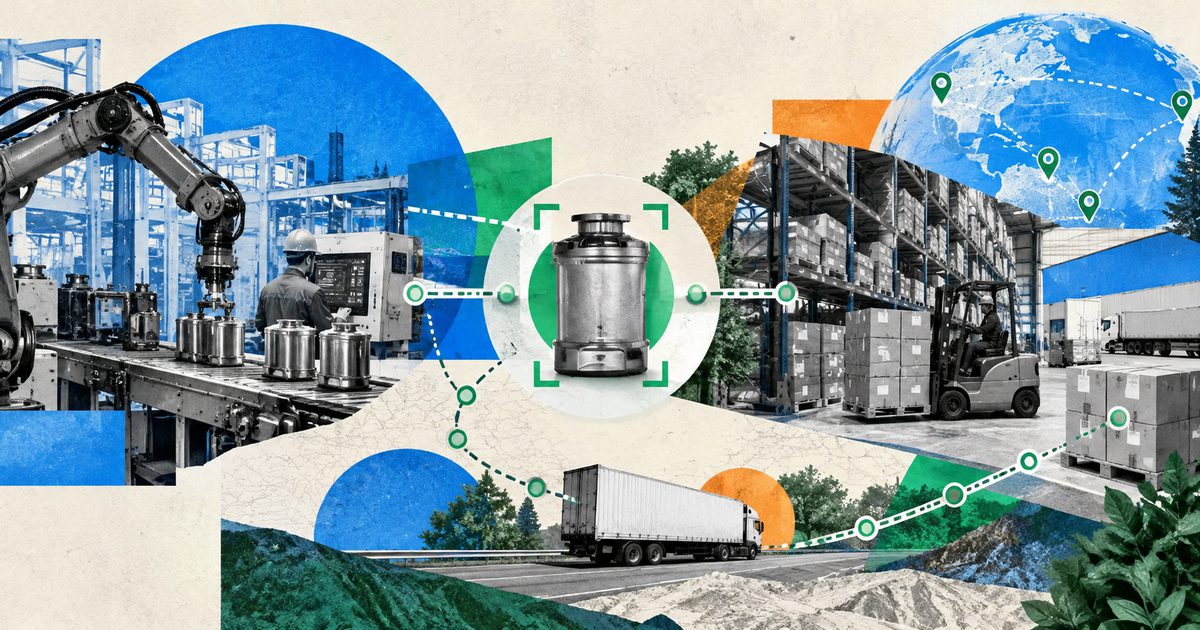
This is exactly the kind of gap Origin, Acviss’s supply-chain traceability product, is built to close. Origin gives a brand serialized, real-time visibility into the supply chain down to which specific unit or location received which batch of approved packaging, ingredients, or components. It turns “the contract says approved vendors only” from a sentence into something a compliance team can actually check against live data, without waiting for a scheduled physical audit.
Certify complements this at the product level: assigning a unique, non-clonable digital identity to genuine, corporate-supplied packaging and inputs means a franchisee, or a corporate auditor, can verify with a scan whether what’s on the shelf actually traces back to the approved supply chain, rather than relying on visual similarity to catch a substitution. For franchise staff without a smartphone on hand, Uniqolabel‘s holographic security labels offer the same check without requiring a device, useful for a quick visual verification at goods receipt.
None of this replaces the audit clause already in the franchise agreement. It gives that clause something to actually check against, continuously, instead of once a year with advance notice.

What to do next
If your brand runs a franchise network, the honest first question isn’t “do we have audit rights in the contract”; most brands already do. It’s “when did we last verify sourcing at the ten smallest, least-visited locations in the network, and would we actually know if one of them had quietly swapped suppliers eighteen months ago?” For most franchise operators, the answer is no, and that’s the gap worth closing before a customer complaint forces the question.
Acviss works with brands across FMCG, pharma, and consumer goods to build exactly this kind of supply-chain visibility into franchise and distribution networks. If franchise-level sourcing integrity is a live concern for your brand, book a demo to see how Origin and Certify apply to your specific network.

Turn your audit clause into something you can actually check
Book a free demo and see how Origin and Certify extend supply chain traceability into your franchise and distribution network.
Book a Free Demo
Related reading

5 Signs Your FMCG Distributor Network Has a Diversion Leak
Your sales numbers can be healthy and your brand can still be losing money on every single unit. Grey market diversion, stock meant for one
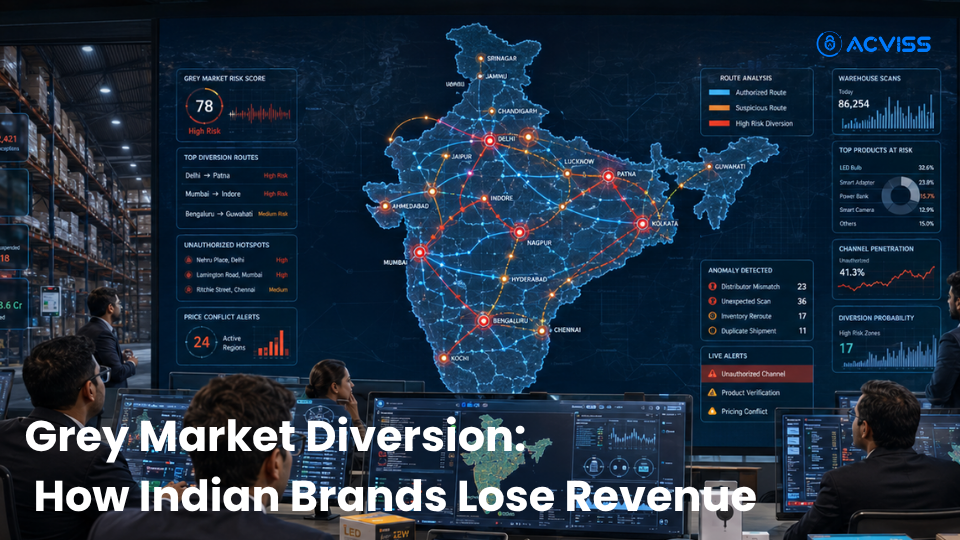
How Grey Market Diversion Steals Indian Brand Revenue
What-is-Grey-Market-Diversion-How-Indian-Brands-Lose-Revenue-Without-Knowing