- What an Inspector Asks to See, and What Teams Prepare
- What the Rules Already Require
- What a Complete Custody Record Includes
- Where Gaps Show Up First
- Closing a Gap After It Has Been Flagged
- How Origin Tracks a Batch Past the Factory Gate
- What Audit-Ready Should Mean Before the Audit
- From the Plant File to the Distribution Chain
 Arun KrishnanSep 30, 20266 min read

- CDSCO and state regulators have run joint, risk-based inspections since December 2022, choosing firms on factors such as Not of Standard Quality results, complaints and product criticality.
- The Drugs Rules already require wholesale records of batch, quantity, buyer and manufacturer for every sale, kept for three years and produced to an inspector on demand.
- Gaps rarely start at the factory. They start at the C&F agent, where batches split across stockists and returns come back in.
- Audit-ready means you can trace one batch end to end today, before an inspection is scheduled.
Most audit preparation in Indian pharma starts at the plant. Batch manufacturing records, validation files, deviation logs and SOPs get pulled together, checked and filed where the inspector will look first.
That file still matters. But the inspections most likely to reach a firm today are risk-based, and the question that follows a flagged batch is rarely “show me how you made it”. It is “show me where it went”.
What an Inspector Asks to See, and What Teams Prepare
Since December 2022, CDSCO has inspected drug manufacturing units jointly with state drug controllers, using a risk-based approach. Firms are picked on criteria such as the number of drugs declared Not of Standard Quality, complaints received and how critical the products are.
That selection logic shapes the inspection itself. If the trigger was a failed sample or a complaint, the inspector may already have a batch number in hand.
Compliance teams tend to prepare what they control: the plant file. An inspector following that batch will want the other half, meaning which depots and stockists received it, in what quantities, and how much is still in the market.
This article assumes the requirements themselves are familiar. For the wider picture, see our guide to CDSCO traceability requirements.
What the Rules Already Require
This part is not optional, and it is older than any serialisation debate.
Under Rule 65 of the Drugs Rules, 1945, every wholesale supply must be made against a cash or credit memo recording the date, the buyer’s name, address and licence number, the drug, the quantity, the batch number and the manufacturer. Carbon copies must be kept for three years, and purchase records carry the same batch detail.
The same rule requires the licensee to produce all registers and records to an inspector on demand. Every licensed wholesaler and C&F agent in your chain holds part of your batch’s history, whether or not you can see it.
On the manufacturing side, Schedule M has long required that recalls reach each level of the distribution channel, that distribution records be available to the people running a recall, and that the recall report reconcile delivered and recovered quantities. The revised Schedule M, notified in December 2023, now applies to small and medium manufacturers too, after their extended deadline of 31 December 2025 passed.
Labelling is moving the same way. Since August 2023, the top 300 brands listed in Schedule H2 have been required to carry a QR code or barcode. A June 2026 amendment extends that to vaccines, narcotic and psychotropic drugs and anticancer medicines from 1 July 2027, and to antimicrobials from 1 July 2028.
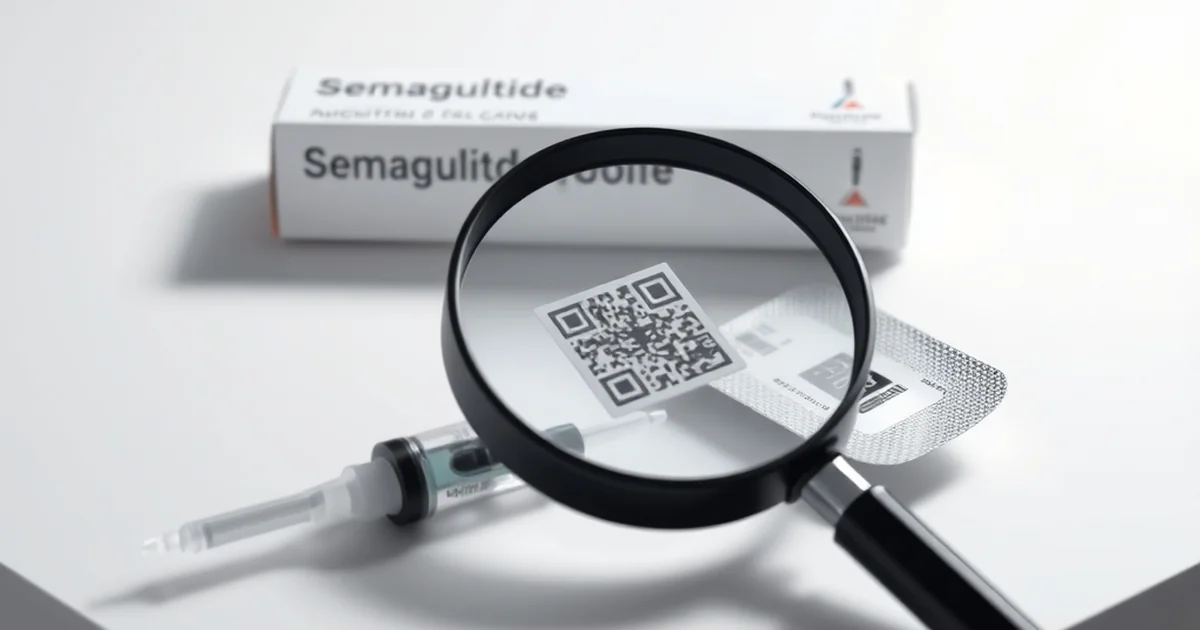
A QR code on the pack is a labelling requirement. It is not, by itself, a record of where that pack went.
What a Complete Custody Record Includes
Beyond what the rules spell out, good practice is a record that can answer one question at every handover: which batch, how many units, from whom, to whom, and when.
1. Batch release to dispatch
Released quantity, dispatched quantity and retained samples should reconcile. Any difference needs a reason on file.
2. Dispatch to C&F agent or depot
Each consignment should carry batch-level quantities that match what the depot books in, not just an invoice total.
3. C&F agent to stockist and retailer
This is where one batch splits into many. Every onward memo, by batch, needs to add back up to what arrived.
4. Returns, recalls and destruction
Expired, damaged and recalled stock flows backwards through the same chain. It needs the same batch-level detail coming back as it had going out.
Where units carry a unique code, product serialisation lets each of these handovers be recorded unit by unit rather than as batch totals.
Where Gaps Show Up First
In most firms, the factory is the best-documented part of the chain. Batch records sit in the ERP or in controlled paper, reviewed by QA.
The first gap usually appears one step out, at the C&F agent. The agent is a separate licensee, often running its own software or registers, and its records are complete for its own purposes rather than yours.
Batch splits are the most common break. A consignment arrives as one line and leaves as twenty, and unless each onward memo carries the batch number, the chain goes from exact to approximate.
Returns are the second. Saleable returns re-entering stock, or damaged stock written off without batch detail, leave quantities that no longer reconcile. The same weakness is what makes returns fraud easier.

Can you trace one batch past your C&F agent today?
See how a unit-level custody record changes that answer.
Book a DemoClosing a Gap After It Has Been Flagged
If an inspector has already found a gap, the aim is a reconstruction you can defend, not a record that merely looks complete.
Start from the records each licensee is already required to keep. Request the relevant memos for the affected batch from the C&F agent and stockists, and rebuild the flow from dispatch to the last known holder.
Then reconcile. Quantities dispatched, sold on, returned and still in stock should add up, and any residual difference should be stated plainly rather than explained away.
Document how the reconstruction was done, and who supplied which records and when. Never back-date or amend original entries to close the gap. A reconstruction labelled as one is defensible; an altered record becomes a far bigger problem than the gap itself.
Finally, fix the process that allowed it. That is usually batch-level capture at the C&F agent, so the same gap does not appear at the next inspection.
How Origin Tracks a Batch Past the Factory Gate
None of the obligations above move to a software vendor. Each licensee still keeps its own records.
Origin is Acviss’s supply-chain track-and-trace solution. It gives each unit a serialised code at the packaging line and, where needed, aggregates units into cases and pallets, so a case scanned at dispatch carries the identity of every unit inside it.
From there, each handover is a scan. When the C&F agent books a consignment in and ships part of it on to a stockist, the scan records which codes moved, who handled them, when and where. That is the batch split from earlier, captured as it happens instead of rebuilt from memos weeks later.
The same record works in reverse. Returns scanned back in keep their original identity, so quantities reconcile code by code. If a batch is recalled, Origin shows where the affected units last moved and tracks how many have come back.
For an inspection, the one-batch drill becomes a lookup: pull the batch, see every node it passed through, and export that trail alongside the Rule 65 memos each licensee holds.
What Audit-Ready Should Mean Before the Audit
Audit-ready is not a folder. It is a result you can reproduce on demand.
A simple test: pick one batch dispatched last quarter and ask your team to show where every unit went, how many are still in the market and what came back. If that takes days, or depends on one person at the C&F agent, that is the gap an inspector will find.
What the rules require:
- Wholesale memos that carry batch, quantity, buyer licence and manufacturer, kept for three years and available on demand
- A recall process that reaches every distribution level and reconciles delivered and recovered quantities
- A QR code or barcode on products listed in Schedule H2, with the list expanding from 2027
What good practice adds:
- Batch-level capture at every C&F agent and stockist handover
- Returns booked back in with the same batch detail they went out with
- A one-batch trace drill, run before any inspection is scheduled
From the Plant File to the Distribution Chain
For years, pharma audit readiness meant a strong plant file. Risk-based inspections pushed the question out to the first handover, and the Schedule H2 expansion is putting a scannable code on more packs every year.
The next inspection is less likely to ask whether a batch was made well than where it went. The firms that can answer in an afternoon are the ones that built the record before anyone asked.

Trace every batch past the factory gate
Book a free demo and see how Origin approaches supply-chain track and trace for pharma distribution.
Book a Free DemoRelated reading

What Indian Pharma Must Know About CDSCO Traceability Requirements 2026
In this article What Is CDSCO and What Role Does It Play in Drug Traceability? Current Traceability Requirements for Indian

Why Duplicate Packaging Makes Pharma Returns Fraud So Easy
In this article A genuine box does not mean a genuine return Why the return desk never checks What verification

What Security Compliance Tools Actually Need to Prove in an Audit
Most brands treat security compliance tools as paperwork software: something that generates a certificate, files a report, and closes an aud