- The scale behind the rules
- What the regulations actually require
- What Europe’s first months of verification taught the industry
- Where blockchain fits, and where it does not
- A traceability framework in four actions
- What the pilots have shown
- The missing layer: proving the pack is real
- Where implementations go wrong
- Common questions
- Why this matters beyond export markets
 Arun KrishnanNov 04, 20268 min read

Counterfeit medicines rarely arrive through the front door. Europol’s threat assessment on pharmaceutical crime describes criminals diverting and infiltrating the legal supply chain, with commercial warehouses and transport companies among the compromised enterprises. A traceability system has to be designed for that reality, not for the tidy chain in a process diagram.
The stakes are clinical. The World Health Organization estimates that at least 1 in 10 medicines in low- and middle-income countries is substandard or falsified, and that countries spend about US$30.5 billion a year on them. Blockchain is often proposed as the answer. It can help, but only for one part of the problem.
- DSCSA, EU FMD and India’s rules all depend on unique, serialised identities for each pack. A blockchain can hold the resulting records in a shared, tamper-evident form.
- A ledger records what it is told. It cannot prove the pack in a patient’s hand is genuine, or correct bad data entered at the source.
The scale behind the rules
Interpol’s Operation Pangea XVII, run from December 2024 to May 2025, led to 769 arrests and the seizure of 50 million doses of illicit pharmaceuticals worth USD 65 million.
Both figures describe what was caught, not what reached a shelf. That is why regulators moved the control point to the pack itself, and why counterfeit medicines that look identical to the genuine product are so hard to catch without an identity check.
What the regulations actually require
Three regimes matter most to a manufacturer that sells across borders. They differ in detail, but all start from the same idea: every saleable unit carries its own identity.
| Regime | What it asks for |
|---|---|
| US DSCSA | Product identifiers on packs and interoperable electronic tracing across trading partners. The final requirements took effect on 27 November 2023, with enforcement phased in through FDA exemptions for some trading partners. |
| EU FMD | A unique identifier and an anti-tampering device on most prescription packs, verified against a central repository. Applicable since 9 February 2019 under Delegated Regulation 2016/161. |
| India | QR codes on all API packaging since 1 January 2023, QR codes on the Health Ministry’s top 300 brands, and serialisation data for exports uploaded to the DGFT’s iVEDA portal. |
Without serialisation, none of the downstream records has anything to attach to. The differences in aggregation requirements between the US and EU are where exporters usually lose time. The FDA’s exemptions page shows the DSCSA rollout is managed group by group, so planning against one published date is planning against a moving target. India’s direction is covered in our note on CDSCO traceability requirements.
What Europe’s first months of verification taught the industry
The EU’s system is the largest live test of mandatory pack-level verification. In July 2019, five months after launch, the Regulatory Affairs Professionals Society reported that 40% of manufacturers and a quarter of other supply chain actors had not yet connected to the European Medicines Verification System.
The same report described a practical worry. With a false alert rate of 3%, the European Medicines Verification Organisation warned, up to 2,000 products could face supply shortages, and stakeholders argued for allowing dispensing of products triggering false alerts until the overall alert level fell below 0.05%.
A false alert is not a counterfeit. Industry commentary attributed early alerts mainly to operational causes, such as data that was never uploaded or was uploaded incorrectly, and scanners that were badly configured. No choice of database removes that. Data discipline at the point of serialisation, clear ownership of alert investigation, and a rule for what a pharmacist does while an alert is open do.
Where blockchain fits, and where it does not
A blockchain is a shared record that no single party can quietly rewrite. For pharma, that suits a supply chain where manufacturers, distributors, wholesalers and pharmacies do not fully trust each other’s databases. The blockchain-based traceability case rests on a common version of each product’s history, records that show tampering, and less reliance on one party’s system.
The limits are the part vendors seldom volunteer. A ledger records what a participant submits, so a cloned code submitted with valid-looking data is recorded as faithfully as a genuine one. That is why copy detection and copy prevention are separate problems, and why an ERP record alone does not count as traceability.
Pharma networks generally favour permissioned chains, where participants are known and access is controlled. The real choice is between three set-ups.
| Option | Where it works | Where it struggles |
|---|---|---|
| Central repository | One regulator or industry body runs the system, as in the EU | Depends on a single operator; slow to add participants or data types |
| Permissioned ledger | Many parties that need a shared history but no single host | Needs agreed governance, data standards and cost sharing first |
| Ledger plus identity layer | Brands that must prove a pack is genuine, not only that a record exists | Adds integration work at the line and a verification step at the end |
A traceability framework in four actions

1. Identify every unit
Assign a unique serial to each saleable pack, then link packs to cases and pallets. If the same code can be reproduced, the rest of the chain inherits that weakness. Standards matter too: GS1 Digital Link and the move to 2D codes change what a printed symbol can carry.
2. Record every hand-over
Log an event each time custody changes. This is event-based traceability, and it is what an auditor wants to replay. The weak point is the hand-over that never gets scanned, so the process must make a missing scan visible instead of silent.
3. Add condition data where it matters
For cold-chain products, sensor readings can be anchored to the record. Swiss company Modum, for example, launched a system in 2018 with Swiss Post and SAP that paired a temperature logger with an Ethereum smart contract that compares readings against Good Distribution Practice requirements when a shipment arrives.
4. Verify at the last step
The pharmacy or patient scan is where a fake is most likely to show. A verification result should say whether the identity is valid, not just whether a record exists. This is the principle behind modern product authentication, and the step most often left until last in project plans.
What the pilots have shown
In 2019 IBM, KPMG, Merck and Walmart took part in an FDA pilot to test whether blockchain could meet DSCSA interoperability requirements. Their report to the FDA concluded that a permissioned network could connect trading partners that do not otherwise interact, while limiting what each can see.
That is a narrower claim than “blockchain solves counterfeiting”. It shows a shared ledger can carry compliance data between parties. It does not show that it stops fakes reaching patients.
Map your serialisation and traceability gaps
Talk to Acviss about how identity, custody and verification fit into your pharma supply chain.
The missing layer: proving the pack is real

Origin is Acviss’s supply-chain track-and-trace solution. In a pharma set-up, a production team configures products and identifier levels, generates and commissions serialised identities, and aggregates units into cases and pallets. Scan events are then captured at production and distribution hand-offs and checked for exceptions.
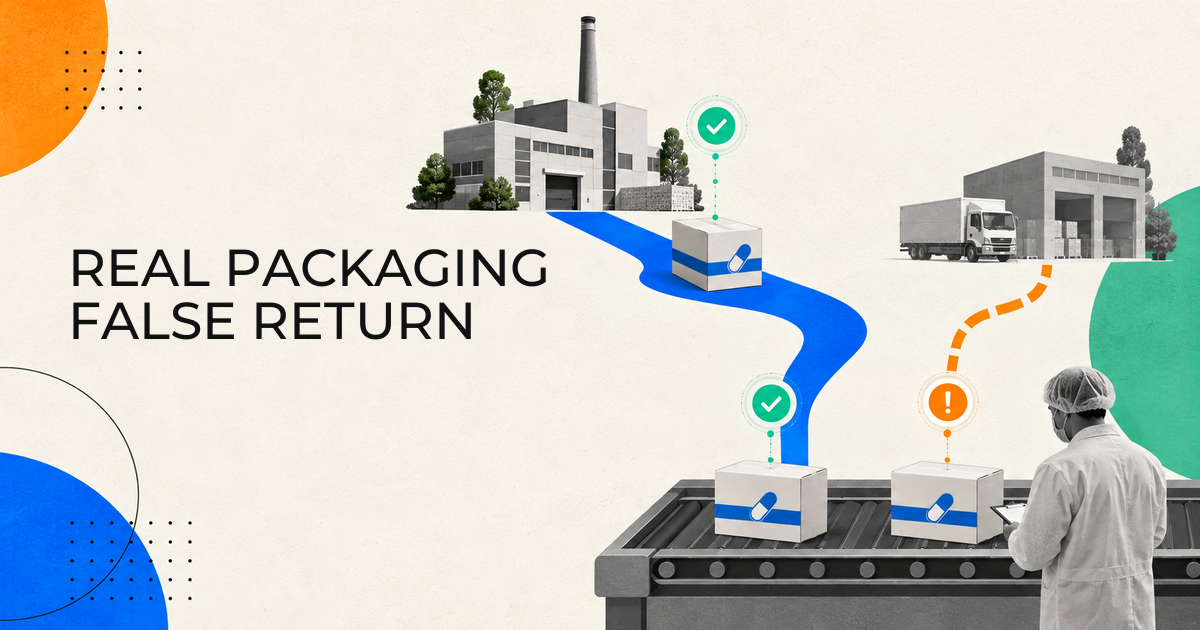
When an alert fires, the team investigates it, traces affected stock or runs a targeted recall, and exports records for internal, partner or regulatory review. A scan history supplies custody context. It does not by itself prove the physical item is genuine, so duplicate or unusual scans are leads to investigate, not conclusions. The same logic applies to returns, where duplicate packaging makes fraud easy.
Where implementations go wrong

These patterns are analysis drawn from how mandatory systems have rolled out, not from any single client programme.
Starting too wide, with partners who are not ready
A full rollout across every product and market brings integration, training and data-quality problems all at once, and the EU experience shows connection lag is normal even under legal compulsion. A pilot on one product line shows where records break before they multiply, and agreeing data standards with partners early costs less than reconciling after go-live.
Leaving data quality to the line
If the number printed on a pack differs from the number uploaded, every downstream check fails and the failure looks like a counterfeit. Reading back each printed code before it leaves the line, and retiring rejected identifiers, turns a verification problem into a production-floor routine.
No owner for alerts
Someone must decide what a duplicate scan means, who investigates it, and how long a pack stays blocked. Without an owner, alerts pile up or get ignored, and a system nobody trusts is quickly bypassed.
Common questions
Does blockchain prevent counterfeit drugs?
No. It makes records harder to alter and easier to share, but it records whatever it is given. Counterfeit entry needs identity checks at the point of use alongside the ledger.
Is blockchain required by DSCSA or EU FMD?
No. Both require unique identifiers and electronic verification or tracing, without mandating a technology.
Why this matters beyond export markets
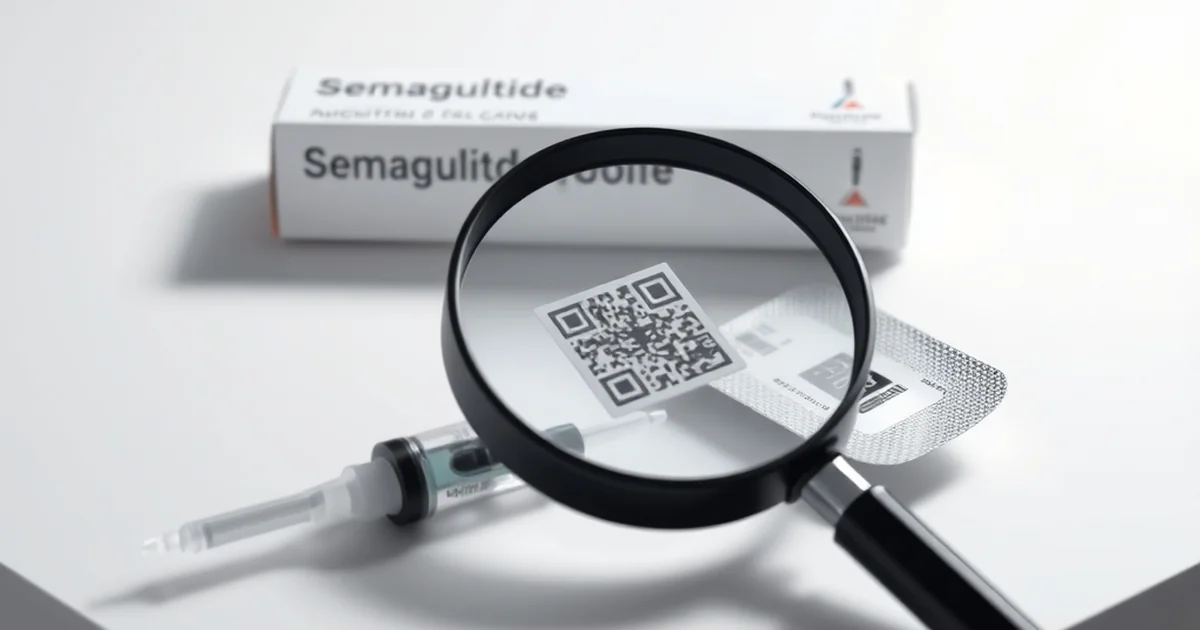
India’s API and top-300 QR mandates already reach domestic packaging, and export buyers increasingly ask for serialised data before they order. The same record that satisfies an auditor can locate a batch during a recall or help isolate a suspect shipment, which is where speed matters in demand-driven cases such as the semaglutide case.
Regulators are moving from asking whether a manufacturer keeps records to asking whether a pack in a pharmacy can prove its own identity. The first generation of mandatory systems shows that adoption, data discipline and alert handling decide the outcome more than the storage technology. Manufacturers that treat serialisation as a line-and-governance project, with a ledger as one option inside it, will absorb the next rule change with far less rework.
Interested to learn more? Get in touch with us
See how Acviss connects serialised identities, custody events and verification for pharma supply chains.
Related reading

A CDSCO Inspector Is Coming. Is Your Traceability Record Actually Audit-Ready?
CDSCO inspectors follow a batch out of the factory. What the Drugs Rules require, where records break at C&F agents,…

Warranty Fraud in Auto Parts: What Parent-Child Traceability Lets You Check
Parent-child traceability links each auto part to its assembly, so a warranty claim can be checked against a record….

Counterfeit Auto Parts Traceability: A Manufacturer’s Guide
Counterfeit auto parts traceability explained: identity, custody events and exceptions, with the NHTSA air-bag case…