- What the BIS/ISI mark is actually supposed to prove
- Why forging the mark is close to effortless
- Where the exposure lands: the certified brand, not the forger
- What the ISI/BIS mark proves versus what it can’t
- Making a genuine certification claim actually verifiable
- What compliance and quality teams should actually do
BIS/ISI Mark Counterfeiting: Fake Safety Certifications on Electronics

- Counterfeit electronics increasingly carry forged BIS/ISI marks, printed logos and licence numbers with no relationship to a real certification, so the products look compliant without being tested.
- The mark itself is a static graphic, not a cryptographic credential, so anyone with a printer can copy it convincingly; nothing on the unit ties it back to BIS’s own database.
- When a forged-mark fake causes harm, the fallout traces back to the real certificate holder’s licence number first, exposing genuine brands to liability and marketplace delisting they didn’t cause.
- Unit-level authentication, such as Acviss’s Certify, gives every product a unique, non-clonable identity a buyer can check directly, closing the gap a shared, copyable mark can’t.
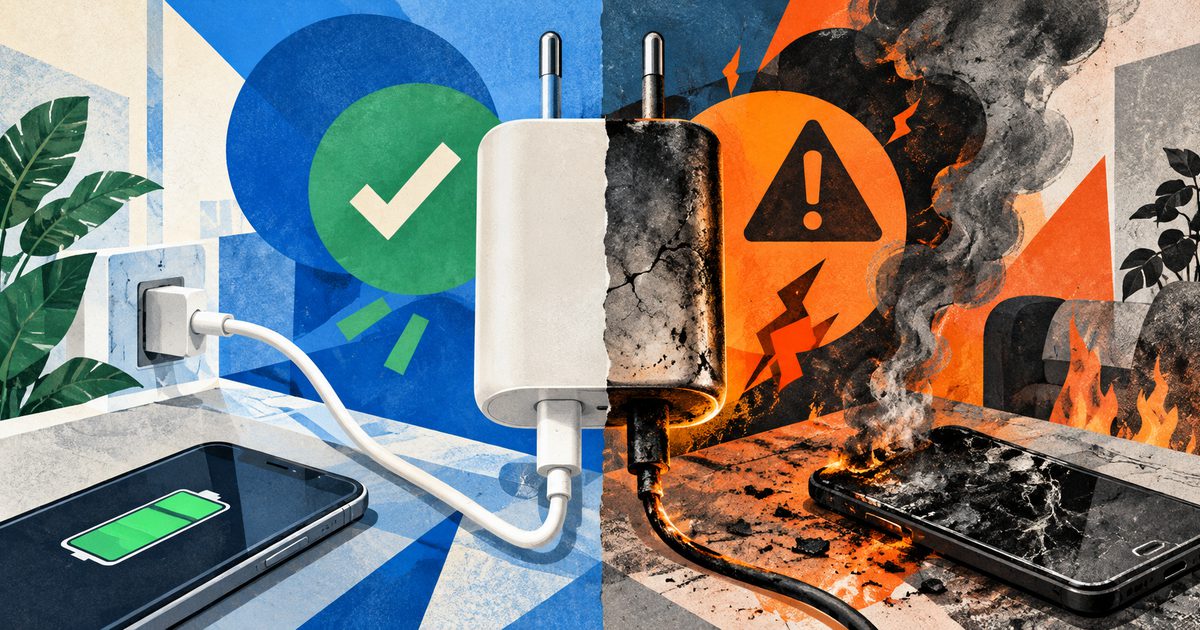
A charger sold on a marketplace in India carries a printed ISI mark and a licence number. The mark looks correct. The number looks plausible. Neither has any relationship to a real Bureau of Indian Standards (BIS) certification, and the charger inside the case has never been tested against the safety standard it claims to meet. This is not a rare edge case. It is a standard anti-counterfeiting problem playing out at the compliance layer: counterfeit electronics sold as extension boards, chargers, adapters, and small appliances copy the mark, skip the testing, and let the sticker do the selling.
What the BIS/ISI mark is actually supposed to prove
The ISI mark and the newer BIS Compulsory Registration Scheme (CRS) mark exist because electrical products fail in specific, predictable ways when they are built badly: insulation breaks down, connectors overheat, components aren’t rated for the load they actually carry. Certification is meant to catch this before the product reaches a plug socket.
Electronics and IT goods are notified under BIS’s Compulsory Registration Scheme, alongside the older ISI Mark Scheme used for other product categories (BIS, 2026). Products falling in scope, including a wide range of power supply, adapter, and consumer electronics categories, must be tested against the relevant Indian Standard and registered with BIS before sale [UNVERIFIED: whether extension boards and chargers specifically are always covered depends on the exact product sub-category and current CRS notification list, which changes over time — check the live BIS CRS list for a specific SKU rather than treating this as blanket coverage]. A genuine mark represents three things: the product model was tested by a BIS-recognised or self-declared conformity process, the manufacturer holds an active licence or registration number tied to that specific model, and BIS can be asked to confirm that licence against its own database at any time.
That last point matters more than the logo itself. The mark is a pointer to a real record. It was never designed to be checked on sight.
Why forging the mark is close to effortless
Here is the gap counterfeiters exploit: the ISI/BIS mark is a static graphic plus a printed number. It is not encrypted, it is not unique per unit, and nothing about the physical sticker or moulded logo ties it back to the database entry it is supposed to represent. Anyone with basic design software and a printer can reproduce it convincingly, because there is nothing to reproduce beyond the visual pattern.
Compare that to how the same problem is solved for other kinds of authentication. A genuine unit-level identifier, such as the non-clonable 2D code Acviss’s Certify platform assigns to individual product units, is designed so that copying the visible mark does nothing, because the verification happens against a unique code per unit, not a shared graphic per SKU. The BIS/ISI mark was never built with that property. It is one mark, applied identically across every unit in a run, genuine or fake, and a photocopy is functionally as convincing as the original to anyone checking it by eye.
That is why a retailer, a customs inspector doing a visual sweep, or a shopper comparing product photos online has almost no way to catch a forged mark in the moment. The forgery isn’t sophisticated. It doesn’t need to be, because the thing it is copying carries no built-in proof of its own legitimacy.

See Certify in action
See how Certify gives every unit a non-clonable digital identity, so a genuine BIS/ISI-certified claim can be checked against a real record, not just a printed logo.
Explore Certify
Where the exposure lands: the certified brand, not the forger
The uncomfortable part of this problem is who absorbs the fallout. When a counterfeit extension board or charger carrying a forged BIS mark causes a fire, a shock, or a device failure, the incident doesn’t trace back to an anonymous counterfeit workshop first. It traces back to the licence number printed on the unit, which points to a real, certified brand.
That brand now has to prove the failed unit wasn’t theirs, after the fact, often to a regulator, an insurer, or a marketplace’s trust and safety team that has already flagged the listing category. Under the Consumer Protection Act’s product liability provisions, a consumer harmed by a product bearing a brand’s mark has grounds to pursue that brand directly, regardless of whether the unit was ever manufactured by them. E-commerce platforms respond to safety complaints by delisting entire categories, not just the offending SKU, which means a genuine manufacturer’s real, certified inventory can get caught in a takedown triggered by someone else’s fake. The brand did everything right and still inherits the exposure, because the certification mark that was supposed to protect its reputation carries no way to distinguish a genuine unit from a forged one.
This is a distinct failure mode from the physical safety problem itself. We’ve covered the mechanism by which counterfeit chargers and extension boards actually cause fires (overloaded components, substandard insulation, no thermal cutoff) in a separate piece on counterfeit chargers as a fire hazard. That post is about what happens inside a bad unit. This one is about the paperwork layer sitting on top of it: the fact that the safety claim itself, the mark that’s supposed to signal “this was tested,” can be faked independently of whether the product is actually dangerous. The two problems compound each other, but they need separate fixes.

What the ISI/BIS mark proves versus what it can’t
| What a genuine mark represents | What the mark itself can’t do |
|---|---|
| The product model was tested against the relevant Indian Standard | Prove that a specific physical unit came from that tested batch |
| A manufacturer holds an active BIS licence or CRS registration | Stop someone from printing an identical-looking mark on an uncertified unit |
| BIS can confirm the licence against its own database | Be checked against that database by a shopper or retailer at the point of sale |

Making a genuine certification claim actually verifiable
The fix isn’t better enforcement against forged marks after the fact. It’s removing the gap the forgery relies on: a mark that can’t authenticate itself. Unit-level product authentication, where every individual item carries a unique, non-clonable digital identity that a buyer can check via a QR scan or WhatsApp message rather than trusting a printed logo, moves the verification from “does this look right” to “does this specific unit check out against a real record.” That’s a fundamentally different property from what the ISI/BIS mark carries today. A shared graphic applied to a production run tells you nothing about the individual unit in front of you. A unique identifier per unit, checkable in real time, does. Acviss’s Certify platform (part of a stack that has secured over 2 billion products across 80+ brands, and operates under ISO 27001 certification) applies this model to exactly this problem: a certified brand can give consumers, retailers, and its own compliance team a way to confirm a unit is genuine that doesn’t depend on anyone recognising a logo correctly.
What compliance and quality teams should actually do
For a brand manufacturing BIS-registered electronics, three things follow from this gap directly. First, monitor your own CRS registration status and licence number actively rather than assuming the paperwork is static once filed. Second, don’t rely on the mark alone as your product’s safety signal; build a verification layer that lets a retailer, a distributor, or a consumer confirm a specific unit rather than a printed graphic. Third, monitor online marketplaces for listings using your brand’s category and packaging cues, since a forged-mark fake usually surfaces there before it surfaces as a field failure.
A mark that can be photocopied isn’t a safety guarantee, no matter how official it looks on the box. The certification behind it is real. The way most people check it isn’t. Closing that gap, not just chasing down forged stickers one at a time, is what actually protects both the consumer plugging the device in and the brand whose name is printed next to the mark.
If your product line carries mandatory BIS/ISI certification and you want a way to make that claim independently verifiable at unit level, book a demo to see how Certify applies to your specific product category.

Holding a BIS/ISI licence you can’t afford to see forged?
Book a free demo and see how Certify makes your certification claim independently verifiable at unit level, closing the gap a copied mark exploits.
Book a Free Demo